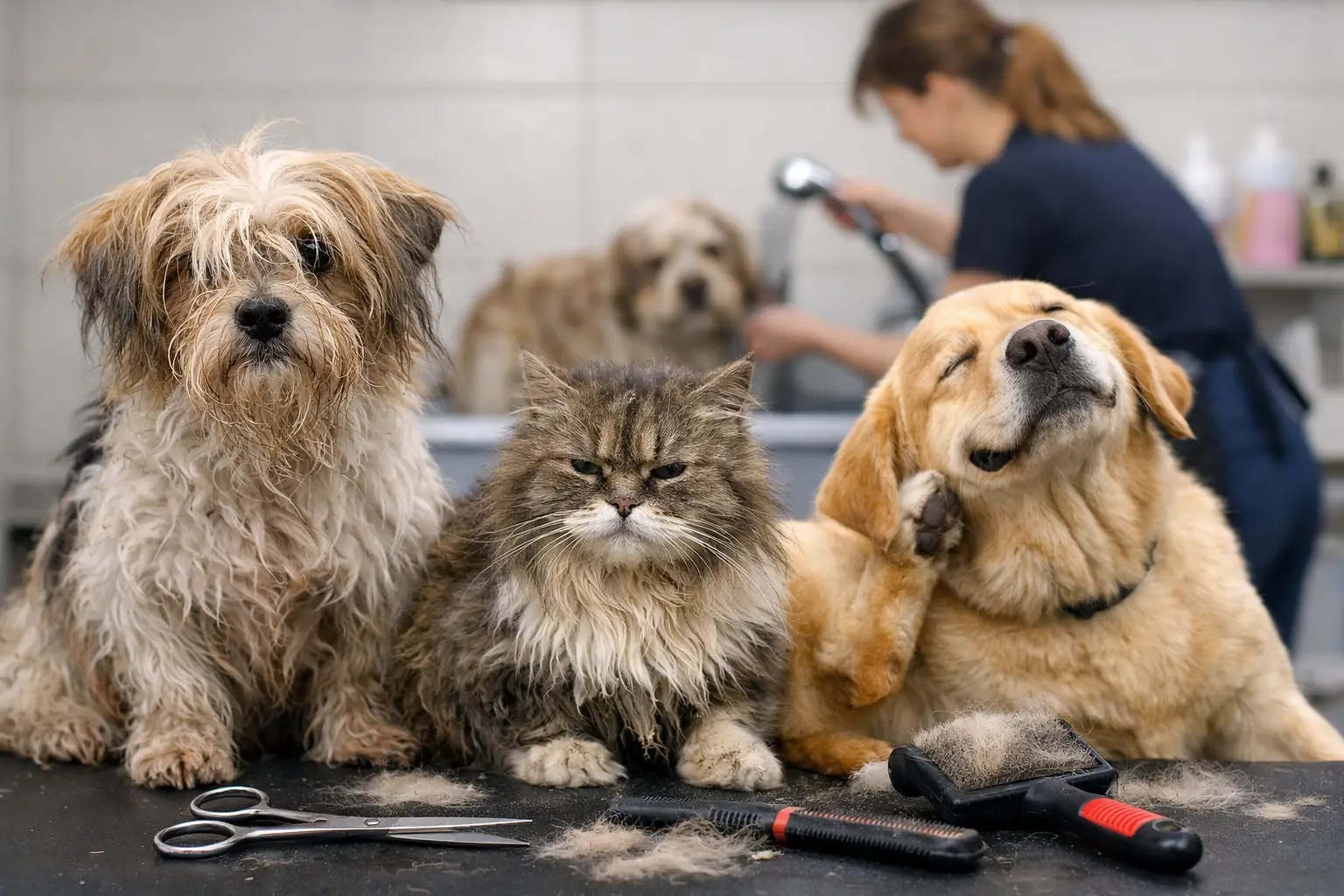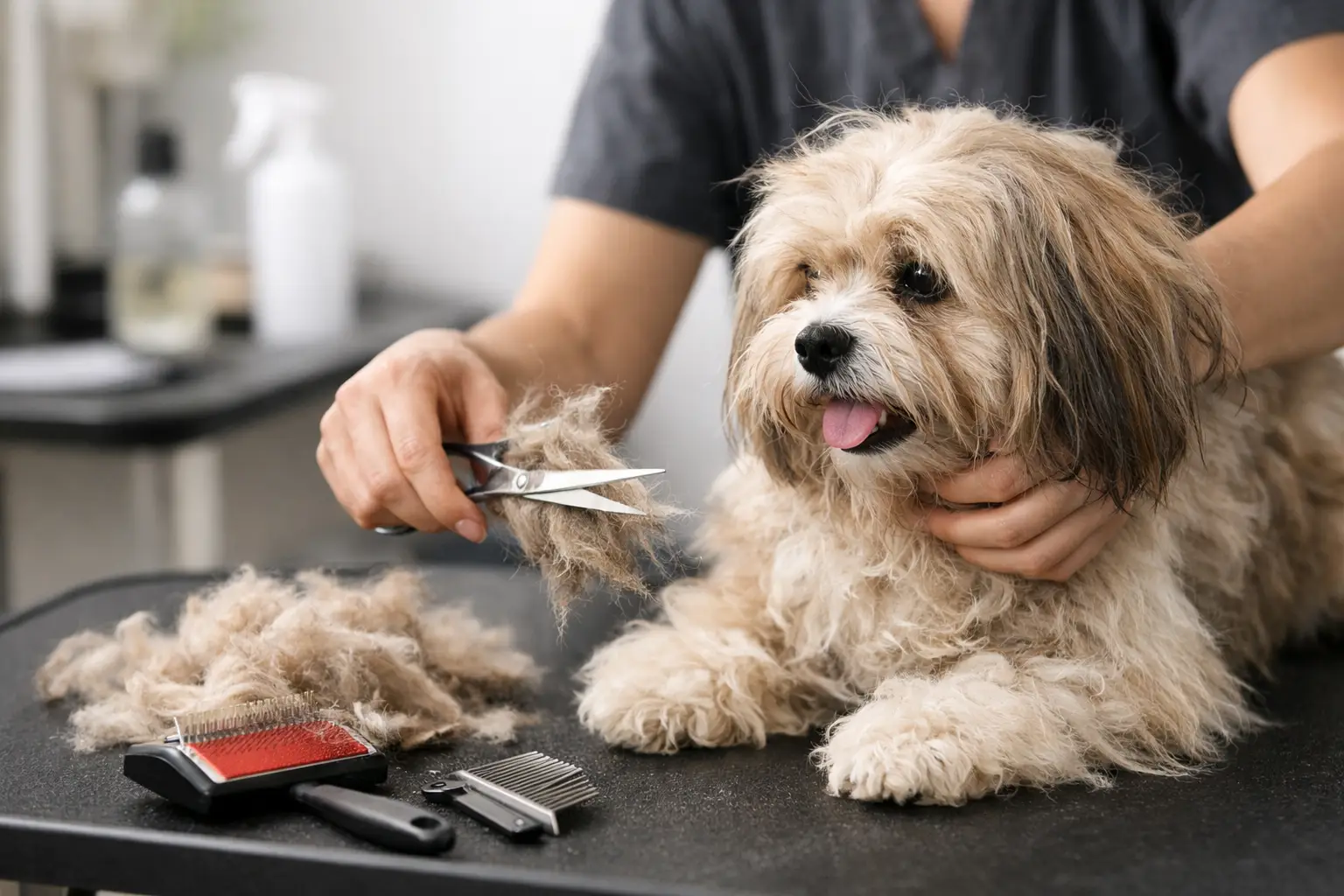
A pet who trembles at the sight of a brush, hides when the carrier appears, or pulls away during nail trims is not being difficult. They are communicating that grooming feels unfamiliar, uncomfortable, or overwhelming. Learning how to reduce pet grooming stress starts with listening to those signals and changing the experience before fear becomes a routine.
For many dogs and cats, grooming combines several challenging things at once: handling, strange sounds, slippery surfaces, water, scents, and separation from the people they trust. A calm approach does not mean skipping necessary care. It means giving your pet more predictability, more choice where possible, and the patient one-on-one attention they deserve.
Start Before Grooming Day
The lowest-stress appointment is often prepared for long before the shampoo comes out. Pets do better when grooming-related items become ordinary parts of home life rather than signals that something scary is about to happen.
Leave the brush in a familiar room and offer a small treat when your pet looks at or approaches it. Let them sniff the nail clippers without using them. For cats, keep the carrier open with a soft towel inside and occasionally place treats or a favorite toy near it. These quiet, low-pressure moments teach your pet that grooming tools and travel equipment do not always lead to an uncomfortable event.
It also helps to keep a consistent rhythm. A dog who receives gentle brushing several times a week is less likely to develop painful tangles and less likely to need a long, intensive grooming session later. Short-haired pets benefit from regular coat care too, especially during shedding seasons. For cats, brief brushing sessions can reduce loose fur and help you notice skin or coat changes early.
The goal is not perfection. Two calm minutes of brushing are more valuable than ten minutes of wrestling with a pet who has reached their limit. End on a positive note while your pet is still comfortable.
Read the Signs of Rising Stress
Some pets make their feelings clear with barking, growling, hissing, or trying to escape. Others show quieter signs that can be easy to miss. Watch for lip licking, yawning when tiredness is unlikely, a tucked tail, pinned ears, wide eyes, freezing, panting, trembling, or sudden reluctance to take treats.
When you see these signals, pause rather than pushing forward. Give your pet a moment to reset, then decide whether you can continue with a simpler step. For example, if your dog is uneasy about having paws handled, touch one shoulder, reward, touch the leg, reward, and stop before moving to the paw. Building tolerance in small increments is often more effective than trying to finish every task at once.
There is a difference between mild uncertainty and genuine distress. A brief pause may be enough for a slightly nervous pet. A pet that is panicking, snapping, or unable to settle needs a different plan, which may include multiple shorter grooming visits or guidance from your veterinarian or a qualified behavior professional.
Make the Environment Feel Safer
Noise is a major stress trigger, particularly for sensitive pets, seniors, and cats. At home, choose a quiet time when the household is less active. Turn off loud television programs, ask children to give the pet space, and avoid rushing through grooming before work or a busy outing.
Use a non-slip mat in the tub, sink, or grooming area. Slippery footing can make even a confident dog feel vulnerable, especially when wet. Keep the water comfortably warm, not hot, and introduce it slowly. Many pets tolerate a gentle handheld sprayer better than being placed under a strong stream of water, but it depends on the animal. Some prefer a cup or soft washcloth around the face and ears.
Cats generally need an even more controlled setting. A full bath is not necessary for most healthy cats, and forcing one can create lasting fear. If your cat needs bathing for a medical, coat, or hygiene reason, work in a warm, enclosed room with everything ready before you begin. Keep the process brief and calm, and avoid adding unnecessary steps.
Scent matters as well. Strong fragrances, heavily scented cleaning products, and unfamiliar perfumes can be overwhelming for an animal with a sensitive nose. A clean, fresh environment with minimal competing odors helps the grooming space feel less intense.
Use Gentle Handling, Not Restraint by Force
Comfortable grooming relies on secure, thoughtful handling, not overpowering a pet. Support your dog or cat’s body, move slowly, and let them see what you are doing when possible. Speak in a low, steady voice. Your own tension can travel down the leash or into your hands.
For brushing, start in areas your pet usually enjoys being touched, such as the shoulder or back, before approaching more sensitive spots like the belly, tail, legs, or ears. Use the right tool for the coat. A brush that pulls, a comb used too aggressively, or repeated passes over a knot can turn a simple brushing session into a painful experience.
Mats deserve special caution. Tight mats can tug on the skin and conceal irritation beneath the coat. Trying to brush them out at home may hurt your pet and make future grooming much harder. A professional groomer can assess whether careful detangling is appropriate or whether clipping the mat is the kinder, safer option. The shortest path is not always the best one, but avoiding pain should come first.
Nail care is another common source of anxiety. Rather than attempting all nails in one sitting, try one or two at a time with a reward afterward. For some pets, a nail file or grinder is easier to accept than clippers; for others, the sound of a grinder is the problem. There is no single right tool, only the method your pet can learn to tolerate comfortably.
Choose a Grooming Experience That Fits Your Pet
For pets who become distressed by car rides, crowded salons, barking dogs, cages, or long waits, the setting may be the biggest issue. A mobile, one-on-one grooming appointment can remove several stressors at once by bringing professional care directly to your home.
This approach is especially helpful for senior pets, puppies still learning the routine, anxious rescues, cats, and dogs who need extra time. Instead of being passed between staff members or waiting near unfamiliar animals, your pet can receive focused attention in a calm space. Quiet equipment and a cage-free process can make a meaningful difference for pets that are sensitive to sound and separation.
At V-GROOM, individualized handling is part of the experience because no two pets respond to grooming in exactly the same way. A confident young dog may enjoy a complete spa-style session, while an elderly pet with stiff joints may need frequent breaks, gentle positioning, and a simpler service. Sharing these details before the appointment allows the groomer to plan with your pet’s comfort in mind.
For some animals, mobile grooming is not automatically stress-free. A pet that fears enclosed spaces may need gradual introductions to the van, and a cat that becomes upset outside the home may benefit from a carefully paced visit. Honest communication about past grooming experiences, triggers, medical conditions, and bite history helps create the safest plan.
Help Your Pet Recover Well After Grooming
Once grooming is complete, keep the rest of the day easy. Offer water, a familiar place to rest, and quiet affection if your pet seeks it. Avoid immediately taking them to a noisy park, hosting guests, or introducing another big activity.
Praise and rewards should be connected to the experience, not only the moment it ends. A favorite chew after a nail trim, a calm walk after a bath, or a cozy nap after a professional appointment can help build a more positive association over time. This is particularly valuable for young pets, whose early grooming experiences can shape their comfort for years.
If your pet seems unusually sore, repeatedly scratches, develops redness, or acts distressed after grooming, contact your veterinarian. Grooming can reveal underlying skin conditions, ear discomfort, dental concerns, arthritis, or other issues that deserve medical attention.
Patience Is Part of Premium Care
A beautifully groomed coat matters, but a pet who feels safe matters more. Progress may look small at first: allowing a brush near the legs, standing calmly on a mat, accepting one nail trim, or stepping into a new grooming space without fear. Those small wins are the foundation of a lifelong routine.
Give your pet the time, quiet, and compassionate handling they need. When grooming becomes predictable and respectful, it can shift from something they endure to a regular moment of care.