
A cat can sense the carrier coming out from across the house. Add a car ride, unfamiliar smells, barking dogs, and a busy salon lobby, and even routine care can become a difficult day. DFW cat grooming does not have to follow that pattern. With the right setting and gentle handling, grooming can support a cleaner, more comfortable cat without asking them to spend hours in a stressful environment.
Cats are masters at grooming themselves, but they still benefit from professional care. Long coats can mat close to the skin. Seniors may struggle to reach their backs or hindquarters. Even short-haired cats can accumulate loose undercoat, dander, and debris that brushing at home does not fully remove. The goal is never to make a cat look overly styled. It is to help them feel clean, mobile, and comfortable in their own coat.
DFW Cat Grooming Should Feel Different
Cats are not small dogs, and they should not be groomed like them. Most cats respond best to calm movements, a quiet voice, and a groomer who knows when to pause. They may tolerate one part of a service easily and object strongly to another. That is not bad behavior. It is useful information about their comfort level.
A one-on-one appointment gives the groomer room to work with the cat in front of them rather than rushing through a fixed sequence. For some cats, a bath, drying session, nail trim, ear cleaning, and thorough brush-out are manageable in one visit. For others, a shorter visit focused on coat care and hygiene may be the kinder choice. The right service depends on the coat, the cat’s health and age, and their tolerance for handling.
The environment matters just as much as the service. A crowded salon can expose cats to unfamiliar animals, sharp noises, and long waits in a cage. Mobile grooming replaces the drive and waiting room with a dedicated appointment at home. For many families, that means less disruption for both the pet and the person booking the service.
When Your Cat May Need Professional Grooming
Visible mats are the most obvious reason to schedule grooming, but they are not the only one. A cat who suddenly looks unkempt may be having trouble reaching certain areas. This is especially common in older cats, cats carrying extra weight, or cats with reduced mobility. Greasy fur, persistent shedding, flakes, unpleasant odor, and stool caught in the coat can all signal that at-home grooming is no longer enough.
Long-haired breeds and mixes often need the most regular support. Their soft undercoat can knot behind the ears, beneath the front legs, around the belly, and near the hindquarters before a pet parent sees a problem. Mats can pull on the skin with every step and may hide irritation underneath. Waiting until they become severe can turn a simple brush-out into a more involved coat reset.
Nail care is another overlooked need. Indoor cats still need their nails monitored, particularly if they are less active or no longer use scratching surfaces effectively. Overgrown nails can curve toward the paw pad and make walking uncomfortable. A professional trim performed with patience can keep this small concern from becoming a painful one.
A grooming visit is not a substitute for veterinary care. If your cat has open sores, sudden hair loss, swelling, a strong change in odor, or seems painful when touched, contact your veterinarian first. Grooming works best as regular comfort and maintenance, not as a way to diagnose a medical issue.
What a Calm Cat Grooming Appointment Can Include
A professional cat appointment should be built around what your pet actually needs. For a cat with a healthy, manageable coat, a bath and clean service may include a gentle cleanse, careful drying, brush-out, nail trim, and basic ear cleaning. This can reduce shedding around the house while leaving the coat soft and fresh.
For cats with denser coats or more shedding, a bath and brush can help remove loose hair that would otherwise end up on furniture and clothing. The brushing process needs to be slow and intentional. Pulling through tangles or overworking one sensitive area can make future grooming much harder.
Full grooming may also address sanitary areas, coat shaping where appropriate, and more detailed de-shedding. A lion cut or close shave is sometimes requested for heavily matted cats, but it is not automatically the best answer. Shaving can be necessary when mats are painful or cannot be safely combed out, yet a well-maintained coat usually benefits more from regular brushing and preventive appointments than repeated close clipping.
Add-ons such as teeth brushing, nail care, and ear cleaning can be helpful when the cat accepts them. They should never take priority over the animal’s emotional limit. Premium care is not about doing every possible step. It is about providing the right care without pushing a cat past what they can reasonably handle.
Choosing Cat Grooming in DFW
When comparing grooming options, ask how cats are scheduled and handled. A groomer who works primarily with dogs may provide excellent dog care but not offer the slower pace or cat-specific approach your pet needs. Look for clear answers about whether cats wait in cages, how long the appointment may take, what happens if a cat becomes overwhelmed, and whether the groomer can adjust the service based on coat condition.
Convenience is worth considering too. A salon appointment can require catching the cat, managing the carrier, driving through traffic, checking in, returning later, and helping an unsettled pet decompress. Mobile grooming removes several of those steps. The groomer arrives at your home, and your cat stays close to familiar surroundings before and after the appointment.
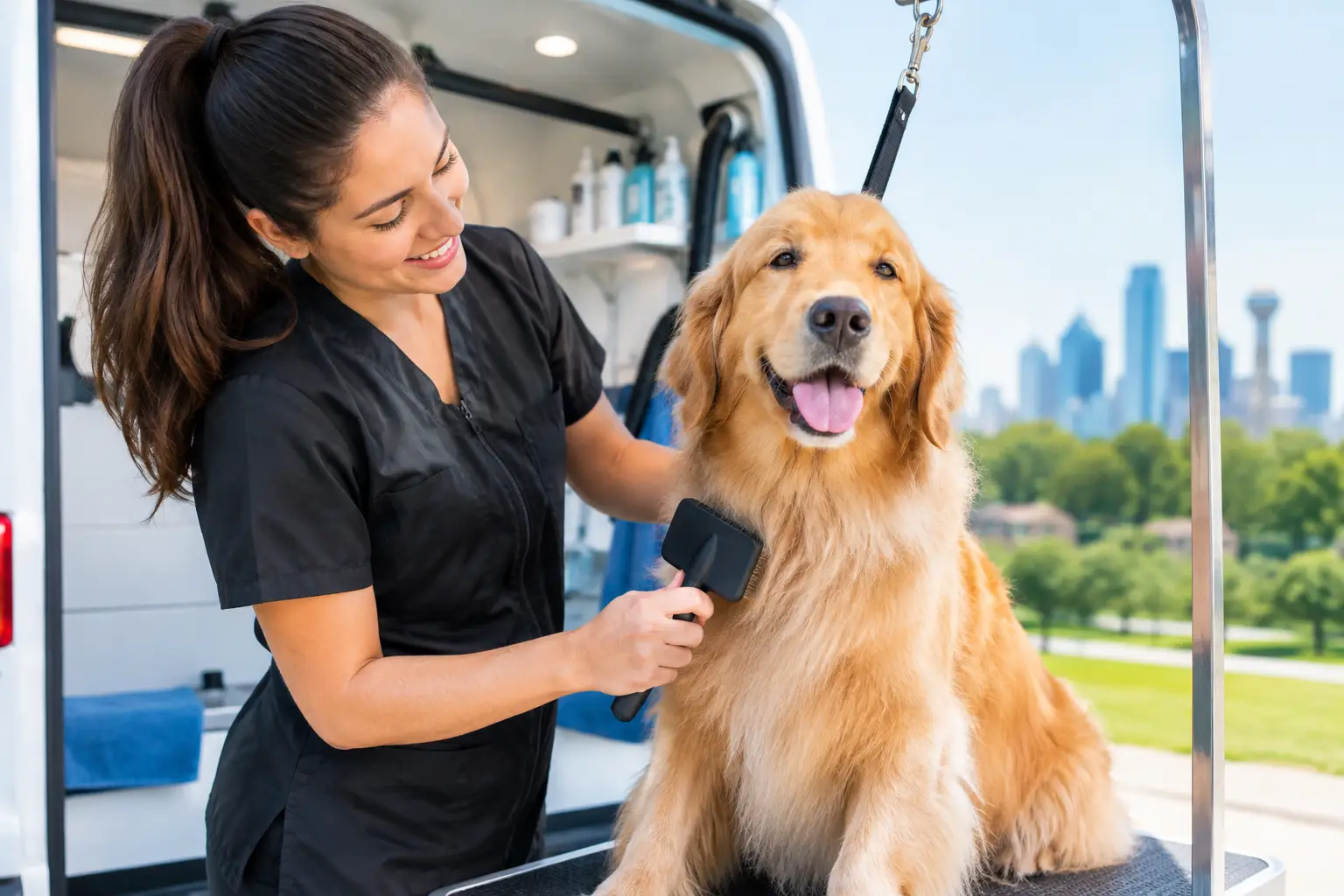
For anxious, elderly, or noise-sensitive cats, a quiet mobile setting can be especially valuable. V-GROOM provides one-on-one, cage-free grooming inside a fully equipped mobile van, with quiet equipment and no fumes or loud generators. That setting is designed to keep the experience calm while still delivering the thoughtful coat and hygiene care cats need.
Mobile care is not a one-size-fits-all solution. Some cats need veterinary-supervised grooming because of serious matting, medical conditions, or extreme handling sensitivity. Others may be comfortable at a traditional salon they already know and trust. The best choice is the one that balances your cat’s needs, your schedule, and the quality of care available.
How to Help Your Cat Have a Better Visit
The most successful grooming appointments begin before the groomer arrives. Keep the morning quiet, and avoid chasing your cat around the home right before the appointment. If possible, choose a time when your cat is usually more relaxed. Let the groomer know about past reactions to baths, dryers, nail trims, carriers, or brushing. Small details can help shape a gentler plan.
Be honest about mats. It can be tempting to avoid mentioning them, especially when they are hidden beneath the surface, but advance notice allows the groomer to reserve enough time and explain realistic options. A mat-free finish may require clipping rather than brushing, and the kindest choice is often the one that avoids prolonged pulling on sensitive skin.
Regular maintenance makes every future visit easier. A few brief brushing sessions at home each week can help your cat accept touch and prevent small tangles from becoming painful mats. Start with areas your cat enjoys, such as the cheeks or back, and keep the session short. Ending before your cat gets irritated builds more trust than trying to finish every task at once.
Your cat does not need to love grooming for grooming to be worthwhile. They need a patient routine, a professional who reads their signals, and care that puts comfort ahead of speed. When those pieces come together, a clean coat and healthy nails become part of a calmer life at home.
One Response