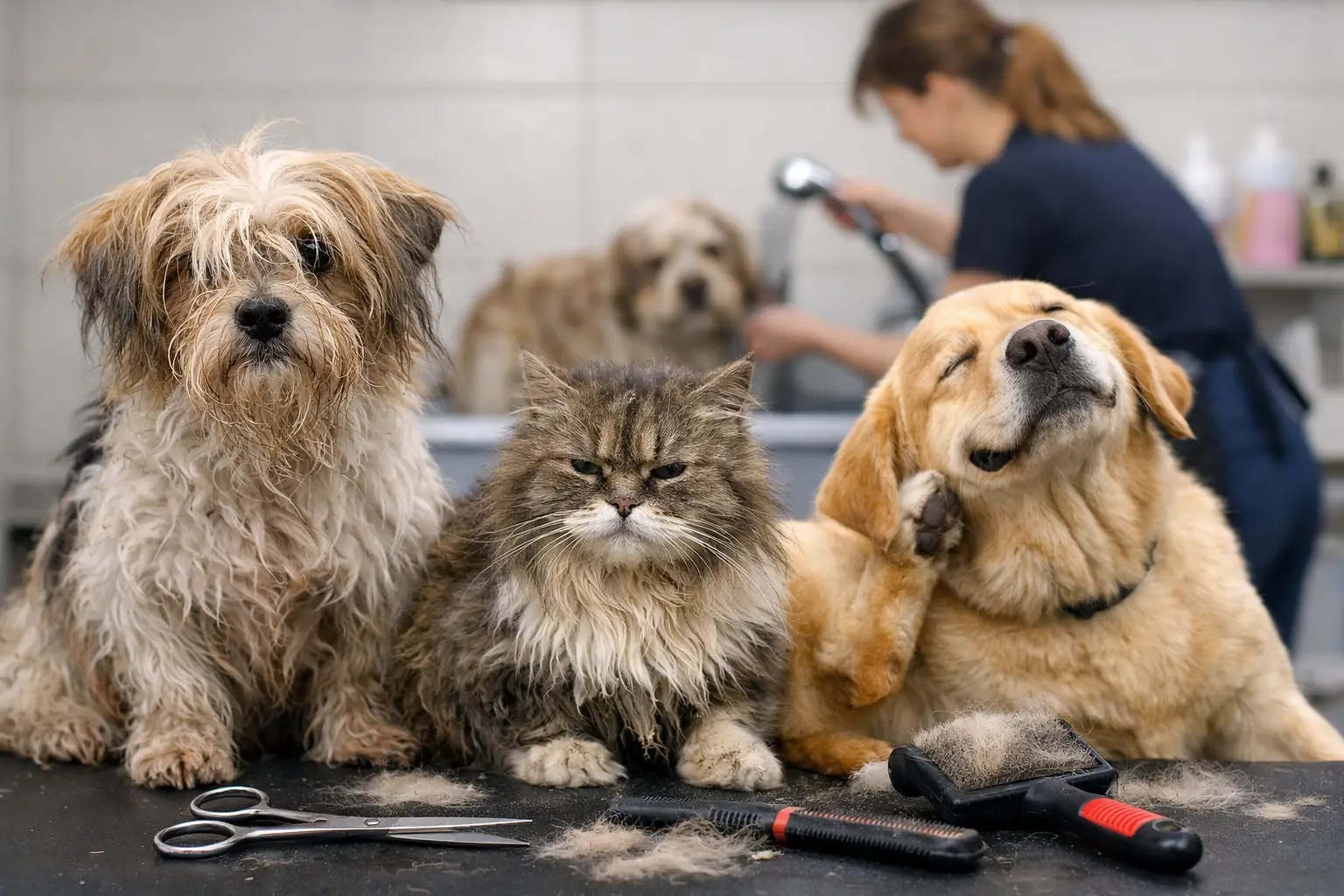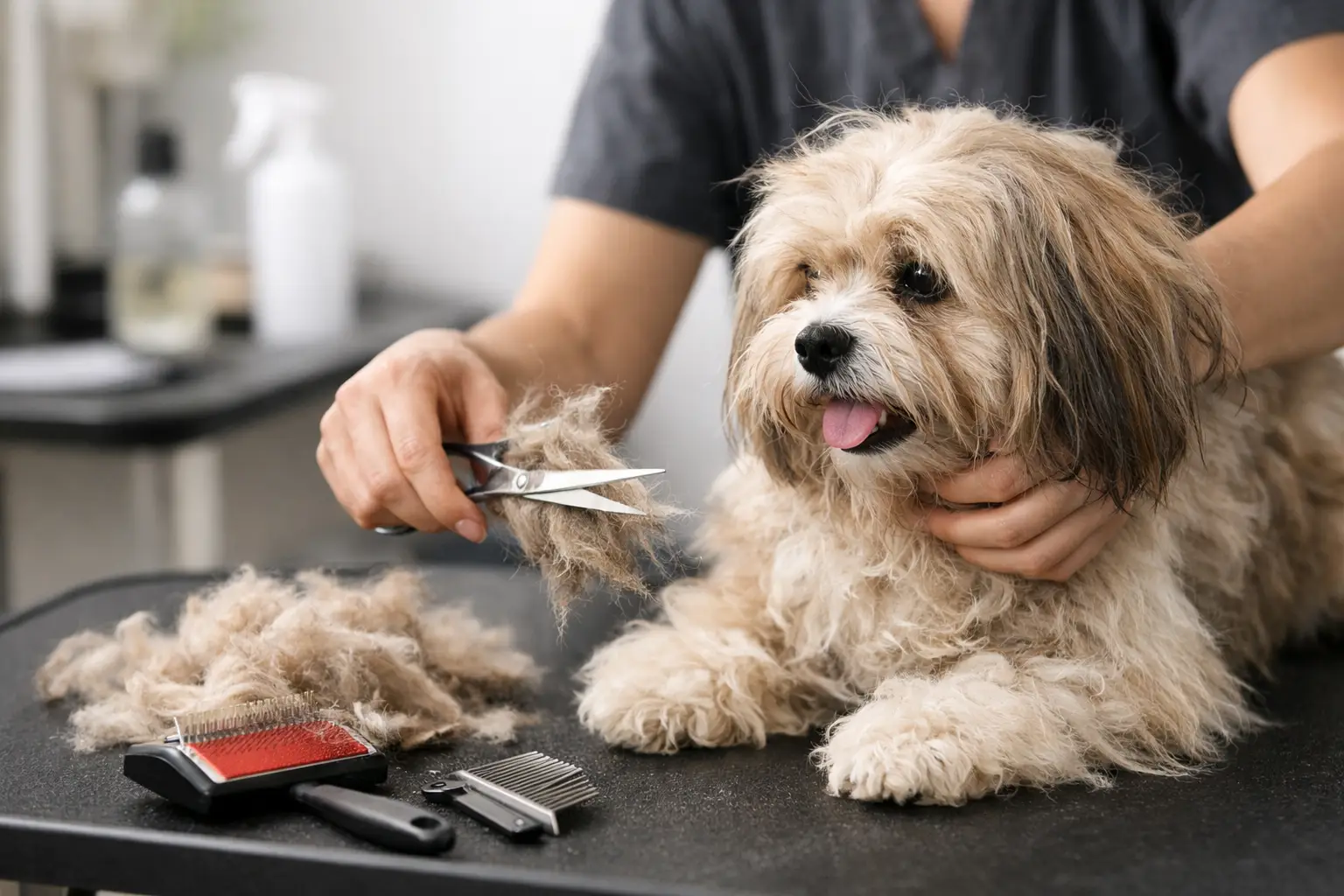
A dog who barks, snaps, freezes, or struggles during grooming is not giving you a hard time. They are having a hard time. The right grooming options for reactive dogs can protect your pet’s comfort while still keeping their skin, coat, nails, and ears in healthy condition.
Reactivity can show up for many reasons. Some dogs are frightened by dryers, clippers, unfamiliar hands, other animals, or being separated from their family. Others have pain, past negative experiences, age-related sensitivity, or simply a lower tolerance for handling. The goal is not to force a dog to “get used to it” in one appointment. It is to build a grooming routine that feels predictable, respectful, and safe.
Start With the Reason Behind the Reaction
Before choosing a grooming setting, consider what your dog is reacting to. A dog who lunges at other dogs in a salon may be perfectly comfortable with bathing and brushing at home. A dog who panics at the sound of a high-velocity dryer may tolerate nail trims when quiet tools and patient handling are used.
Watch for patterns. Does your dog become tense during the car ride, at the sight of grooming tools, when touched around the feet, or only after being left in an unfamiliar environment? These details help you choose a service and communicate your dog’s needs clearly before an appointment.
Sudden changes deserve extra attention. If a dog who once accepted grooming begins growling, yelping, or avoiding touch, schedule a veterinary checkup. Ear infections, dental pain, arthritis, skin irritation, and other physical issues can make routine care feel unbearable.
At-Home Grooming for Mild Reactivity
For dogs with mild sensitivity, short at-home sessions can be a valuable option. A few calm minutes of brushing after dinner, touching one paw and offering a treat, or briefly introducing a nail file can make grooming feel less overwhelming than a full session once a month.
Keep the goal small. You do not need to finish every task in one sitting. If your dog calmly allows a few brush strokes, stop there while the experience is still positive. Pushing through stress can teach your dog that grooming is something to fear.
At-home care works especially well for maintenance between professional visits. Regular brushing helps prevent painful mats, while gentle paw handling can make future nail care easier. However, home grooming is not always enough for thick coats, tight mats, sanitary trims, or dogs that need professional coat-specific care. It also is not the right choice if handling your dog puts you or your pet at risk.
Traditional Salon Grooming: When It May or May Not Fit
A traditional grooming salon can be a good match for some dogs, particularly those who are comfortable around people, sounds, and other pets. Many salons employ experienced professionals and offer a wide range of grooming services. But for a reactive dog, the environment can add several layers of pressure.
Busy salons often include barking dogs, unfamiliar scents, dryers, ringing phones, multiple groomers, and time spent in a kennel or waiting area. Even an excellent groomer may have limited ability to remove every trigger in a high-traffic setting. If your dog reacts mainly to other animals or noise, a standard salon may be more challenging than helpful.
If you choose this route, ask direct questions before booking. Find out whether your dog can be scheduled during a quiet period, handled by the same groomer each visit, and brought straight into the grooming area rather than waiting near other dogs. A salon that welcomes a detailed conversation about your pet’s triggers is a better sign than one that promises every dog will be easy.
Mobile Grooming Offers a Calmer Alternative
For many families, mobile grooming is one of the most supportive grooming options for reactive dogs. The appointment happens right outside your home, so your dog avoids the car ride to a salon, a crowded lobby, and exposure to unfamiliar pets. That reduction in stimulation can make a meaningful difference.
A one-on-one mobile appointment also allows the groomer to focus on one pet’s pace and body language rather than moving dogs through an assembly-line schedule. There are no cages, no waiting around for their turn, and no need for your dog to navigate a noisy room full of activity.
The mobile environment itself still needs to suit the individual dog. Some pets need a few visits to feel comfortable stepping into a new van, while others settle quickly once they realize their family is nearby and the space is quiet. A thoughtful groomer will not assume that doorstep service solves every concern. They will use calm introductions, breaks, gentle handling, and realistic expectations.
At V-GROOM, our cage-free, one-on-one approach is designed around that kind of care. Quiet equipment, no loud generator fumes, and individualized handling help create a more peaceful grooming experience for sensitive pets throughout the DFW area.
Ask for a Behavior-Informed Grooming Plan
A reactive dog benefits from a plan, not a label. “Reactive” tells a groomer that your dog may need extra support, but the details are what make an appointment safer. Share what your dog dislikes, what helps them relax, whether they have a bite history, and which handling methods have worked in the past.
Be honest about aggression. This is not something to hide out of embarrassment. Accurate information lets the groomer prepare the right setup, decide whether the service can be completed safely, and avoid putting your dog in a situation that exceeds their limits. A caring professional will appreciate the transparency.
A behavior-informed plan may include a shorter first visit, a bath-only appointment before a full haircut, quiet breaks, or working on one difficult area at a time. For some dogs, the best first session is simply entering the grooming space, receiving treats, and leaving. Progress is still progress when your dog learns that grooming does not always mean panic.
Consider Cooperative Care Training
Cooperative care teaches dogs that they have a role in grooming rather than feeling trapped by it. With patient practice, a dog can learn to place their chin on a towel for brushing, offer a paw for nail work, or stand on a mat for a brief body check. The dog is rewarded for participating, and the handler learns to pause when the dog signals discomfort.
This is not an overnight solution, especially for a dog with a long history of fear. It can, however, change the tone of grooming over time. A qualified positive-reinforcement trainer can help families work on specific challenges such as nail trims, ear handling, bathing, or muzzle conditioning.
Muzzle training deserves a clear distinction. A properly fitted basket muzzle can be an important safety tool for some dogs, but it should be introduced gradually and positively, never used as a shortcut for forcing a terrified dog through a service. A muzzle does not make a stressful situation acceptable. It simply helps prevent injury while professionals assess what is safe and humane.
When Sedation or Veterinary Grooming Is the Kindest Choice
Some dogs cannot be groomed safely in a typical grooming environment, even with a quiet setting and excellent handling. Severe fear, significant pain, advanced matting, or a high risk of biting may require veterinary involvement. In these cases, veterinarian-supervised grooming or prescribed sedation may be the most compassionate option.
Sedation is not a failure, and neither is choosing a very short haircut to remove painful matting. Comfort comes first. Once immediate needs are addressed, your veterinarian, trainer, and groomer can help create a maintenance routine that reduces the chance of another difficult appointment.
Choose Consistency Over Perfection
Reactive dogs usually do best when grooming becomes familiar. Keeping the same groomer, maintaining a reasonable schedule, and using a consistent arrival routine can reduce uncertainty. Waiting until a coat is badly tangled or nails are painfully long often turns a stressful task into a much harder one.
Look for a groomer who speaks calmly about your dog, asks thoughtful intake questions, and is willing to say when a service should be modified or postponed. Premium care is not about completing every item on a checklist at any cost. It is about protecting your dog’s well-being while providing the hygiene and coat care they need.
Your dog does not need to love every brush, bath, or nail trim to make progress. With the right setting, a patient professional, and a plan built around their individual triggers, grooming can become one more routine your pet learns to approach with greater confidence.