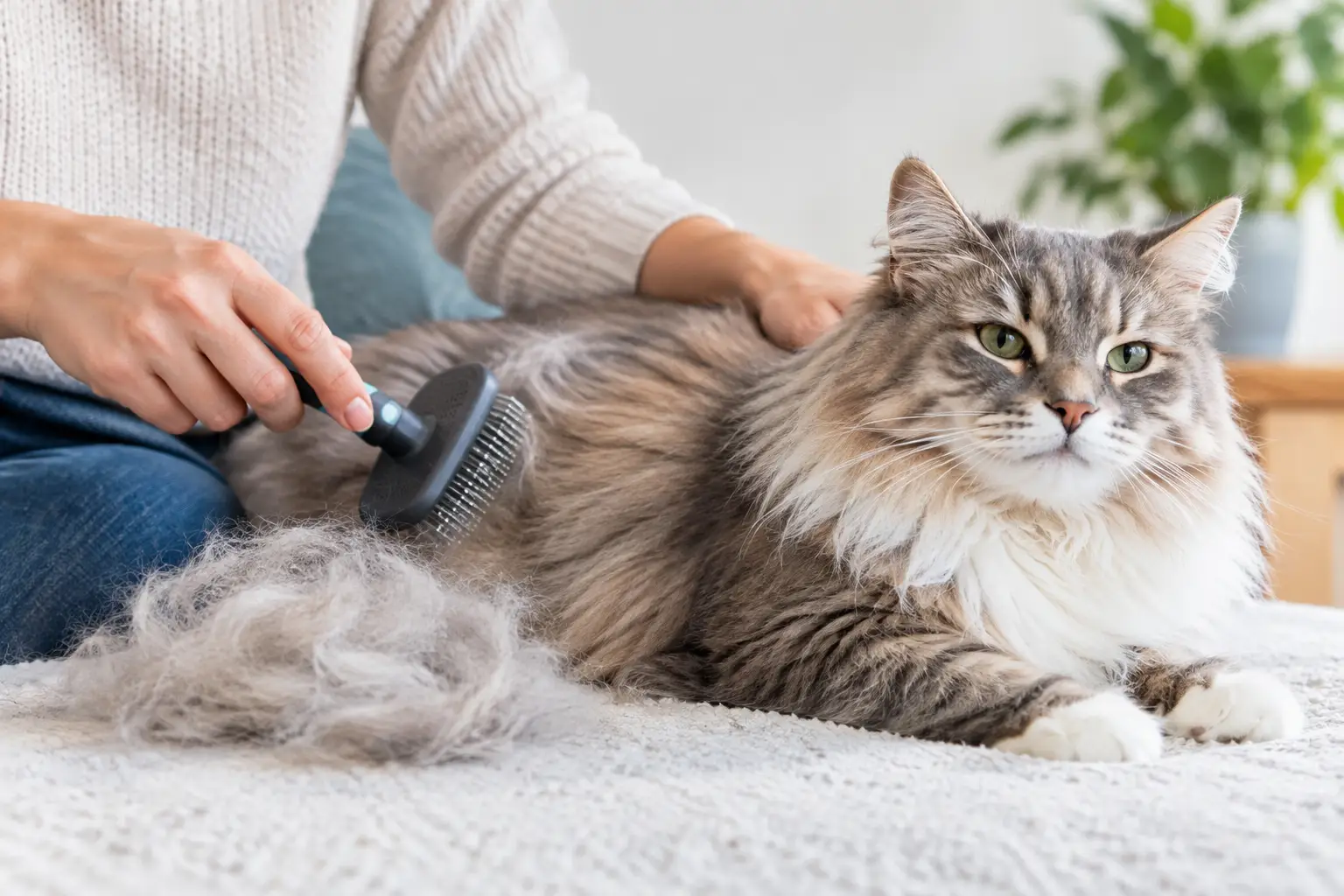
A fur-covered throw blanket is usually part of life with a cat. But when loose hair is collecting in corners, clinging to every outfit, or showing up in larger-than-usual clumps, it is time for a more thoughtful routine. This guide to cat shedding control helps you manage everyday fur while protecting the comfort and health of the cat behind it.
Shedding cannot, and should not, be eliminated entirely. Cats naturally replace older hairs throughout the year, often with a noticeable increase during seasonal coat changes. The goal is a cleaner home, fewer hairballs, and a coat that feels soft and cared for – without turning grooming into a stressful battle.
Why Cats Shed More at Certain Times
A cat’s coat is always cycling through growth, rest, and release. Daylight is one of the strongest influences, which is why many cats shed more heavily in spring and fall. Indoor cats may shed fairly consistently because artificial lighting and climate-controlled homes soften those seasonal signals.
Breed, coat length, age, diet, and general health matter, too. A sleek short-haired cat can leave behind as much visible fur as a long-haired cat, especially on dark furniture. Long-haired cats tend to hold loose hair in their coat, where it can tangle and form mats if it is not brushed out regularly.
Normal shedding looks like an even release of fur with healthy-looking skin underneath. Sudden thinning, bald patches, redness, scabs, greasy fur, or constant scratching are different. Those signs deserve a conversation with your veterinarian rather than a new brush alone.
A Guide to Cat Shedding Control Starts With Gentle Brushing
Regular brushing is the most effective way to capture loose hair before it reaches your sofa, bedding, and floors. It also gives you a chance to notice tangles, skin changes, parasites, or tender areas early. The right frequency depends on the cat and their coat, not a one-size-fits-all schedule.
Many short-haired cats do well with a gentle brushing once or twice a week. Dense double coats and medium-to-long coats often benefit from brushing several times weekly, or briefly each day during a seasonal shed. A senior cat or a cat with limited mobility may need extra help around the lower back, hips, chest, and belly, where self-grooming can become difficult.
Choose tools for the coat, not the mess
For short coats, a soft rubber grooming mitt, silicone brush, or gentle bristle brush can lift loose hair without pulling. For medium and long coats, a wide-tooth comb is useful for checking for tangles, followed by a soft slicker brush used with a light hand. A metal comb can help you confirm that a section is truly free of knots, especially behind the ears and under the front legs.
Deshedding tools can be helpful for some cats with thick undercoats, but they are easy to overuse. Aggressive or frequent use can break healthy guard hairs, irritate skin, and make a cat dread grooming. If you are unsure what tool suits your cat’s coat, a professional groomer can recommend a gentler approach.
Keep each session short and positive
A five-minute brush after dinner is often more successful than a long grooming session once a month. Start in areas most cats enjoy, such as the cheeks, neck, and upper back. Move slowly, follow the direction of hair growth, and pause before your cat becomes restless.
Offer calm praise, a favorite treat, or a quiet moment near a sunny window. If your cat flicks their tail hard, turns to bite the brush, flattens their ears, or tries to leave, respect the signal. Ending on a calm note builds trust and makes the next session easier.
Support a Healthy Coat From the Inside Out
A glossy, resilient coat begins with everyday health. Feed a complete, balanced cat food appropriate for your cat’s life stage, and make fresh water easy to access. Hydration supports overall skin health, particularly for cats that prefer dry food or do not drink much from a traditional bowl.
Supplements are not a shortcut for poor nutrition or untreated skin concerns. Omega-3 fatty acids may be useful in certain cases, but the best type and amount depends on your cat’s diet, medical history, and needs. Ask your veterinarian before adding oils, powders, or other supplements. Human products and “natural” remedies are not automatically safe for cats.
Stress can also show up in the coat. Overgrooming may look like shedding at first, but it can be a response to discomfort, allergies, pain, boredom, or anxiety. A predictable routine, clean litter box, playtime, resting spots, and a peaceful environment all support a cat’s well-being.
Bathing Can Help, but It Is Not Always Necessary
Most healthy cats do not need frequent baths. They are skilled self-groomers, and too much bathing can dry the skin or create unnecessary stress. Still, a professionally handled bath and thorough blow-dry can be valuable for cats with heavy undercoats, excess oil, dander, mobility challenges, or compacted loose fur.
The benefit is not just the shampoo. A proper bath can loosen dead undercoat, while careful drying and combing remove it before it spreads throughout your home. This is especially helpful during major seasonal sheds, when brushing alone may feel like it is never quite enough.
Never use human shampoo, dog shampoo, or essential oils on a cat unless your veterinarian specifically directs you to do so. Cats are highly sensitive to many ingredients and fragrances. If bathing at home causes fear or struggling, do not force it. A calm, cat-aware professional setting is the safer choice.
Prevent Mats Before They Become Painful
Mats are not simply cosmetic. Tight knots pull on the skin, trap moisture and debris, and can become painful quickly. They are common beneath collars, under the armpits, around the belly, and near the hindquarters, particularly in long-haired, senior, or overweight cats.
Check these areas gently during normal petting. If you find a small tangle, work at the outer edges with a comb and short, patient strokes. Hold the hair near the skin so you do not tug. If a mat is dense, close to the skin, or your cat reacts with pain, do not cut it out with household scissors. Cat skin is thin and easily injured. Professional grooming is the appropriate next step.
Make Your Home Work With Your Cat’s Shedding
Even a well-groomed cat will shed, so a few practical home habits make a real difference. Wash washable throws and pet bedding regularly, and keep a lint roller where you get dressed rather than searching for one at the last minute. Vacuuming upholstery and using a pet-hair attachment on rugs can control buildup before it becomes embedded.
A designated cozy blanket or cat bed near your cat’s preferred resting spot can also contain much of the daily fur. This is not about limiting your cat’s comfort. It is about giving them a soft, familiar place that is easier to refresh than an entire sectional sofa.
If hairballs are becoming frequent, increase brushing first and talk with your veterinarian. Occasional hairballs happen, but repeated vomiting, reduced appetite, constipation, or lethargy should never be dismissed as a simple shedding issue.
When Professional Cat Grooming Makes Sense
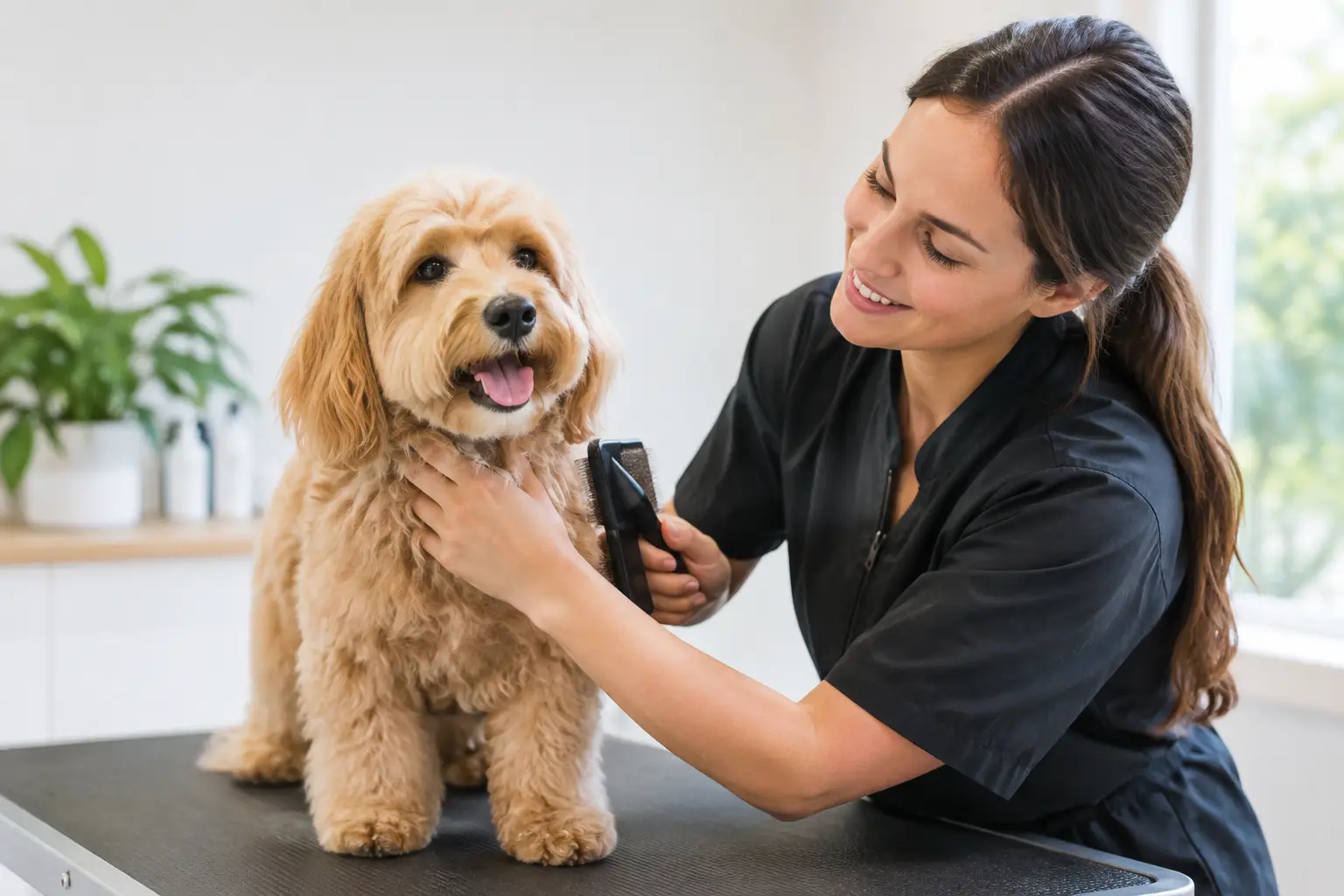
Professional grooming can be a meaningful part of shedding control for cats that resist home brushing, have thick coats, struggle with mats, or need help staying clean as they age. The right environment matters as much as the service. Cats are sensitive to unfamiliar sounds, scents, and handling, so a quiet, one-on-one appointment can make grooming feel far less overwhelming.
For DFW pet parents, V-GROOM brings individualized grooming care directly to the doorstep, avoiding crowded waiting areas, cages, loud salon activity, and the stress of travel. A calm bath, careful brush-out, coat assessment, and gentle handling can give both you and your cat a welcome reset during high-shedding seasons.
Your cat does not need a perfectly fur-free home to be well cared for. They need consistent, kind attention that keeps loose hair manageable, skin comfortable, and grooming time safe. A few gentle minutes at a time can turn shedding control into one more way your cat feels at home with you.