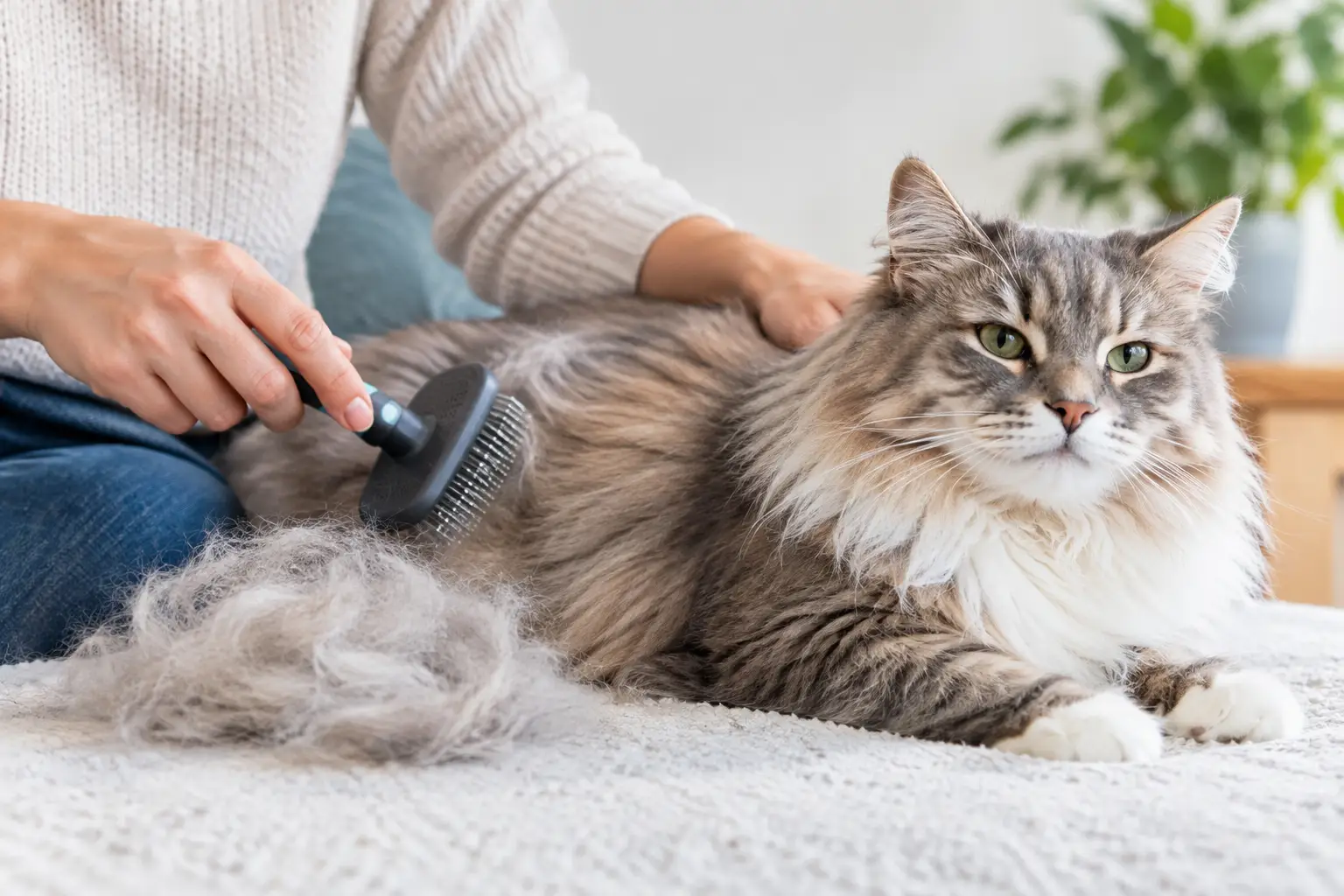
A cat who leaves a soft layer of fur on the sofa, your clothes, and every sunny patch of floor is not necessarily poorly groomed. Shedding is normal, especially during seasonal coat changes. But knowing how to brush a shedding cat can make a real difference for your home, your cat’s comfort, and the amount of loose hair they swallow while self-grooming.
The goal is not to pull out as much fur as possible. A good brushing routine removes hair that is already loose, supports a clean, healthy coat, and gives your cat a calm moment of individual attention. For sensitive cats, the right pace matters just as much as the right brush.
Why Regular Brushing Helps a Shedding Cat
Cats are excellent self-groomers, but their tongues cannot remove every loose hair without swallowing some of it. When shedding picks up, that extra fur can contribute to more frequent hairballs and can leave the coat looking dull or uneven. Regular brushing reduces the amount of loose hair your cat carries around and may help you spot skin changes, tangles, flakes, or small bumps early.
For long-haired cats, brushing is also a comfort issue. Loose undercoat can tangle near the armpits, behind the ears, under the collar area, and around the hind legs. Those small tangles can tighten into mats, which pull on the skin and make even gentle touch unpleasant.
Short-haired cats benefit too. Their coats may not mat as easily, but they still shed a surprising amount. A brief, consistent brushing session can keep loose fur from spreading through the house while helping their coat lie smoother and feel cleaner.
Choose a Brush That Fits the Coat
The best tool depends on your cat’s coat length, density, and tolerance for handling. One brush does not suit every cat, and a tool that feels great on one coat can feel scratchy or too aggressive on another.
For most short-haired cats, a soft rubber brush or grooming mitt is an easy place to start. These tools lift loose surface hair while feeling more like petting. A soft bristle brush can also work well for cats who enjoy light contact but dislike stronger brushing.
For medium- and long-haired cats, a metal comb with rounded tips is especially useful. It can reach closer to the skin to check for hidden tangles without tearing through the coat. A gentle slicker brush may help lift loose undercoat, but it should be used with a very light hand. If your cat flinches, turns to bite the brush, or walks away, the pressure or tool may be too much.
Deshedding tools can be effective in moderation, particularly during heavy seasonal shedding. They should not be used every day or pressed into the coat. Overuse can remove healthy hair, irritate the skin, and leave the coat looking thin. When in doubt, choose the gentler tool and brush a little more often.
How to Brush a Shedding Cat Gently
Start when your cat is already relaxed. After a meal, during a favorite nap spot, or while they are sitting beside you can be better than trying to begin during an energetic moment. Keep the first sessions short. One or two calm minutes can build a better long-term habit than a 15-minute session your cat learns to avoid.
Let your cat see and sniff the brush first. Then begin with a few soft strokes in the direction the fur grows, usually from the neck toward the tail. Focus on easy areas such as the shoulders, back, and sides before moving to more sensitive spots.
Use one hand to steady the skin gently while the other brushes. This is particularly helpful for long coats because it prevents the brush from tugging. Avoid repeated strokes over the same small area, which can cause irritation even with a soft tool.
Pay attention to your cat’s signals. A relaxed body, slow blinking, purring, or leaning into the brush usually means the experience feels good. A twitching tail, flattened ears, tense posture, skin rippling, or quick turns toward your hand are signs to pause. Respecting those signals is how you make brushing feel safe rather than forced.
End before your cat becomes frustrated. Offer a small treat, quiet praise, or a favorite activity afterward. Over time, this helps your cat connect grooming with comfort and positive attention.
Start With the Easy Areas
Many cats accept brushing along the back and cheeks but dislike it around the belly, legs, tail, and rear. There is no need to tackle every inch of coat in one session. Brush the areas your cat accepts, then gradually add a few gentle strokes in a more sensitive area on another day.
For cats with a thick ruff or feathering around the legs, use a comb in small sections. Hold the hair near the skin and comb outward from the ends first. This prevents pulling and makes it easier to find small tangles before they become larger mats.
How Often Should You Brush?
Frequency depends on coat type and the season. Most short-haired cats do well with brushing once or twice a week, though daily use of a soft grooming mitt can be welcome during periods of heavier shedding. Long-haired cats often need brushing three to five times a week, and some need a brief daily comb-through to stay free of tangles.
Spring and fall are often peak shedding seasons, but indoor cats may shed lightly throughout the year because of indoor lighting and climate control. If you notice more fur on furniture or more hairballs than usual, add a few short sessions rather than one long grooming appointment.
A clean home can help, too. Washing bedding, vacuuming favorite lounging areas, and using washable throws on furniture will manage the fur you cannot catch with a brush. Still, remember that shedding cannot be eliminated completely. A healthy cat will shed.
What Not to Do When Brushing
Never cut a mat out with household scissors. Cat skin is thin and can pull up into a mat, making accidental injury far too easy. Do not bathe a cat simply to stop shedding, either. Unless a bath is specifically appropriate for your cat, it can create unnecessary stress and may dry the skin if done too often.
Avoid yanking through knots or holding your cat down to finish a session. If a tangle will not release with gentle work from the ends, stop and arrange professional help. Severe mats often need careful clipping by an experienced groomer, not more brushing at home.
Human hairbrushes and strongly scented products are also poor choices. Cats groom themselves after brushing, so anything placed on the coat should be specifically made for feline use and only used when needed.
When Heavy Shedding Needs More Attention
Normal shedding should leave your cat’s skin looking healthy. Contact your veterinarian if you see bald patches, redness, scabs, persistent dandruff, a sudden major change in shedding, or repeated scratching and overgrooming. Those signs can point to allergies, parasites, skin conditions, stress, or other health concerns that a brush alone cannot solve.
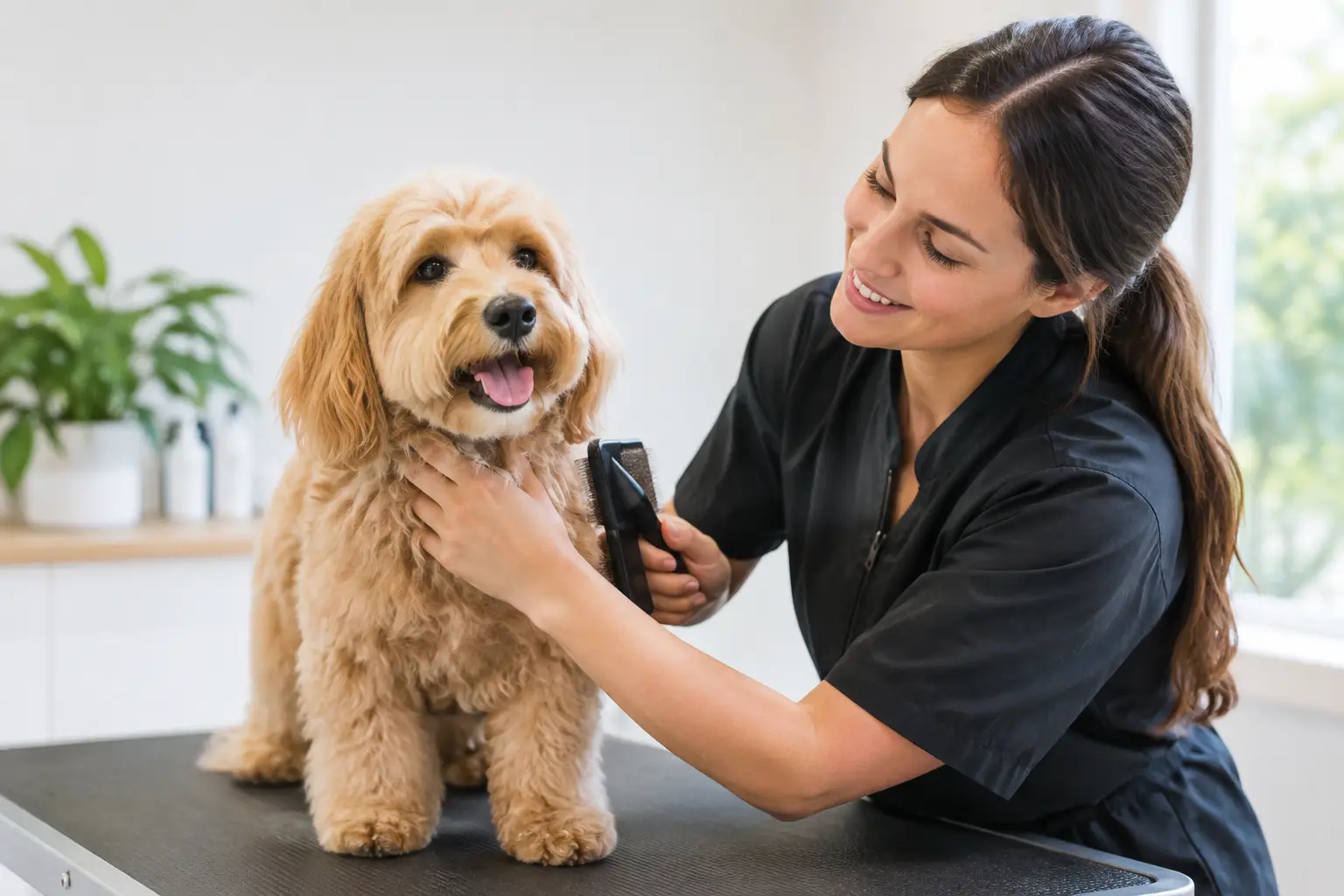
Professional grooming can also be a thoughtful option for cats with dense coats, persistent tangles, limited mobility, or strong discomfort with at-home brushing. A calm, one-on-one appointment can provide a thorough bath-and-brush service without the noise, cages, and rushed environment that many cats find overwhelming. For DFW pet parents, V-GROOM brings that individualized care directly to the doorstep.
A shedding cat does not need perfection. They need a gentle routine, the right tool for their coat, and someone willing to stop when they have had enough. A few peaceful strokes at a time can keep their coat more comfortable and turn grooming into one more quiet way to show them they are cared for.