That light clicking across the kitchen floor is often the first clue. If you are asking, “When do dogs need nail trims?” your dog’s daily movement offers the most useful answer. Nails that touch the ground while your dog is standing, snag on blankets, or make a steady tap on hard floors are usually ready for attention.
A nail trim is not simply a cosmetic finishing touch. Proper nail length supports comfortable walking, steadier posture, and healthier paws. For dogs who dislike noisy salons, being handled around their feet, or being away from home, the way a nail trim is performed matters just as much as the timing.
When Do Dogs Need Nail Trims?
Most dogs need a nail trim every three to six weeks. That is a helpful starting point, not a rigid rule. A dog who walks daily on sidewalks may naturally wear down some nails, while a dog who spends most of the day on grass, carpet, or soft ground may need more frequent trims.
Age, breed, activity level, paw shape, and nail growth all affect the schedule. Small dogs often need trims more often because their lighter body weight creates less friction on pavement. Senior dogs may also need closer monitoring as they become less active. Puppies benefit from short, gentle nail appointments early on, even when little is removed, because positive handling helps build lifelong comfort with paw care.
Rather than waiting for a calendar reminder, check your dog’s nails every week or two. A quick look after a bath, cuddle, or walk can prevent overgrowth before it becomes uncomfortable.
Signs Your Dog’s Nails Are Too Long
The clearest sign is contact with the floor. When your dog is standing on a level surface, their nails should generally sit just above the ground rather than pressing into it. You may hear clicking as they walk across tile or hardwood, but sound alone is not the only measure. Some dogs have naturally firm, thick nails that make a little noise even at a healthy length.
Watch for changes in movement, too. A dog with overgrown nails may shift weight back onto their heels, spread their toes wider than usual, hesitate on slick floors, or seem less eager to walk. Long nails can change the angle of the foot and place extra strain on the toes, joints, and tendons over time.
Other common clues include nails catching on rugs, scratches that seem sharper than usual, and visible curling. Curled nails need prompt professional attention, especially if they are growing toward the paw pad. Do not wait for a nail to curl into the skin. This can be painful and may lead to infection.
Do Not Forget the Dewclaws
Dewclaws are the higher nails found on the inside of many dogs’ front legs, and sometimes on the back legs. Because they often do not touch the ground, they do not wear down naturally. They can grow in a tight curve surprisingly fast, even when a dog’s other nails look fine.
Checking dewclaws is one of the simplest ways to avoid a painful snag or ingrown nail. If you are unsure whether your dog has them, a groomer can point them out during a routine appointment.
Why Regular Trims Matter for Comfort
Dogs rarely announce that their nails are too long. They adapt. That is why pet parents may not notice an issue until a nail catches, breaks, or affects the way their dog walks.
Long nails can make ordinary activities less comfortable, from getting up after a nap to walking down stairs. For an older dog with arthritis or reduced mobility, that additional pressure can be particularly frustrating. Keeping nails at an appropriate length is a small part of a thoughtful wellness routine that can make a real difference in everyday comfort.
Regular trims also help the quick, the sensitive blood vessel and nerve inside the nail, recede gradually. When nails are allowed to grow too long, the quick often grows longer with them. That makes it harder to achieve a healthy short length in one session. Gentle, frequent maintenance is safer and more comfortable than waiting until the nails become overgrown.
How Often Should Different Dogs Have Their Nails Checked?
Every dog deserves an individual schedule, but a few patterns can help. Dogs who rarely walk on hard surfaces should usually have their nails checked every two to three weeks. Many family dogs do well with a trim about once a month. Active dogs that regularly walk on pavement may need less trimming on their front nails, but their dewclaws and back nails can still grow long.
Dogs with fast-growing nails, narrow feet, or naturally curved nails often need more frequent care. Breeds with fluffy feet can be harder to assess at home because hair hides the nail length. A professional grooming visit is a good opportunity to check the full paw, including the nails between the toes and any fur that is holding moisture or debris.
A practical rule is simple: if you notice floor contact, clicking that has become more pronounced, or a change in your dog’s gait, schedule a trim rather than waiting for the next full groom.
Can You Trim Your Dog’s Nails at Home?
Many pet parents can maintain their dog’s nails at home, particularly if their dog is relaxed with foot handling. The trade-off is that nail trimming takes patience, good visibility, and a calm dog. Trying to rush a frightened or wiggly pet can turn a routine task into a stressful experience for everyone.
Light-colored nails are easier to trim because the quick is often visible as a pink center. Dark nails require smaller, more cautious cuts because the quick cannot be seen as clearly. In either case, take tiny amounts at a time. A fresh treat, a quiet room, and brief sessions can help dogs learn that paw care is safe.
If you accidentally cut the quick, stay calm. It can bleed, but a small nick is usually manageable with styptic powder or another pet-safe clotting product. Still, repeated quicking can make a dog fearful of future trims. For nervous dogs, very dark nails, severely overgrown nails, or pets that pull away, professional care is often the kinder choice.
A Calm Nail Trim Can Change the Experience
Dogs remember how grooming makes them feel. A busy environment, unfamiliar barking, and rushed handling can make an already sensitive dog more uneasy. A quiet, one-on-one appointment gives the groomer time to read your dog’s body language, work at a comfortable pace, and use positive reassurance throughout the service.
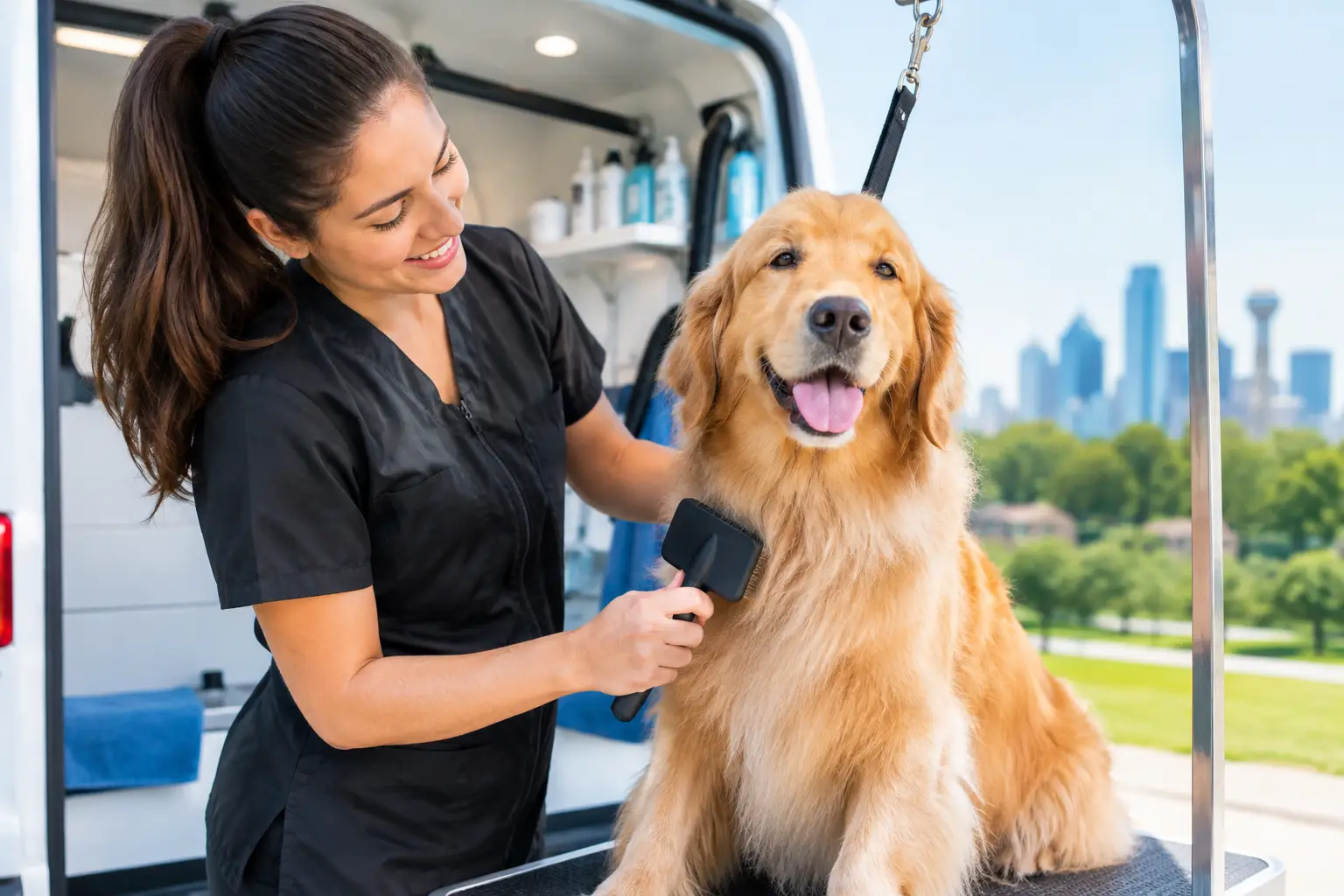
For pets who are anxious, elderly, or simply more comfortable close to home, mobile grooming can remove many of the stressful parts of a traditional salon visit. At V-GROOM, nail care is handled with the same calm, personalized attention as a full grooming service, inside a cage-free mobile spa designed around comfort.
Nail trims are also easier when they are paired with regular coat and paw care. Clean, well-maintained feet make it simpler to spot dry pads, irritation, broken nails, or debris before those small concerns become bigger ones.
When to Call a Groomer or Veterinarian
A groomer is well suited for routine maintenance, cautious work on dark nails, and helping dogs become more comfortable with regular trims. However, some nail concerns need veterinary attention. Call your veterinarian if you see swelling, redness, limping, discharge, a torn nail, persistent bleeding, or a nail embedded in the paw pad.
A sudden change in nail growth can also be worth mentioning at your dog’s next veterinary visit. While many variations are harmless, unusual brittleness, splitting, or rapid changes may have an underlying cause that deserves a closer look.
The best nail-trim schedule is the one that keeps your dog walking freely and feeling secure. A few calm minutes of care every few weeks can spare them the discomfort of overgrown nails and make each step around home feel a little easier.