A cat who suddenly leaves tufts of fur on every sofa, develops tiny knots beneath the collar, or stops reaching her back half is not being difficult. She may be telling you that her usual self-grooming routine is no longer enough. Knowing when should cats get professionally groomed helps you protect their comfort before a minor coat issue becomes painful.
Cats are famously clean, and many short-haired cats need little more than regular brushing at home and routine nail care. But self-grooming does not remove every loose undercoat hair, prevent mats, or solve mobility and skin concerns. Professional grooming can be a thoughtful part of feline care, especially when it is quiet, patient, and tailored to your cat’s temperament.
Cats Do Not All Need the Same Grooming Schedule
The right schedule depends on coat type, age, health, lifestyle, and your cat’s tolerance for brushing. A young, healthy short-haired cat who grooms thoroughly may only benefit from a professional bath, brush, nail trim, and ear check a few times a year. A long-haired cat, a heavy shedder, or a cat with limited mobility may need more frequent support.
For many long-haired breeds and mixes, an appointment every 4 to 8 weeks helps keep the coat manageable. Persian, Maine Coon, Ragdoll, Himalayan, and similarly coated cats can develop hidden tangles quickly, particularly under the legs, around the chest, beneath the collar, and near the tail. Regular appointments are usually gentler than waiting until the coat is tightly matted and requires extensive shaving.
Short-haired cats often do well with professional grooming every 8 to 12 weeks during shedding seasons, or as needed for nails, dander, and coat maintenance. The goal is not to over-bathe a cat with no grooming concerns. It is to provide the right level of care for a clean, comfortable coat and healthy skin.
Signs Your Cat Should Be Professionally Groomed
You do not have to guess whether your cat needs help. Their coat, behavior, and everyday habits often provide clear clues.
Mats, tangles, or a greasy-looking coat
Mats are more than a cosmetic issue. As they tighten, they can pull on delicate skin, trap moisture and debris, and make normal movement uncomfortable. A mat may feel like a small lump under the fur, so run your fingers gently along the belly, armpits, chest, hindquarters, and base of the tail.
Do not cut mats out with household scissors. Cat skin is thin and can easily be injured, especially when a mat pulls skin into the tangle. A professional groomer has the tools and handling techniques to assess whether a mat can be brushed out safely or needs to be clipped away.
A dull, oily, flaky, or soiled coat can also signal that your cat needs a grooming visit. Sometimes the answer is simply a thorough bath and de-shed. Other times, changes in coat condition deserve a conversation with your veterinarian, particularly if they appear suddenly.
Excessive shedding and hairballs
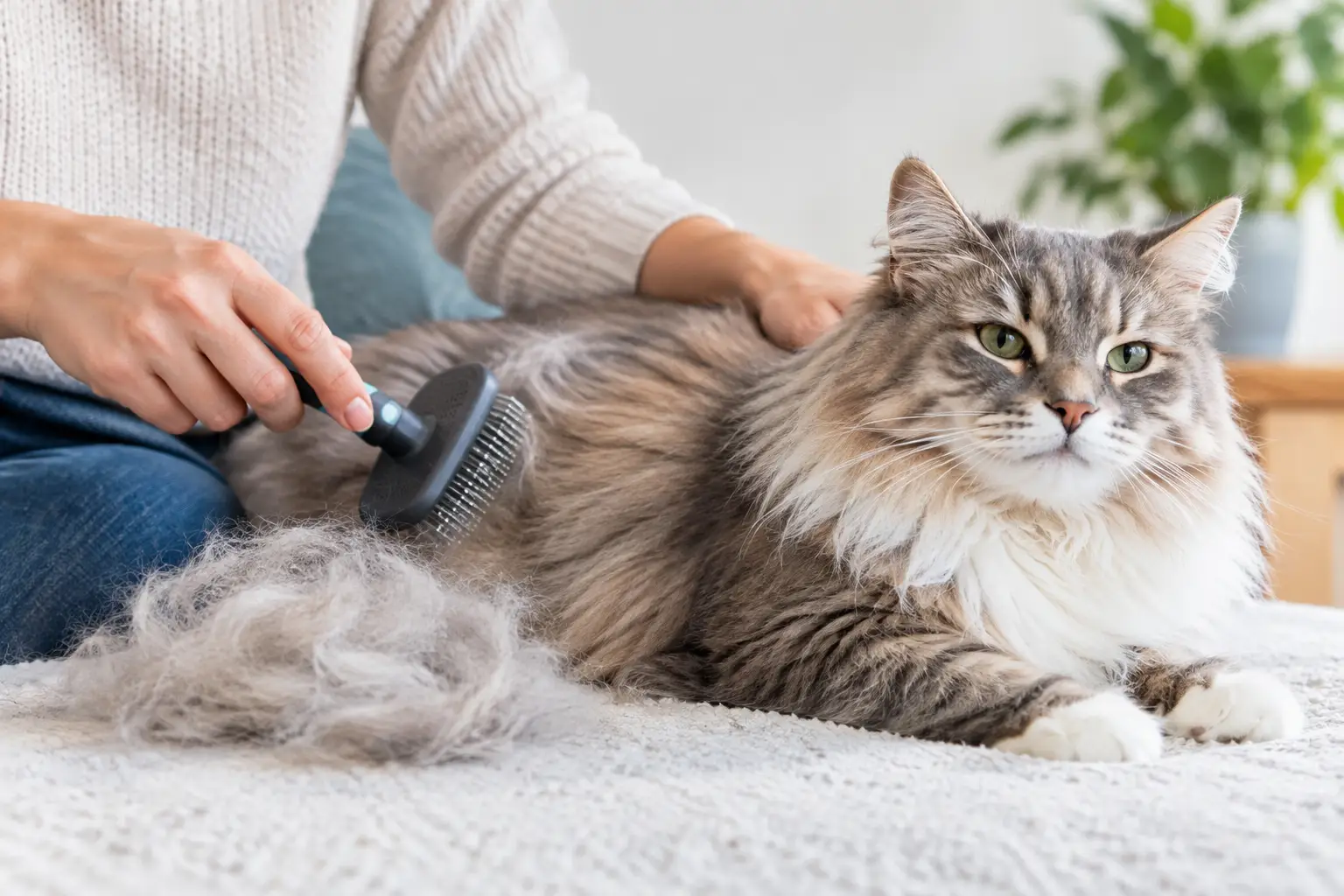
Seasonal shedding can turn even a tidy home into a fur-covered one. More importantly, loose hair swallowed during self-grooming can contribute to hairballs. Professional de-shedding and careful brushing remove a significant amount of loose undercoat before your cat ingests it.
Hairballs can happen occasionally, but frequent vomiting, repeated retching, appetite changes, constipation, or lethargy should not be treated as a grooming problem alone. Contact your veterinarian promptly, since those symptoms can point to concerns beyond normal shedding.
Nails that snag, curl, or click on the floor
Indoor cats still need regular nail maintenance. If you hear nails clicking across hard flooring, notice snagging on blankets, or see a claw curving toward the paw pad, schedule a trim. Overgrown nails can be painful and, in severe cases, grow into the pad.
Cats who resist nail trims at home are not bad cats. They may be sensitive about their paws, worried by restraint, or simply unused to the process. A calm, one-on-one appointment can make routine care feel far less overwhelming.
Trouble grooming because of age, weight, or health
Senior cats often become less flexible. A cat with arthritis may struggle to reach her lower back, hips, or belly, even if she still tries to groom. Cats carrying extra weight can have the same challenge. You may see clumps of fur, staining around the rear, or a coat that looks separated and unkempt over the back half of the body.
Professional grooming can offer real relief for these cats through gentle brushing, sanitary care, nail trims, and coat maintenance designed around their physical comfort. If your cat seems sore, has difficulty jumping, or reacts strongly when touched, seek veterinary guidance as well. Grooming should support medical care, never replace it.
Messes your cat cannot comfortably clean herself
Litter, stool, urine, food, or sticky debris caught in the coat can cause irritation and distress. This is especially common in long-haired cats and cats with digestive issues or reduced mobility. A sanitary trim or targeted clean-up can keep the area more comfortable and make at-home maintenance easier between visits.
When Should Cats Get Professionally Groomed for the First Time?
The best time is before there is a crisis. Introducing a kitten or young adult cat to gentle handling, brushing, paw touch, and quiet grooming sessions can build familiarity over time. The first appointment does not need to be an elaborate makeover. A simple bath and brush, nail trim, or light tidy-up can be enough to create a positive foundation.
For an adult cat who has never been groomed, start with realistic expectations. Some cats need a shorter introductory appointment before they can tolerate a full service. Others are comfortable immediately when the environment is calm and the groomer works at their pace. Rushing a fearful cat through an unfamiliar experience can make future care harder, so a patient approach is worth choosing.
Why the Grooming Environment Matters for Cats
Cats are highly aware of unfamiliar sounds, scents, and movement. A traditional salon can be difficult for a cat who is sensitive to barking dogs, crowded waiting areas, cages, or long periods away from home. Even a cat who seems confident at home may become stressed in a busy setting.
A mobile, one-on-one service gives many cats a more comfortable alternative. There is no car ride to a salon, no crowded lobby, and no waiting in a cage beside other animals. With V-GROOM, grooming is performed in a fully equipped mobile spa with individualized handling and a calm, cage-free experience. For anxious, elderly, or noise-sensitive cats in the DFW area, those details can make routine care more manageable.
That said, every cat is an individual. Some cats may be safer receiving grooming under veterinary supervision, particularly if they have severe matting, significant pain, respiratory concerns, or a history of extreme stress during handling. A responsible groomer will recognize those limits and put your cat’s well-being first.
How to Keep Your Cat Comfortable Between Appointments
Professional care works best alongside simple maintenance at home. Brief, consistent brushing is usually easier for cats than an occasional long session. Let your cat sniff the brush, begin with areas she enjoys being touched, and stop before she becomes frustrated. Treats, praise, and a familiar blanket can help turn grooming into a calmer routine.
Check the coat weekly for tangles, especially during seasonal shedding. Look at the nails every few weeks, and keep an eye on the ears, rear area, and overall coat texture. These small check-ins help you schedule care at the first sign of trouble rather than after your cat is uncomfortable.
Your cat does not need to look show-ready to deserve professional grooming. She deserves to move freely, rest comfortably, and feel clean in her own coat. A well-timed, low-stress grooming visit is a small act of care that can make a meaningful difference in how she feels at home.