A dog who freezes at the sight of a brush, backs away from the bathtub, or trembles when the clippers start is not being difficult. They are telling you that grooming feels unsafe. Learning how to groom a fearful dog starts with listening to that message rather than trying to work through it quickly.
A clean, comfortable coat matters, but emotional comfort matters too. For an anxious dog, one rushed or overwhelming appointment can make the next grooming session harder. The goal is not to finish every step at any cost. It is to create calm, predictable experiences that gradually teach your dog that grooming can be safe.
Why Some Dogs Fear Grooming
Fear can come from many places. A puppy may not have been gently introduced to brushes, dryers, nail tools, or being handled around sensitive areas. An adult dog may have had a painful mat removed, slipped in a tub, or been overwhelmed by noise and activity in a busy salon.
Physical discomfort can also look like fear. Dogs with arthritis may resist standing for long periods. Ear infections, dental pain, skin irritation, and tender paws can make ordinary handling unbearable. Senior dogs may be more sensitive to unfamiliar sounds, slick surfaces, or changes in routine.
That is why a fearful response deserves patience, not correction. Growling, pulling away, lip licking, yawning, trembling, rigid posture, tucked tails, and showing the whites of the eyes are all signs that your dog needs more space or a slower pace.
How to Groom a Fearful Dog: Begin Before Bath Time
The most successful grooming sessions often begin on days when no grooming is planned. Instead of bringing out every tool and expecting your dog to tolerate a full service, introduce one small part of the process at a time.
Leave the brush near your dog’s favorite resting place. Let them sniff it, then offer a small treat. Touch the brush to their shoulder for one second and reward again. If they remain relaxed, try one gentle stroke. Stop while the experience is still positive.
The same approach works for towels, nail clippers, a grooming table, and the sound of a dryer. A dog does not need to love every tool immediately. They only need repeated evidence that the tool predicts calm handling, a reward, and an opportunity to step away.
Keep these practice sessions short – often one to three minutes is enough. Several easy sessions across the week will do far more than one long session that leaves your dog exhausted or frightened.
Set up a quieter, safer space
Choose a familiar area with good footing and minimal interruption. A non-slip mat can make a major difference for dogs who feel unsteady in a tub or on tile. Keep the room comfortably warm, have towels ready, and avoid adding pressure by chasing your dog from room to room.
If your dog is especially noise-sensitive, skip loud home dryers. Towel drying may be enough for a short-coated dog, while a longer-coated dog may benefit from professional drying in a controlled setting. A coat that stays damp for too long can become uncomfortable and may mat more easily, so this is a situation where the right equipment and gentle handling matter.
Work in the order your dog can tolerate
There is no rule that says grooming must happen in the same sequence every time. For one dog, brushing before a bath feels easiest. Another may tolerate a quick face wipe but become worried when paws are handled. Start with the least stressful task and build from there.
If your dog calmly accepts a few brush strokes, let that be a win. If they allow one paw to be touched but not a nail trim, stop there. Small successes build trust. Pushing past their limit teaches them that their signals will be ignored.
Make Brushing Comfortable, Not a Battle
Brushing is often where anxiety and discomfort meet. Mats pull at the skin, especially behind the ears, under the collar, around the legs, and near the tail. Trying to brush through a tight mat can hurt, even when done with the best intentions.
Use a brush suited to your dog’s coat type and work in short, gentle sections. Hold the hair close to the skin as you brush the ends first, which reduces pulling. Take breaks often. A lick mat, tiny high-value treats, or quiet praise can help your dog form a better association with the process.
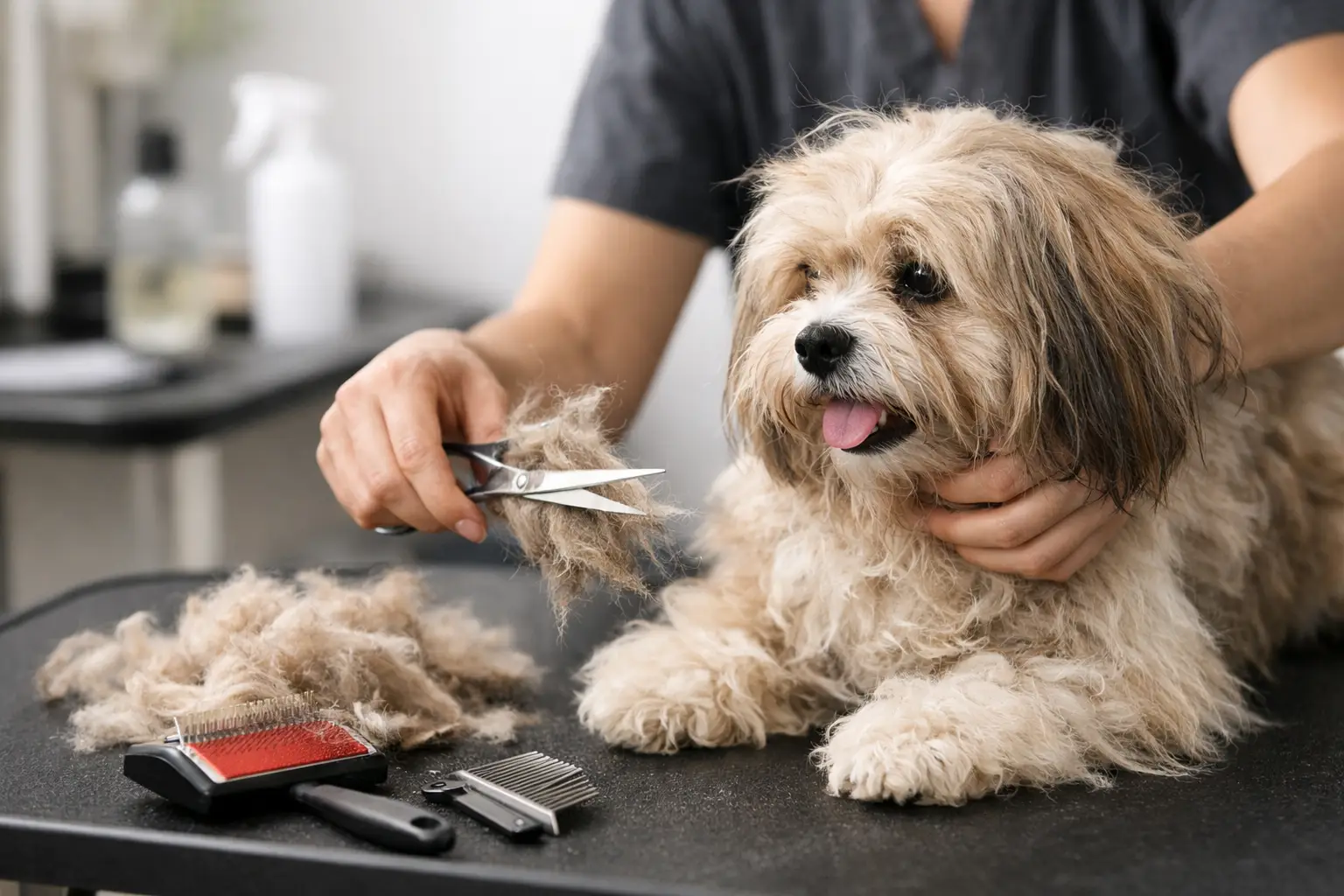
Do not attempt to cut mats out with household scissors. Skin can be pulled up into a mat and injured in an instant. Severe matting is best handled by a trained groomer who can assess the coat, use the right tools, and choose the kindest option. Sometimes a short clip is the most comfortable choice, even if it is not the look you had hoped for.
Be Especially Gentle With Bathing and Drying
Many fearful dogs dislike the loss of footing and the sound of rushing water more than the bath itself. Before using water, help your dog become comfortable standing on the bath mat. Reward calm behavior. Then introduce a small amount of lukewarm water at the feet or shoulders, never a sudden spray to the face.
Use a gentle voice and slow movements. Keep water out of the ears and avoid spraying directly at the eyes, nose, or mouth. A soft, pet-safe cleanser and thorough rinse are usually all that is needed. Strong fragrances or too many products can be unnecessary for sensitive skin.
Drying deserves the same care. Towel your dog slowly rather than rubbing vigorously, particularly around joints and sensitive areas. If a dryer is necessary, begin at a distance on a low, quiet setting. Let your dog hear it from across the room before directing airflow toward the body. Never force a dog to endure high heat or powerful air simply to finish faster.
Know When to Pause
A fearful dog may have good days and harder days. Watch for signs that they are moving beyond mild discomfort into panic. Pause the session if you see repeated escape attempts, heavy panting when the room is not warm, shaking, snapping, intense struggling, or an inability to take treats they normally enjoy.
At that point, continuing is rarely productive. Give your dog time to decompress, then return to easier handling exercises another day. If aggression is a concern, protect everyone involved. A basket muzzle can be a useful safety tool only when it has been introduced gradually and positively, never placed on a terrified dog as a punishment.
Pain should always be ruled out when a dog suddenly becomes fearful of grooming or reacts strongly to being touched. A veterinarian can check for skin, ear, joint, dental, or other health concerns that may be driving the behavior.
When a Professional Groomer Is the Kinder Choice
Some grooming needs are difficult to manage at home, especially nail trimming, compacted undercoat removal, severe matting, and full drying for dense or curly coats. The right professional can make a meaningful difference, but the environment matters as much as the service.
Ask whether appointments are one-on-one, whether dogs are caged, how noise is managed, and whether the groomer can schedule extra time for a sensitive pet. A quiet, individualized mobile grooming appointment may be a better fit for a dog who finds car rides, crowded lobbies, barking dogs, and salon dryers overwhelming. For some dogs, stepping into a calm grooming space right outside their home is much easier than spending hours in a traditional salon. For others with vehicle anxiety, gradual introductions to the mobile van may be needed first.
At V-GROOM, the focus is on a cage-free, one-on-one experience designed around each pet’s comfort, with quiet equipment and individualized handling. Sharing your dog’s triggers, medical needs, and past grooming experiences before the appointment helps the groomer plan a safer, more thoughtful visit.
Build Trust Between Appointments
Fearful dogs benefit from predictable routines. Touch their paws briefly after dinner, brush for a minute while they relax, or gently lift an ear and reward them. These small moments make handling part of normal life instead of a warning that something stressful is about to happen.
Progress may look modest at first. Your dog may go from running away from the brush to sniffing it, from refusing paw handling to accepting one gentle touch, or from panicking at the dryer to resting calmly while it runs across the room. Those changes are real progress.
Your dog does not need to become a perfect grooming client overnight. They need repeated proof that they will be handled with patience, given breaks, and treated with care. That kind of trust is what makes future grooming not only easier, but kinder.