
The shaking often starts before the bath does. Some dogs tense up at the sight of the leash, others start pacing when they realize they are heading to a grooming salon, and many become overwhelmed long before a brush ever touches their coat. Quiet grooming for anxious dogs is not a small upgrade for these pets. It can change the entire experience from something they dread to something they can tolerate, and sometimes even enjoy.
For many families, the problem is not grooming itself. It is everything wrapped around it – the car ride, unfamiliar smells, barking dogs, cage time, loud dryers, rushed handling, and the stop-and-start rhythm of a busy salon. An anxious dog does not separate those stressors into categories. They feel the whole event at once. That is why a calmer grooming environment matters so much.
Why quiet grooming for anxious dogs works
Dogs that are sensitive to sound, change, or handling tend to react to buildup. A noisy grooming space can push them from alert to frightened very quickly. Once that happens, even simple steps like nail trimming or brushing can feel harder for everyone involved.
Quiet grooming for anxious dogs lowers that buildup. Less noise means fewer triggers. One-on-one attention means the groomer can slow down, read body language, and respond before stress escalates. A familiar setting also helps. When a dog stays close to home instead of being dropped off in a crowded salon, there are fewer unknowns to process.
This does not mean every anxious dog will suddenly become calm the moment the environment gets quieter. Some dogs carry fear from past experiences. Others are sensitive because of age, health changes, rescue history, or personality. But reducing noise and overstimulation gives them a better starting point, and that matters.
The stress triggers many owners miss
Pet parents usually notice the obvious triggers first. Dryers, barking, and clippers are easy to blame because they are loud and immediate. But anxious dogs often react to a chain of stressors, not just one.
Travel can be the first issue. If a dog dislikes the car, stress begins before the appointment even starts. Then there is waiting. In a traditional setting, even a well-run one, pets may hear other animals, smell unfamiliar products, and spend time around activity that never quite settles. Some dogs also struggle with separation if they are left for hours in a place they do not know.
Then comes handling. An anxious dog usually does better when one professional works with them steadily and gently, rather than passing them through different stages with different people. Predictability helps. So does pacing.
That is one reason a private, cage-free grooming experience often feels so different. It removes layers of stimulation that many dogs simply do not handle well.
What a quieter grooming experience should include
Not every calm-looking service is truly low stress. The details matter. If your dog is anxious, the goal is not just convenience. It is emotional ease.
A better setup usually includes quiet equipment, minimal waiting, and one-on-one handling. It should also avoid unnecessary exposure to other pets and keep the appointment moving without rushing. Dogs tend to respond well when the process feels contained and predictable.
The environment matters just as much as the groomer’s technique. A space without loud generators or heavy salon traffic can make a noticeable difference, especially for dogs that are sound-sensitive. Clean air and the absence of fumes also help some pets stay more settled, particularly seniors and dogs that already feel overstimulated.
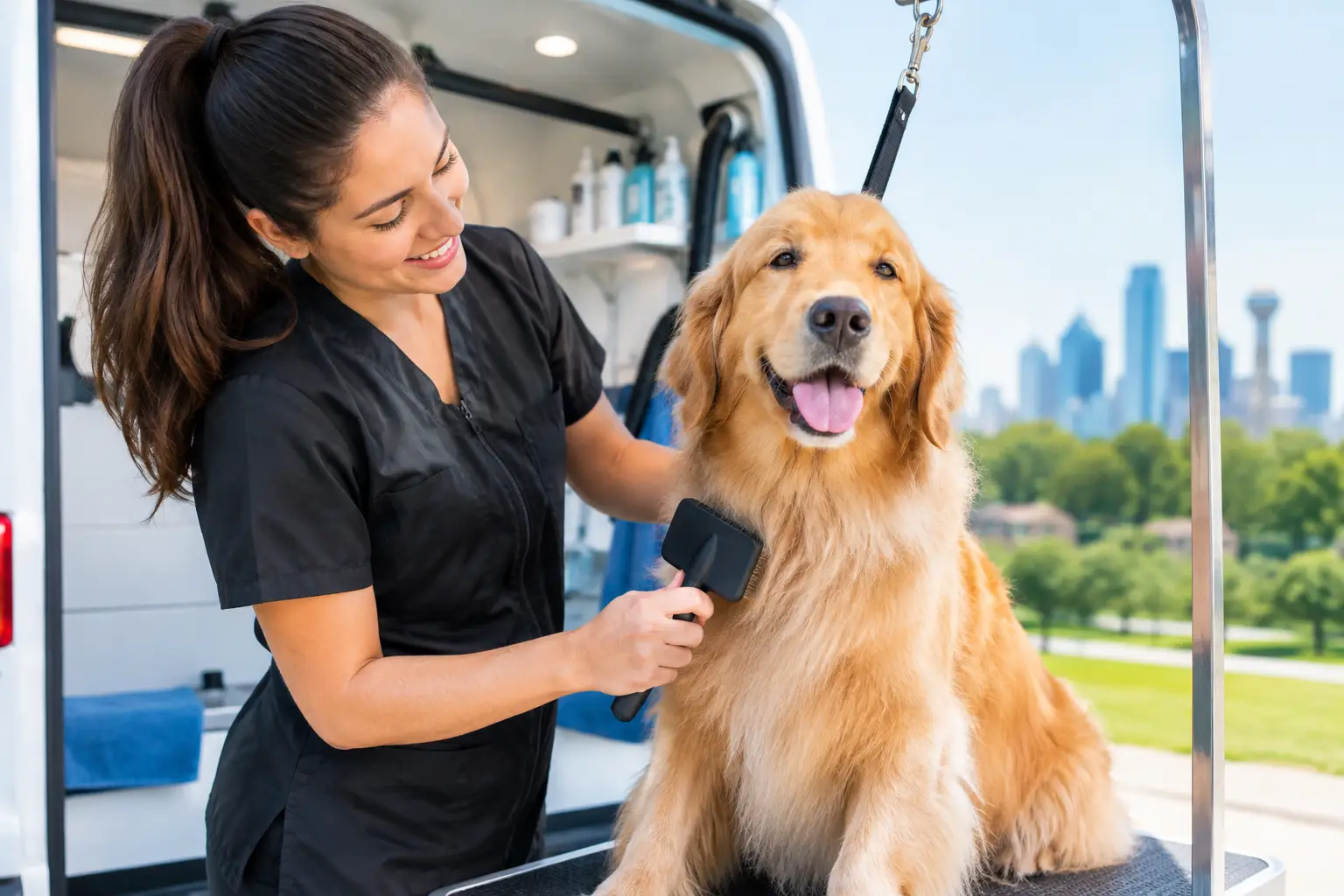
This is where mobile grooming can be especially helpful. When done well, it combines professional tools and skilled care with a much quieter, more controlled setting. For anxious pets, that balance can be the difference between panic and cooperation.
How one-on-one grooming changes the experience
Anxious dogs do not usually need more stimulation. They need less. They need a groomer who can pay attention to the small signs that come before a full stress response – lip licking, turning away, rigid posture, trembling, sudden panting, or refusal to step forward.
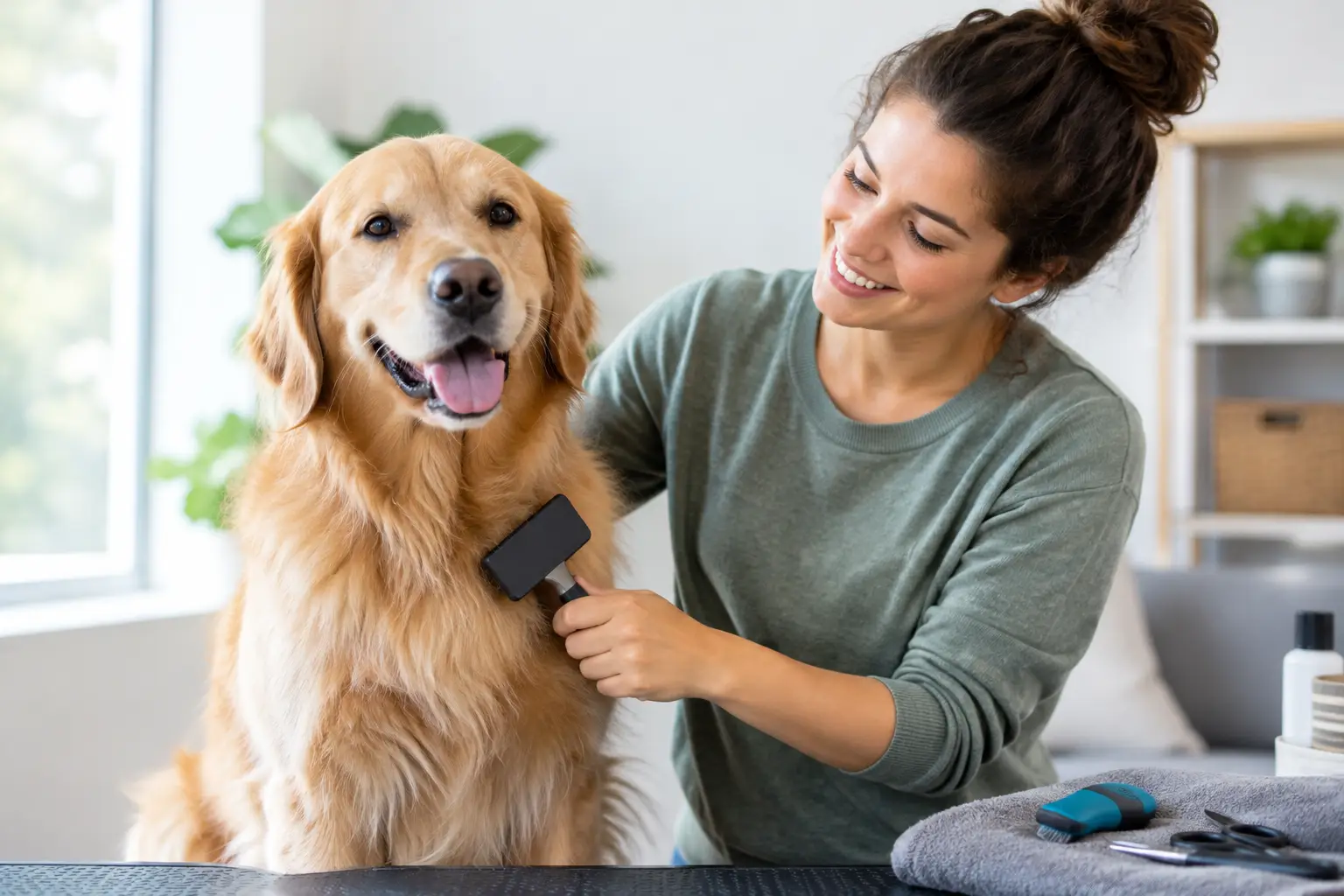
One-on-one grooming creates room for that level of attention. Instead of managing multiple pets at once, the groomer can adjust in real time. Maybe the dog needs a short pause before nail work. Maybe the dryer should be introduced slowly. Maybe the coat can be handled in sections so the appointment feels more manageable.
That kind of care is not about indulgence. It is practical. A dog that feels safer is easier to groom well and more likely to build trust over time.
For pet owners, this often brings peace of mind too. You are not wondering how long your dog has been waiting, how much noise they are surrounded by, or whether they are sitting in a kennel getting more nervous by the minute. The process feels more personal because it is.
Quiet grooming at home is not just about comfort
There is a tendency to think of lower-stress grooming as a luxury extra. For some dogs, it is really a better standard of care.
Dogs with anxiety can become reactive when they are overwhelmed. That can make grooming unsafe, incomplete, or deeply unpleasant. Even if a salon manages to get through the appointment, the dog may come out more fearful the next time. Repeated stress often teaches avoidance, not confidence.
Quiet grooming at home can interrupt that cycle. When the environment is calmer and the handling is tailored to the dog, each appointment has a better chance of ending on a stable note. That does not mean perfect behavior every time. It means the dog is not being pushed further than necessary.
This matters even more for puppies, seniors, and dogs with medical sensitivity. Puppies are still forming associations. Seniors may have hearing changes, joint pain, or lower tolerance for long appointments. Dogs with skin issues or matting may already be uncomfortable before grooming begins. In all of these cases, a gentler environment supports better care.
What to tell your groomer if your dog is anxious
If your dog struggles with grooming, a little context helps your groomer plan well. Share what sets your dog off and what tends to help. Some dogs panic with nail trims but tolerate baths. Some do better when spoken to softly. Others need slower introductions to tools or a break between services.
It also helps to mention rescue background, prior grooming issues, age-related changes, and health concerns. If your dog has become more sensitive recently, that is worth noting too. Sudden resistance can sometimes reflect pain, hearing changes, or general discomfort rather than stubbornness.
The best grooming relationships are built on honesty. You do not need your dog to look easy on paper. You need a groomer who knows how to approach your pet thoughtfully.
When a traditional salon may still work
There is no single answer for every dog. Some pets do well in a salon environment, especially if they have been going since puppyhood and are not bothered by noise or activity. A skilled salon team can absolutely provide excellent care.
But for dogs that tremble, shut down, resist handling, or come home exhausted and distressed, it is fair to question whether the setup is part of the problem. In those cases, changing the environment may matter more than changing shampoos, schedules, or routines.
That is why many pet parents choose a premium mobile approach. Services like V-GROOM are built around what anxious pets often need most – quiet equipment, no loud generators, no cage time, and calm one-on-one care delivered right at the doorstep. For busy households, it is also simpler. For sensitive dogs, it can feel gentler from start to finish.
A calmer routine can build trust over time
Most anxious dogs do not need a dramatic transformation. They need repeated experiences that feel safer than the last one. Quiet grooming supports that process because it removes many of the triggers that make grooming feel unpredictable and intense.
Trust is built in small moments. A dog stepping into the appointment without freezing. A nail trim that ends without panic. A bath that does not leave them exhausted for the rest of the day. Those changes may seem modest, but they are meaningful.
If your dog dreads grooming, that does not mean they are difficult. It usually means they are communicating discomfort in the clearest way they know how. When the environment gets quieter, the handling gets more personal, and the pace becomes more respectful, many dogs finally get the chance to feel heard.
4 Responses