
The first time an older dog stiffens during a simple brush-out, most pet parents notice it right away – what used to be easy now asks for more patience, softer handling, and a calmer setup. Grooming for senior dogs at home is less about keeping up appearances and more about protecting comfort, mobility, skin health, and dignity as your dog ages.
A senior dog may not tolerate grooming the way they did a few years ago. Arthritis can make standing painful. Vision or hearing changes can make sudden touch feel startling. Thinning skin, lumps, dryness, and coat changes can turn an ordinary bath or nail trim into something that needs to be approached with much more care. The goal is not a perfect finish. The goal is a clean, comfortable dog who feels safe in your hands.
Why grooming for senior dogs at home needs a different approach
Older dogs often need shorter sessions, quieter surroundings, and more support during every step. A busy salon can be difficult for seniors who are anxious, easily tired, or uncomfortable around noise and other pets. At home, you can control the pace, stop when your dog has had enough, and work around their physical limitations.
That said, home grooming is not always the best fit for every senior. Some dogs have severe matting, advanced mobility issues, painful skin conditions, or medical needs that require a professional groomer or veterinarian. Gentle home care works best when you can safely handle your dog without causing stress or strain.
Start with comfort, not the tools
Before you pick up a brush or turn on water, set up the environment. Choose a warm, quiet room with stable footing. A slippery floor can make an older dog tense before grooming even starts, so a non-slip mat or thick towel matters more than many owners realize.
If your dog struggles to stand for long periods, let them lie down for parts of the session. You can brush one side, allow a break, then help them reposition if needed. Some seniors do better on a low, padded surface. Others feel safest on the floor where there is no risk of slipping or jumping.
Keep sessions short. Ten calm minutes can be far more effective than trying to force a full grooming routine in one attempt. If your dog seems restless, panting, shaky, or resistant, pause. Senior dogs often tell you they are uncomfortable in subtle ways.
Brushing an aging coat gently
Coats often change with age. Some dogs develop dry, brittle fur. Others get denser undercoat or more tangling around friction areas like the chest, legs, belly, and hindquarters. Brushing helps remove loose hair, improve circulation, and keep mats from forming, but technique matters.
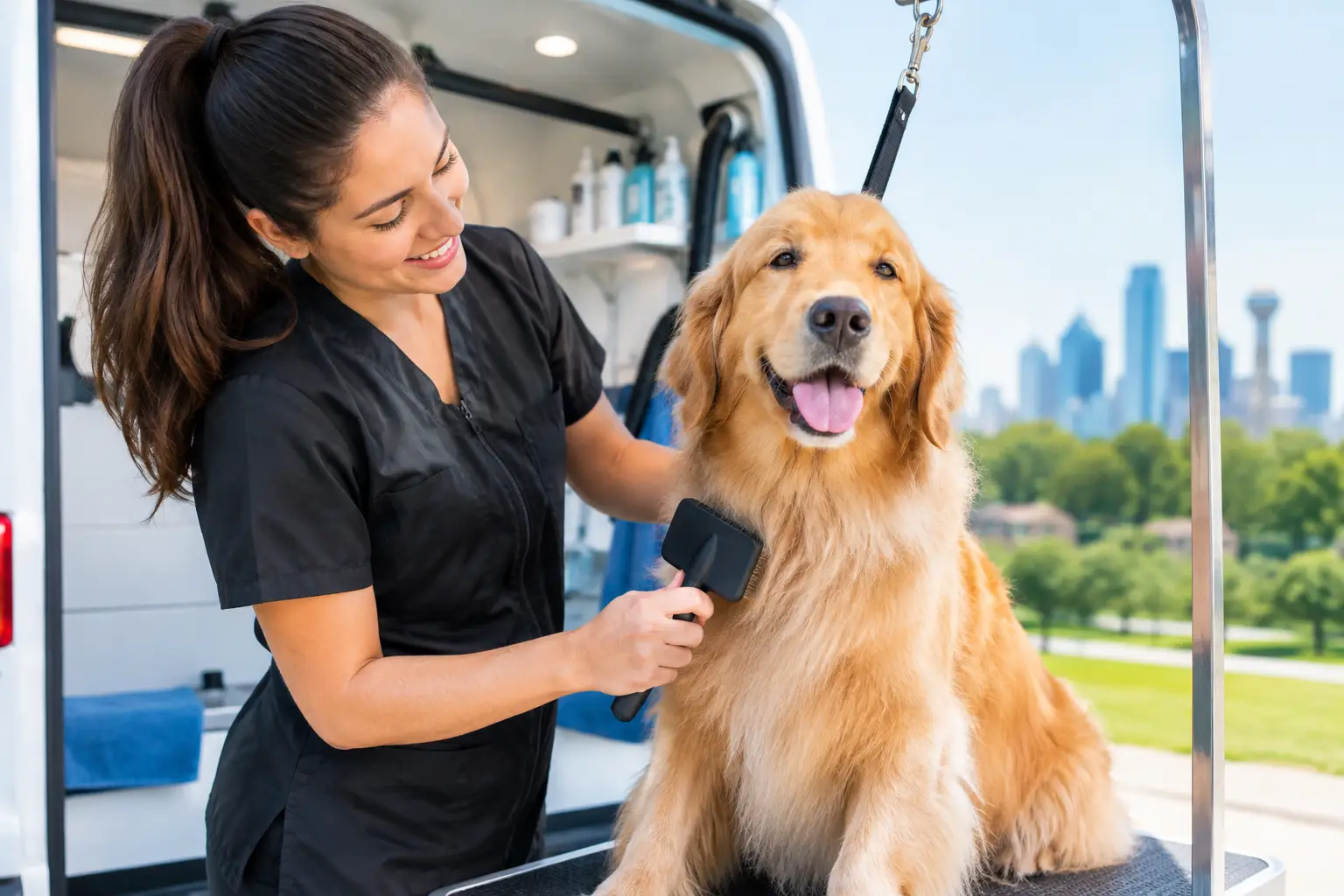
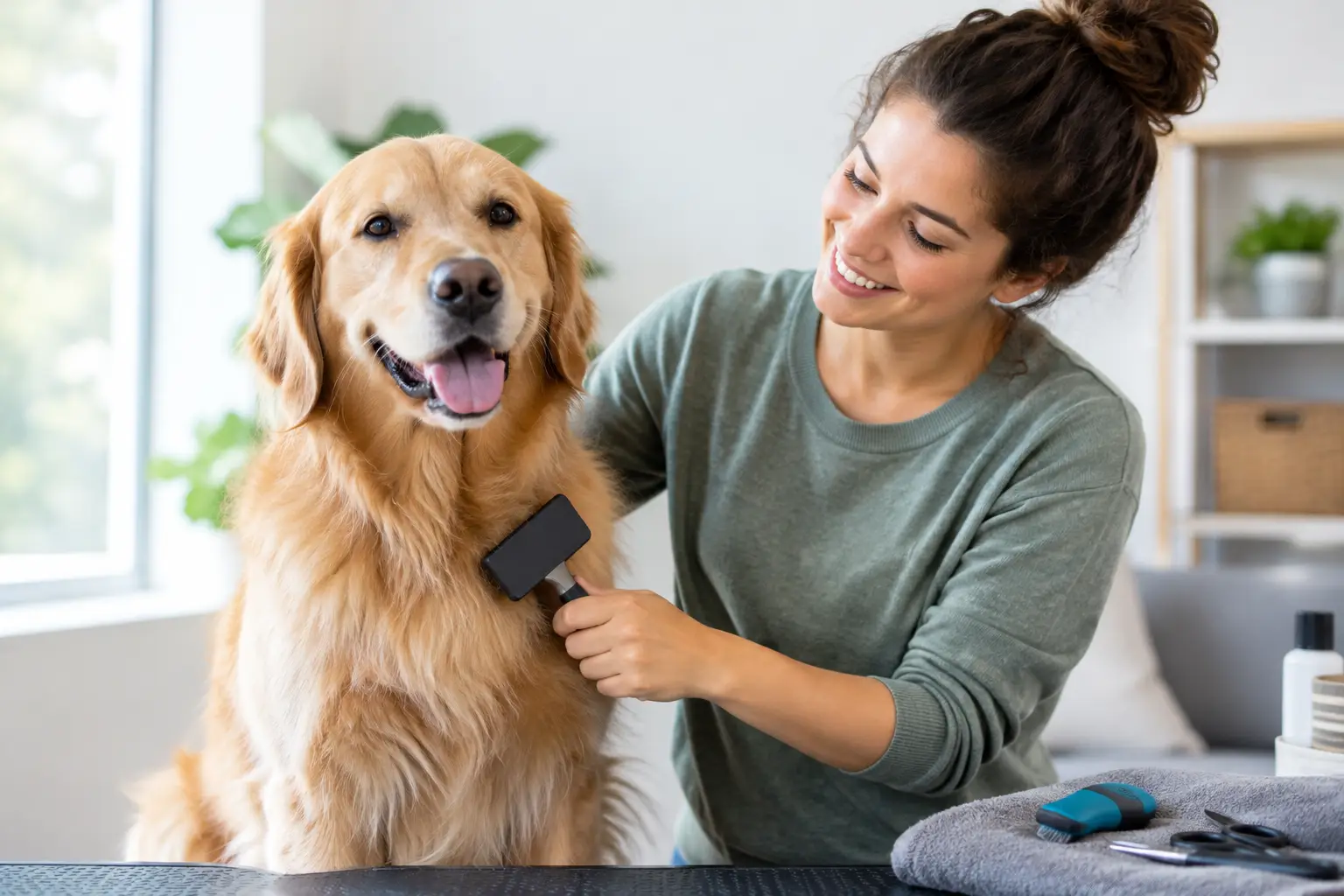
Use a soft slicker, bristle brush, comb, or grooming mitt based on your dog’s coat type. Start with light pressure. Instead of long, vigorous strokes, work in small sections and support the skin with your free hand when needed. Senior skin can be thinner and more delicate, especially around bony areas.
If you find a tangle, do not pull. Hold the hair near the base and ease it apart slowly with a comb or your fingers. Mats close to the skin can be painful and may hide irritation underneath. If the coat is tightly matted, clipping by a professional is usually safer than trying to work it out at home.
Bathing a senior dog without adding stress
A bath can leave an older dog feeling fresh, but it can also be physically demanding. Standing in a tub, stepping over edges, and being exposed to water noise can all be harder for seniors. For some dogs, a full bath is worth it. For others, a warm wipe-down or spot cleaning between professional appointments is the kinder option.
When bathing is appropriate, keep the setup simple. Use lukewarm water, never hot. Have towels within reach before you start. Use a mild shampoo that suits your dog’s skin and coat needs, especially if dryness is an issue. Rinse thoroughly but gently, since residue can irritate aging skin.
Support your dog as they enter and exit the bathing area. A handheld sprayer on low pressure can be easier than pouring water. If your dog becomes anxious with running water, wetting them slowly with a cup may be calmer. Dry them well, especially in cooler weather, but avoid blasting sensitive ears and joints with intense heat.
Nail care matters more than many owners think
For senior dogs, overgrown nails are not just cosmetic. They can change the way a dog walks, reduce traction, and add strain to already tender joints. Regular nail trimming supports balance and comfort, which becomes especially important as mobility changes with age.
This is also one of the hardest parts of grooming for many dogs. If your senior is sensitive, trim one or two nails at a time rather than insisting on all four paws in one sitting. A nail grinder can create a smoother finish, but some dogs dislike the sound or vibration. Clippers are quieter, though they require a steady hand.
If nails are dark or thick and you are unsure where the quick is, be cautious. There is no prize for finishing fast. In some cases, routine nail care is best left to a groomer who can work efficiently and gently.
Don’t overlook ears, eyes, and sanitary care
Senior dogs often need more frequent light maintenance in these areas. Eye discharge can become more common, especially in breeds prone to tear staining or age-related eye changes. Use a soft, damp cloth to wipe gently outward, and never apply pressure directly on the eye.
Ears should be checked regularly for wax, odor, redness, or sensitivity. Clean only the parts you can easily see, using a dog-safe ear cleaner if your veterinarian recommends one. If the ear looks inflamed or painful, stop and have it evaluated.
Sanitary trims and gentle cleanup around the rear can make a real difference in comfort, especially for older dogs with digestive changes, weakness, or trouble squatting fully. Keep the area clean and dry. If trimming near sensitive skin feels risky, professional help is the better choice.
Know when home care should give way to professional support
There is a point where kindness means not doing it yourself. If your dog cries when lifted, cannot remain stable, has significant matting, or reacts strongly due to pain or confusion, home grooming may cause more stress than relief.
This is where a calm, one-on-one grooming experience can make all the difference. For many senior pets, the best setup is one that reduces handling time, avoids noisy salon environments, and gives them individualized attention. A service model like V-GROOM’s can be especially appealing to pet parents of older dogs because it removes the stress of travel and keeps the experience quiet, direct, and more comfortable.
A simple routine is usually the best routine
Most senior dogs do well with a lighter but more consistent schedule. Brushing several times a week may prevent the need for long detangling sessions later. Nails may need checking every few weeks. Ears, eyes, and paws benefit from quick, gentle attention as part of regular care rather than waiting until there is a problem.
The right frequency depends on coat type, health, activity level, and temperament. A curly-coated dog may need much more maintenance than a short-haired senior with minimal shedding. A dog with arthritis may need grooming broken into very small sessions. It depends on what keeps them clean without pushing them past their comfort level.
What your senior dog is really asking for
Older dogs are rarely asking for a flawless groom. They are asking for relief from itchy skin, nails that do not press into the floor, clean fur that does not pull, and handling that respects their changing body. Grooming becomes a form of care in the truest sense when it is slow enough to notice those needs.
If you approach grooming for senior dogs at home with patience, warmth, and realistic expectations, it becomes less of a task and more of a comfort ritual. Sometimes that means a full brush and bath. Sometimes it means five quiet minutes, a clean face, and a gentle paw trim. For a senior dog, that kind of thoughtful care can mean everything.
4 Responses