A dryer turns on, and your dog backs away. Your cat stiffens at the sound of a clipper. Those reactions are not stubbornness or bad behavior. For many pets, grooming noise can feel sudden, unfamiliar, and impossible to escape.
Low noise pet grooming creates a gentler alternative. By reducing harsh sounds, avoiding crowded salon environments, and giving one pet focused attention, grooming can become a more comfortable part of life instead of a stressful event to endure.
Why grooming noise affects pets so deeply
Dogs and cats experience the world through sound in ways people often underestimate. A busy grooming salon may include barking dogs, ringing phones, running dryers, clippers, doors opening and closing, and the movement of multiple people. Even a confident pet can find that much activity overwhelming.
For a noise-sensitive pet, the response may be obvious: trembling, panting, whining, pulling away, hiding, or refusing to enter the grooming space. Other signs are subtler. A pet may become unusually still, resist handling, lick their lips repeatedly, or seem exhausted after the appointment. These are valuable signals that the environment may be asking too much of them.
This matters because grooming requires trust. Brushing, bathing, nail care, ear cleaning, and coat trimming all involve close handling. When a pet is already worried about the sounds around them, even routine care can become more difficult for everyone involved.
What low noise pet grooming looks like
A quiet appointment is not necessarily silent. Water runs, tools operate, and a groomer needs to work carefully and efficiently. The difference is in how the experience is managed.
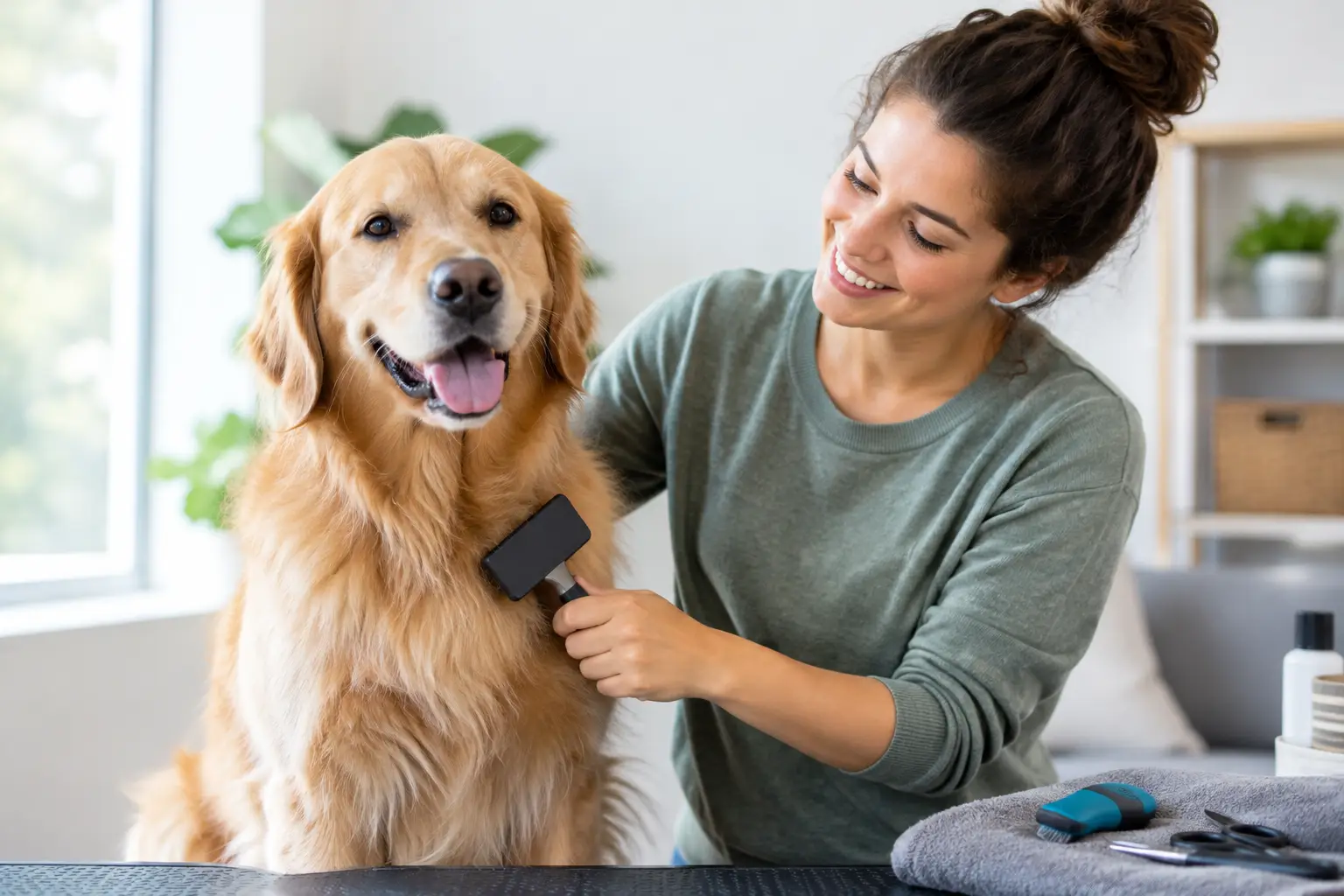
Low noise pet grooming prioritizes quieter equipment where possible and keeps the atmosphere controlled. Instead of a room full of dogs waiting in cages or dryers running nearby, the pet receives individual attention in a calm, dedicated space. There is less commotion, fewer unfamiliar animals, and no need to compete with the noise of an assembly-line salon.
The pace also matters. A thoughtful groomer watches a pet’s body language, gives them time to settle, and adjusts handling when they need a brief break. That does not mean every appointment will take longer. In fact, many pets cooperate more comfortably when they are not distracted or distressed by activity around them.
The benefits go beyond a quieter dryer
A calmer setting can make routine grooming feel more predictable. Pets learn what to expect when they see the same process and receive attentive, gentle handling. Over time, that consistency can help reduce the anticipation anxiety that starts long before the bath.
One-on-one grooming is especially helpful for senior pets. Older dogs and cats may have hearing changes, joint stiffness, reduced vision, or less patience for standing in a noisy environment. They often benefit from a quieter pace and a groomer who can focus on comfort throughout the service.
Puppies and kittens can benefit, too. Early grooming experiences shape future behavior. A first trim or bath does not need to be perfect to be productive. A calm introduction helps young pets build confidence with touch, water, brushes, and drying.
There is a practical benefit for pet parents as well. A lower-stress experience can mean less resistance before appointments, fewer tense car rides, and a pet who returns home feeling clean and comfortable rather than completely overwhelmed.
Why mobile grooming can be a better fit
Travel is often the first stressful part of a grooming day. Pets may dislike the car, react to traffic noise, or become uneasy when they arrive at a place filled with unfamiliar scents and animals. A mobile grooming appointment removes much of that buildup.
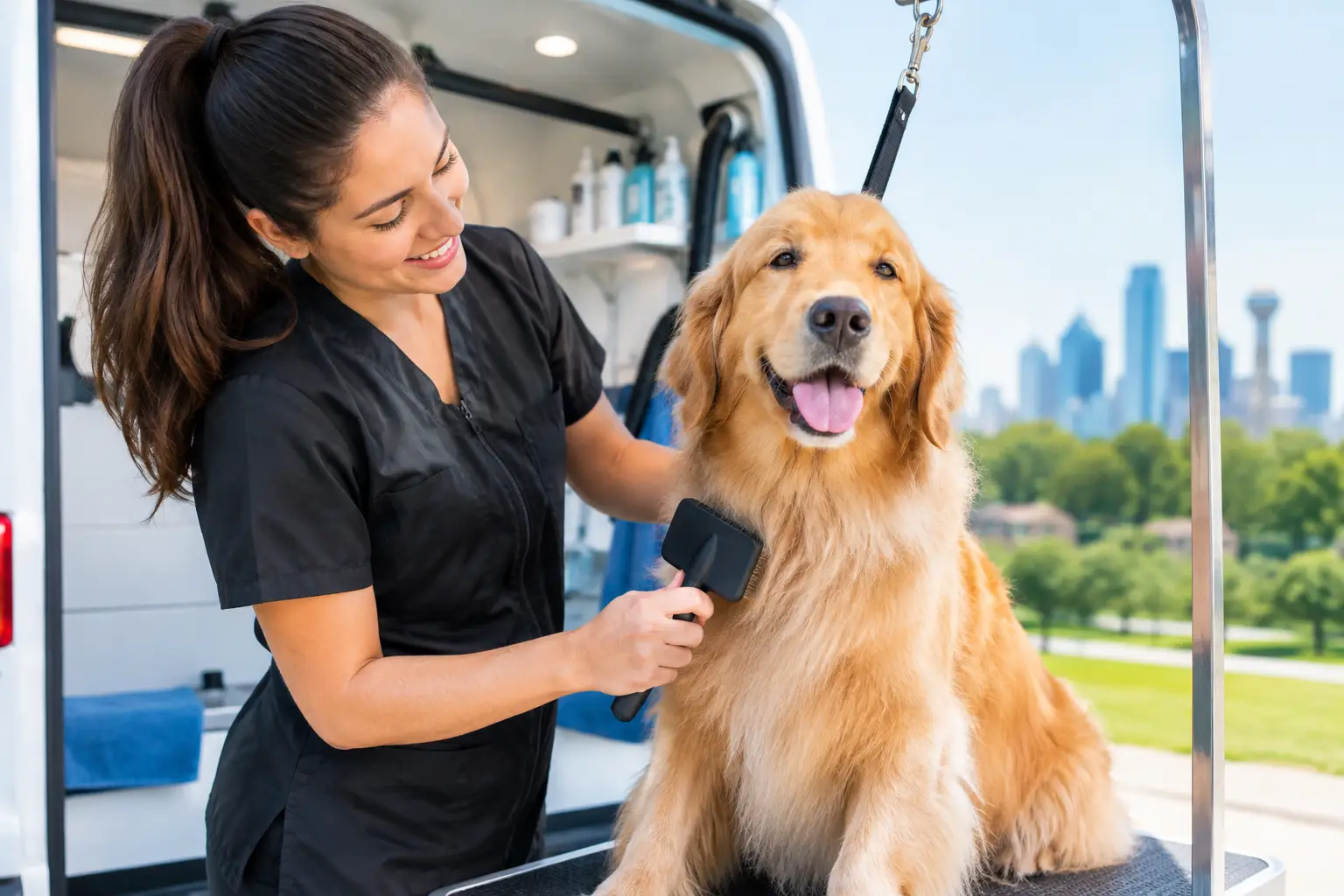
With a professionally equipped grooming van at your doorstep, your pet can stay close to the familiarity of home. There is no salon lobby, no crowded waiting area, and no cage time before or after the service. The appointment is centered around one pet’s needs rather than a full room’s schedule.
For DFW pet parents, V-GROOM brings this luxury, cage-free approach directly to the home. Quiet equipment, zero-emission operation, and no loud generator help support a more peaceful experience from start to finish.
Mobile service is not only for anxious pets. It can be an excellent choice for households with tight schedules, multiple pets, young children, limited mobility, or pets that simply do better with personal attention. Convenience and comfort work well together when the grooming experience is designed around the pet.
Is your pet a good candidate for a quieter grooming experience?
Most pets appreciate a calmer environment, but some have an especially strong need for it. Consider low noise grooming if your pet becomes nervous in the car, reacts to vacuums or hair dryers, has had a difficult salon visit, or tends to shut down around strangers and other animals.
Cats are often excellent candidates because many are highly sensitive to changes in routine and unfamiliar surroundings. A cat that tolerates brushing at home may become fearful in a traditional salon, where the scents and sounds of dogs add another layer of stress.
Pets with medical or behavioral needs may require additional planning. If your dog has severe anxiety, pain, a heart condition, aggression related to fear, or a history of biting during grooming, be open about it before the appointment. A skilled groomer can recommend an appropriate approach, but some pets may also need guidance from their veterinarian to ensure grooming is safe and humane.
How to prepare your pet for a calm appointment
The best grooming visits begin before the groomer arrives. Take your dog for a relaxed potty break beforehand, or make sure your cat has access to their litter box. Avoid turning the appointment into a big, excited event. Your pet will often take cues from your energy.
Share useful details during booking, including prior grooming experiences, sensitive areas, skin concerns, coat matting, mobility limitations, and the sounds or situations that upset your pet. A groomer cannot eliminate every trigger, but clear information makes it easier to tailor the service.
It also helps to keep the handoff simple. A long, emotional goodbye can make some pets more uneasy. Offer calm reassurance, let the groomer take the lead, and allow your pet a moment to adjust to the new space.
Regular appointments can be part of the solution. When nails become too long, coats become tangled, or brushing is delayed for months, grooming may take more time and involve more discomfort. A consistent schedule keeps maintenance manageable and helps pets become familiar with the routine.
Quiet does not mean compromising on results
Some pet parents worry that a gentler appointment means a less polished finish. It should not. Professional grooming still includes the careful work that keeps a coat clean, skin comfortable, nails maintained, and breed or lifestyle preferences respected.
The right groomer balances detail with compassion. A fluffy coat may need thorough brushing and drying. A short-haired dog may need a bath, de-shedding care, nail trimming, and ear cleaning. A pet with matting may require a more practical trim to protect their skin and avoid painful pulling. The goal is never to rush through the service, but to provide the safest, most comfortable result for the pet in front of them.
If your pet has been dreading grooming, a calmer setting may change the pattern. Choose an environment where their comfort is treated as part of the service, not an inconvenience to work around. A clean, well-cared-for pet deserves to feel safe while getting there.