
The first trim around your puppy’s eyes, the feel of warm water, the hum of a dryer – these small moments can shape how they feel about grooming for years. This guide to a puppy’s first grooming visit will help you make that introduction feel calm, kind, and positive, without expecting your pup to handle everything perfectly on day one.
A successful first appointment is not about leaving with a flawless breed-standard haircut. It is about teaching your puppy that gentle handling, brushing, bathing, and grooming tools are safe. With the right timing and a patient groomer, grooming becomes a familiar part of a healthy routine rather than something your dog learns to dread.
When Should a Puppy Have Their First Grooming Visit?
Most puppies benefit from a short, positive grooming introduction after they have met the vaccination requirements set by your veterinarian and grooming provider. Many pet parents begin with a bath-and-brush or puppy introduction appointment around 10 to 16 weeks, but the best timing depends on your puppy’s health, vaccine schedule, coat type, and comfort level.
Do not wait until a puppy needs a full haircut or has mats in their coat. A curly, curly-coated, or long-haired puppy may need professional brushing and face, feet, and sanitary-area tidying early on, even if their adult coat has not arrived. Short-haired puppies also benefit from early visits because nail care, ear handling, bathing, and drying are learned experiences.
A first visit should be brief when possible. Your puppy has a lot to process: a new person, new scents, water, a table, and unfamiliar sounds. A thoughtful groomer adjusts the pace to the puppy in front of them. Sometimes that means completing a full puppy service; other times, it means ending on a calm, successful note and building on that progress at the next appointment.
How to Prepare for a Puppy’s First Grooming Visit
Preparation begins at home, in tiny, low-pressure moments. A few seconds of gentle practice each day can make a meaningful difference. Touch your puppy’s paws, softly lift each ear, and briefly hold their chin while offering praise. Run a soft brush over their body, then reward calm behavior with a small treat, affection, or a cheerful break to play.
Help your puppy get comfortable standing on a non-slip surface, such as a bath mat. You can also introduce the idea of a dryer from a distance. Let them hear it for a moment while you speak calmly, then turn it off before they become overwhelmed. Never force your puppy to endure a sound that is clearly frightening them. The goal is gradual familiarity, not proving that they can “push through.”
On the day of the appointment, give your puppy time to potty and have a little age-appropriate movement beforehand. A puppy who has had a calm walk or play session may settle more easily, but avoid an exhausting outing right before grooming. They still need enough energy to cope with a new experience.
Feed timing is worth considering, too. A very full stomach can make an excited puppy uncomfortable. If your puppy is prone to motion sickness, has a sensitive stomach, or needs food at specific times, share that information with your groomer. The same goes for allergies, skin sensitivities, recent injuries, medications, and handling preferences.
Bring your puppy on a secure leash or in a carrier if that is safest for their size and temperament. A favorite small treat can help, provided your groomer knows about any dietary restrictions. Keep your own energy relaxed. Puppies are remarkably good at reading our body language, so a calm handoff tells them this new person and place are safe.
What Happens During a First Puppy Grooming Appointment?
The appointment usually starts with a conversation, not a bath. Your groomer should ask about your puppy’s age, coat, behavior, health history, home brushing habits, and the type of service you have in mind. This is the right time to mention whether your puppy dislikes having their paws touched, startles at sounds, or has had a difficult experience at a veterinary office or elsewhere.
For many puppies, the service includes a gentle bath, blow-dry, brush-out, nail trim or nail filing, ear cleaning when appropriate, and light trimming around the face, feet, and sanitary areas. The exact service depends on coat needs and the puppy’s tolerance. A first grooming appointment is often more about careful exposure than extensive styling.
Your groomer may pause between steps, use a quieter setting, or work in shorter increments. These are signs of attentive care, not a lack of efficiency. Rushing a fearful puppy through a dryer or nail trim can make future appointments harder. A patient approach protects the long-term relationship your puppy has with grooming.
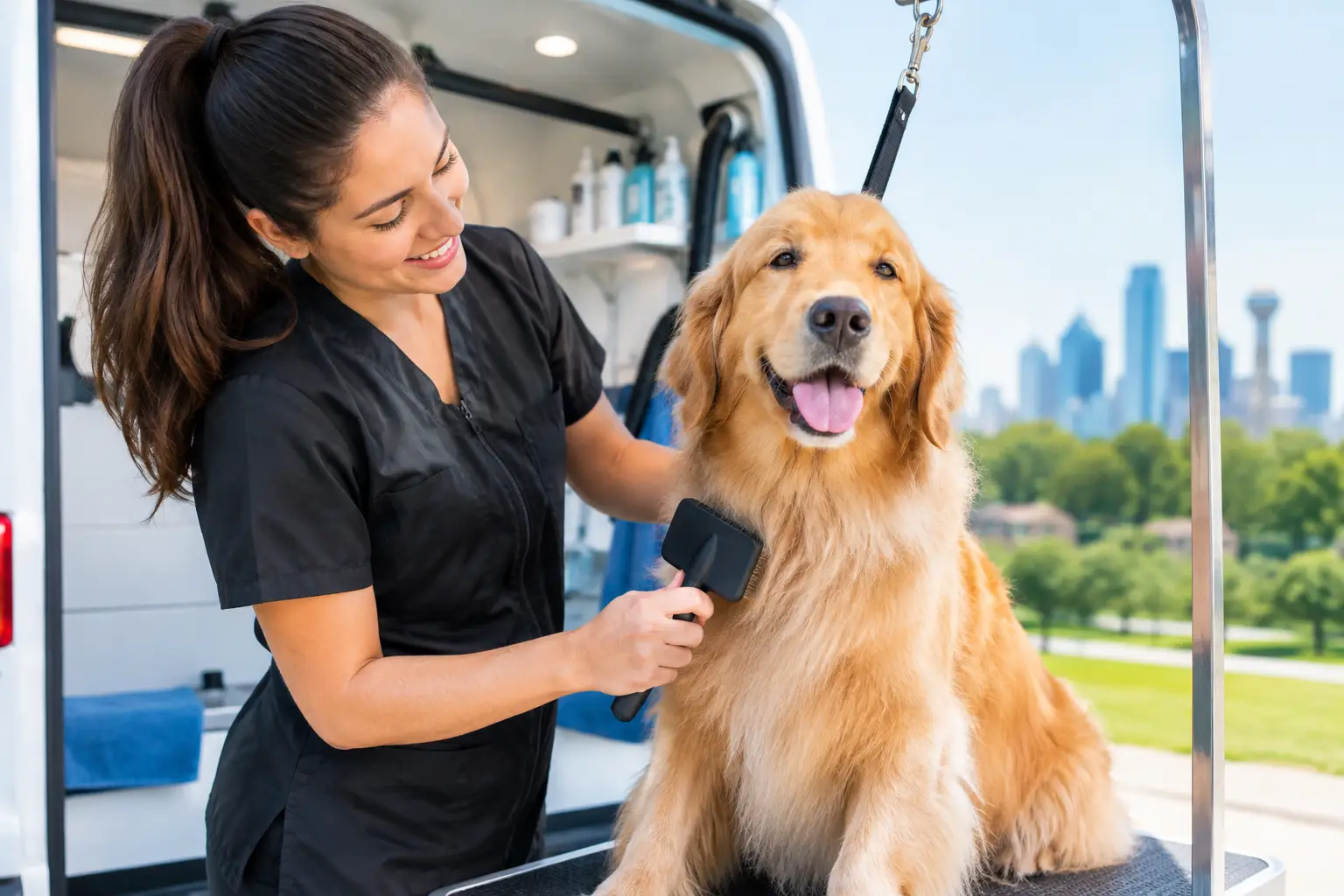
A calm, one-on-one environment can be especially helpful for puppies who are sensitive to noise or easily overstimulated. Mobile grooming also removes the car ride, crowded lobby, and long salon stay that can make a first visit feel bigger than it needs to. At V-GROOM, the appointment is designed around individualized handling in a quiet, cage-free mobile spa at your doorstep.
Your Guide to Puppy First Grooming Visit Questions to Ask
Before booking, ask how the groomer approaches puppy introductions and what they do if a puppy becomes stressed. You want a professional who sees your dog as an individual, not a production-line appointment. Ask whether they use cage drying, how long pets are typically in their care, and whether the same groomer will work with your puppy over time.
It is also reasonable to ask about vaccine policies, cleaning standards, and which grooming services are appropriate for your puppy’s age and coat. Clear answers build trust. A caring groomer will also be honest when a service should be simplified, postponed, or divided into multiple visits for your puppy’s well-being.
Avoid asking for a dramatic first haircut simply because your puppy looks shaggy in photos. Puppy coats can be delicate, and some styles require more coat length, patience, and ongoing home care than a young dog can comfortably manage. Your groomer can recommend a practical shape that keeps the eyes clear, the paws tidy, and the coat easy to brush while your puppy grows.
How to Make Future Grooming Easier
Consistency matters more than intensity. Puppies who see grooming as a normal routine tend to do better with regular, predictable appointments than dogs who only visit when their coat is tangled or their nails are overgrown. Your groomer can suggest an interval based on breed, coat texture, activity level, and the amount of brushing you can realistically do at home.
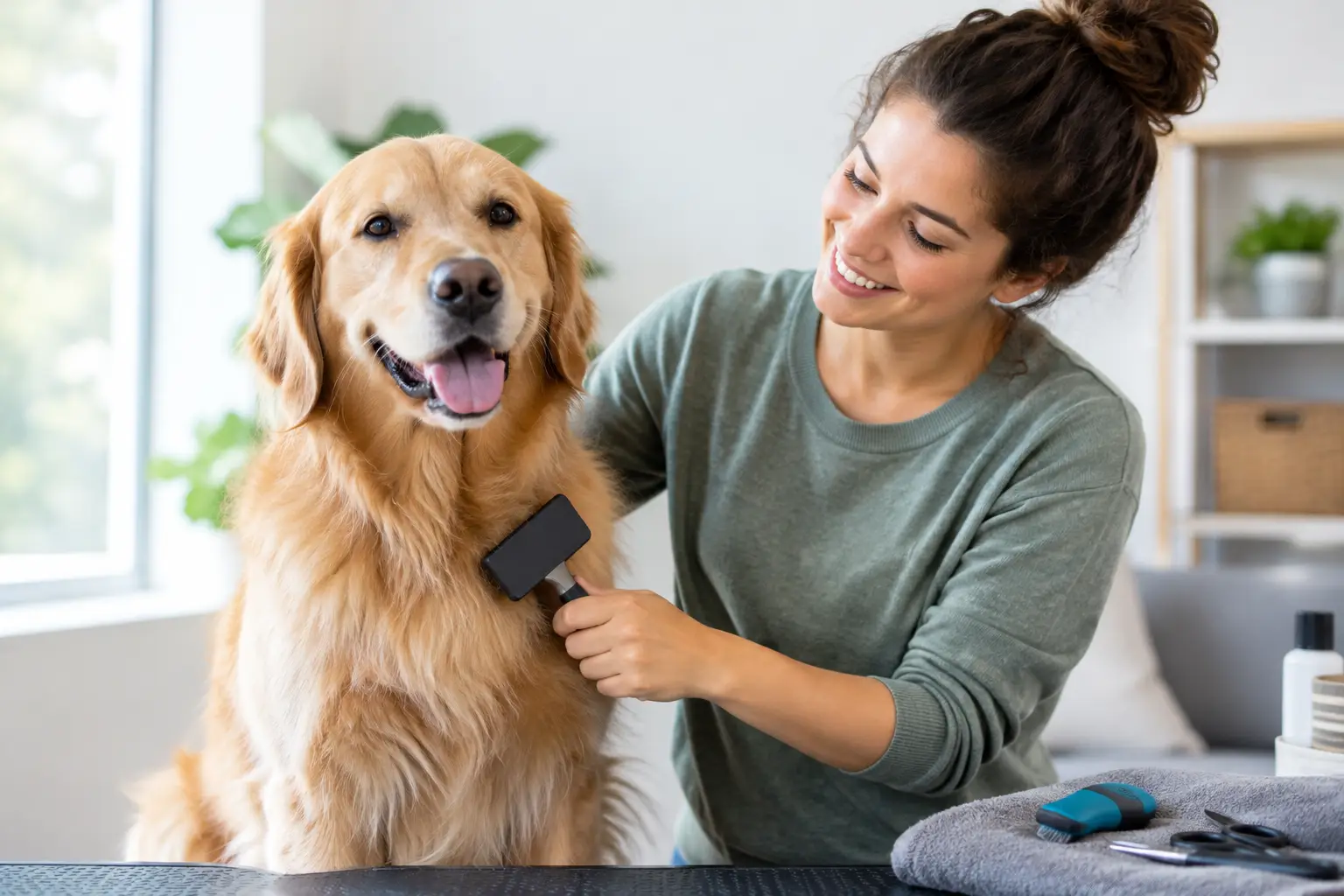
Between appointments, make brushing pleasant and brief. Start with areas your puppy tolerates well, use the right brush for their coat, and stop before frustration takes over. Check the paws, ears, and areas where friction can create knots, such as behind the ears, under the collar, and around the legs. If you find a mat, do not pull at it or try to cut it out with household scissors. Let a professional assess it safely.
Watch how your puppy acts after the visit. A little tiredness from a stimulating new experience can be normal. Persistent scratching, redness, discomfort, vomiting, extreme fear, or unusual behavior deserves a call to your veterinarian or groomer, depending on the concern. Sharing feedback helps the next appointment feel even more tailored to your puppy.
The best first grooming visit ends with something more valuable than a fresh-smelling coat: a puppy who has learned that being cared for can feel safe. Give them time, celebrate the small wins, and let each calm appointment build the confidence they will carry into adulthood.
One Response