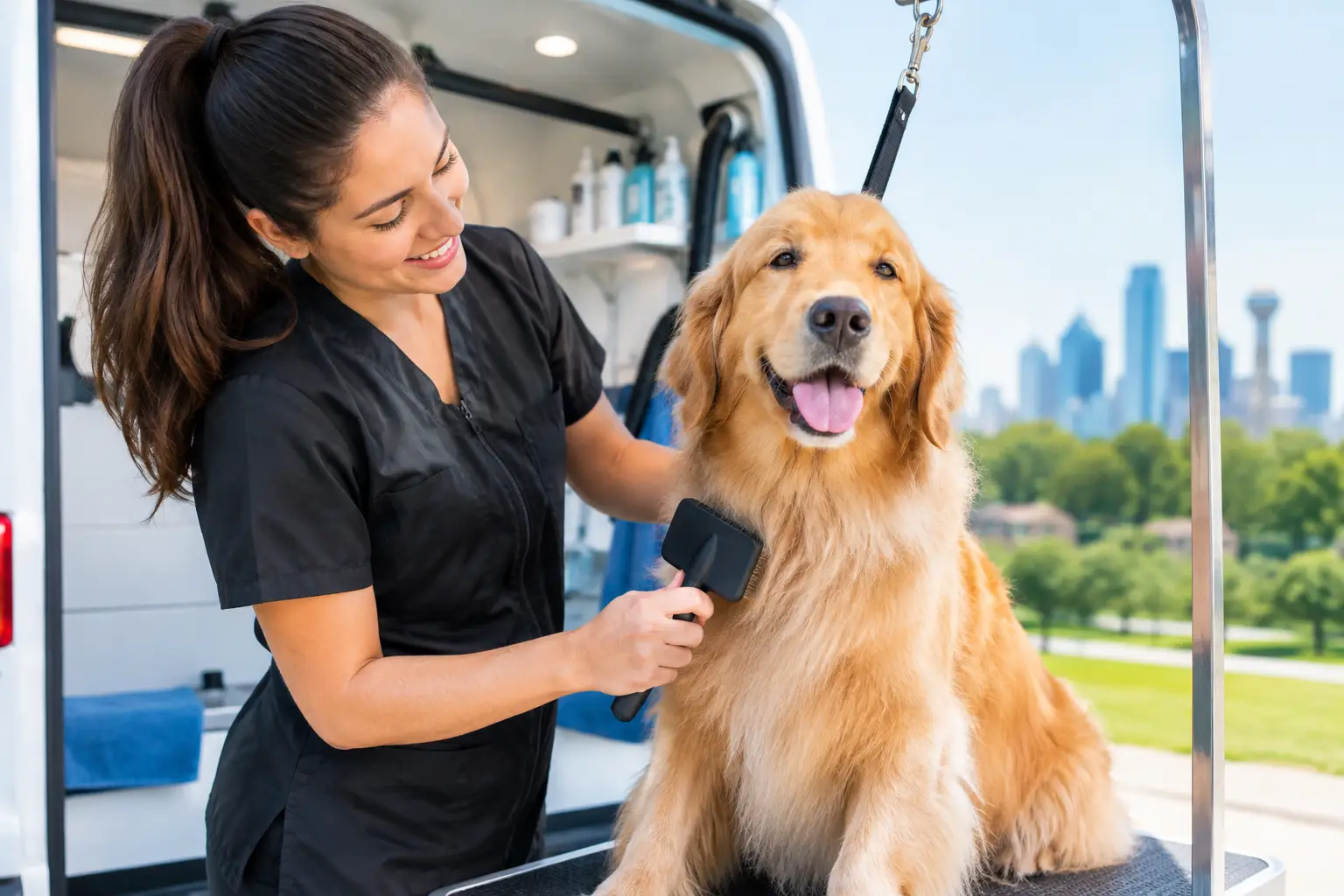
A dog who growls during a nail trim is not necessarily an “aggressive dog.” They may be frightened, painful, overwhelmed, protective of a sensitive area, or simply past their comfort limit. So, can mobile groomers handle aggressive dogs? Sometimes – but only when the dog’s behavior, grooming needs, and safety plan make the appointment appropriate.
The most caring answer is never a blanket yes. A premium grooming experience should protect your pet, the groomer, and everyone nearby. For some dogs, the calm, one-on-one setting of a mobile salon can make grooming far more manageable. For others, grooming should be postponed, broken into smaller steps, or coordinated with a veterinarian or behavior professional first.
Can Mobile Groomers Handle Aggressive Dogs Safely?
A skilled mobile groomer can often work successfully with dogs who are anxious, reactive, touch-sensitive, or uneasy around unfamiliar people. Mobile grooming removes several common stressors: a crowded lobby, barking dogs, long waits in a cage, and the rush of an assembly-line salon. Your dog receives individual attention in a quieter, more controlled environment.
That difference matters. A dog who snaps when surrounded by noise and activity may settle when there is only one groomer, a predictable routine, and no other pets competing for space. At V-GROOM, the goal is a calm, cage-free experience with thoughtful handling, not pushing a pet through a service before they are ready.
Still, mobile grooming is not automatically the right setting for every behavior concern. A grooming van is an intimate workspace. If a dog has a history of causing serious bites, cannot be approached or handled safely, or escalates rapidly with grooming tools, a groomer may need to decline or stop the appointment. That is not a failure. It is responsible care.
Not Every Growl Means the Same Thing
The word “aggressive” can hide the real issue. Some dogs react only when their feet are touched. Others panic around dryers, resist brushing because of painful matting, or become defensive when a stranger reaches near their face. A dog who barks at the window or pulls away from the clippers may need a different approach than a dog who has previously bitten without warning.
Before booking, be candid about what you have seen. Share whether your dog growls, air-snaps, bites, freezes, guards certain body parts, reacts to dryers, or has trouble entering unfamiliar spaces. Let the groomer know what happened, what seemed to trigger it, and what has helped in the past.
Honest details allow the groomer to plan the safest possible visit. Surprises do not serve your dog. A groomer who understands the situation can allow extra time, choose quieter equipment, begin with lower-pressure services, or tell you upfront when another type of support would be kinder and safer.
Pain can look like behavior trouble
A normally gentle dog who suddenly objects to grooming deserves a health check. Ear infections, dental pain, arthritis, skin irritation, nail injuries, and hidden mats can make ordinary handling feel unbearable. Senior dogs, in particular, may have less balance, less hearing, or more joint discomfort than they once did.
If behavior has changed abruptly, speak with your veterinarian before scheduling a full groom. Addressing pain can improve your dog’s comfort and make future grooming sessions less stressful. It also helps avoid teaching your pet that grooming always hurts.
When Mobile Grooming May Be a Good Fit
Mobile grooming can be an excellent option for a dog whose reactivity is tied to the traditional salon experience. The appointment happens at your home, without the car ride to a busy facility or exposure to unfamiliar dogs and people in a waiting area. There is no kennel time before or after the groom, and your pet can return to their familiar home environment as soon as the service is complete.
It may be particularly helpful for dogs who are easily overstimulated, elderly pets who find travel difficult, newly adopted dogs still building confidence, or dogs who do better with one consistent groomer. A slower pace and fewer distractions can leave room for breaks, reassurance, and handling that respects the dog in front of the groomer.
The trade-off is that a peaceful setting cannot erase every serious behavior risk. Dogs who become more protective in tight spaces, who cannot safely wear handling equipment, or who become distressed once separated from their owner may not be suited to a mobile appointment right away. Every decision should be based on the individual dog, not a promise that any environment can solve aggression.
What Responsible Handling Looks Like
A compassionate groomer does not punish fear, force a dog through panic, or ignore warning signals. They watch body language closely: stiff posture, hard staring, lip lifting, tucked tail, repeated turning away, trembling, or sudden stillness can all mean a dog needs more space or a pause.
A well-managed appointment may involve starting with a brief meet-and-greet, allowing the dog to explore the entrance at their own pace, and choosing the least stressful services first. Sometimes a successful first visit is simply a bath and brush, a few minutes of cooperative handling, or an introduction to the van. A complete haircut can come later, once the dog has more confidence.
A properly fitted muzzle can be an appropriate safety tool when introduced thoughtfully and used by someone experienced. It is not a punishment, and it should never be used to force a terrified dog to endure an appointment. Ideally, dogs learn to wear a basket muzzle gradually at home with treats and positive associations before grooming day.
There are also clear limits. Groomers cannot diagnose medical problems, prescribe sedatives, or safely groom a pet who is in severe distress. If sedation is being considered, that decision belongs with a veterinarian. For a dog with a serious bite history, a veterinary grooming setting or a behavior plan may be the safest next step.
How to Prepare Your Dog for a Better Appointment
Preparation starts well before the van arrives. Avoid presenting grooming as a sudden, unavoidable event. In the days or weeks before an appointment, practice brief, reward-based handling at home. Touch a paw, offer a treat, then stop. Lift an ear for a second, reward, then give your dog space. The goal is not to complete a home groom. It is to build trust around the movements grooming requires.
If your dog will wear a muzzle, introduce it gradually with high-value treats. Let them willingly place their nose inside, then build duration slowly. Never chase your dog with it or fasten it before they are comfortable. The same gradual approach can help with brushing, bathing, and nail tool sounds.
On grooming day, give your dog a chance to potty and decompress before the appointment. Keep the handoff calm. Lengthy goodbyes, anxious apologies, or repeated attempts to persuade a reluctant dog can increase tension. Instead, share the important information with the groomer, follow their guidance, and allow the process to stay quiet and predictable.
Do not withhold a bite history because you worry about being turned away. Your transparency may be what allows a groomer to create a safer plan, recommend a preliminary visit, or avoid putting your dog in a situation they cannot handle comfortably.
When to Pause and Choose Another Path
There are times when the kindest grooming decision is not to proceed. Stop signs include attempts to bite that cannot be managed safely, escalating panic, severe matting that requires painful handling, a sudden behavior change, or a dog who cannot recover after a break.
If grooming is medically necessary but behavior makes it unsafe, contact your veterinarian. They can evaluate pain and anxiety, discuss appropriate clinical options, and recommend behavior support if needed. A certified trainer or veterinary behaviorist can also help build cooperative-care skills over time, making future grooming less frightening.
A paused appointment can feel disappointing, especially when your dog needs care. But forcing the issue can create a lasting fear of grooming and make the next visit harder. Protecting trust is often the faster path forward.
The right mobile groomer will see more than a difficult appointment. They will see a pet communicating discomfort and a family looking for help. With honest intake information, patient handling, and the willingness to adjust the plan, many sensitive dogs can have a calmer grooming experience – one careful visit at a time.