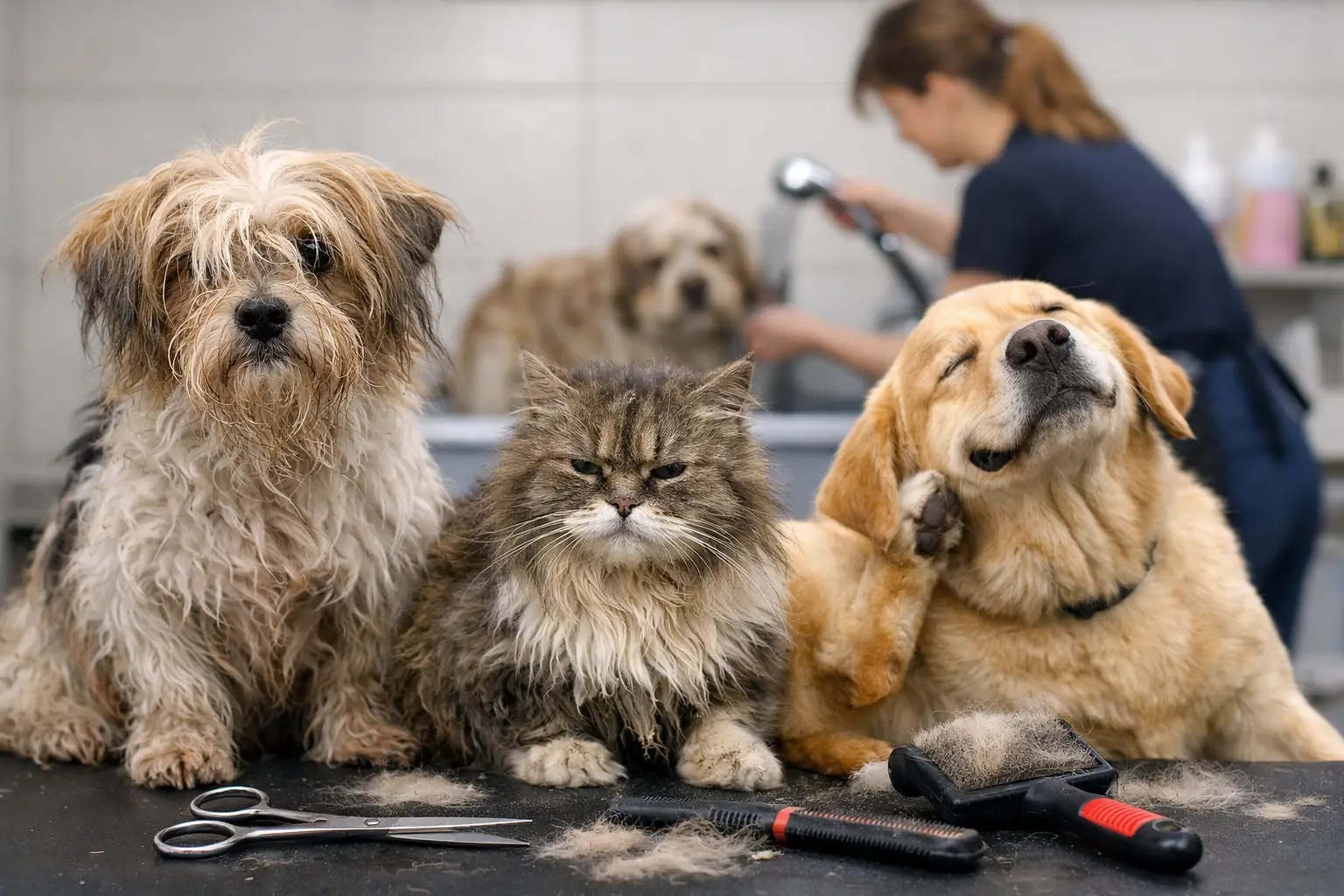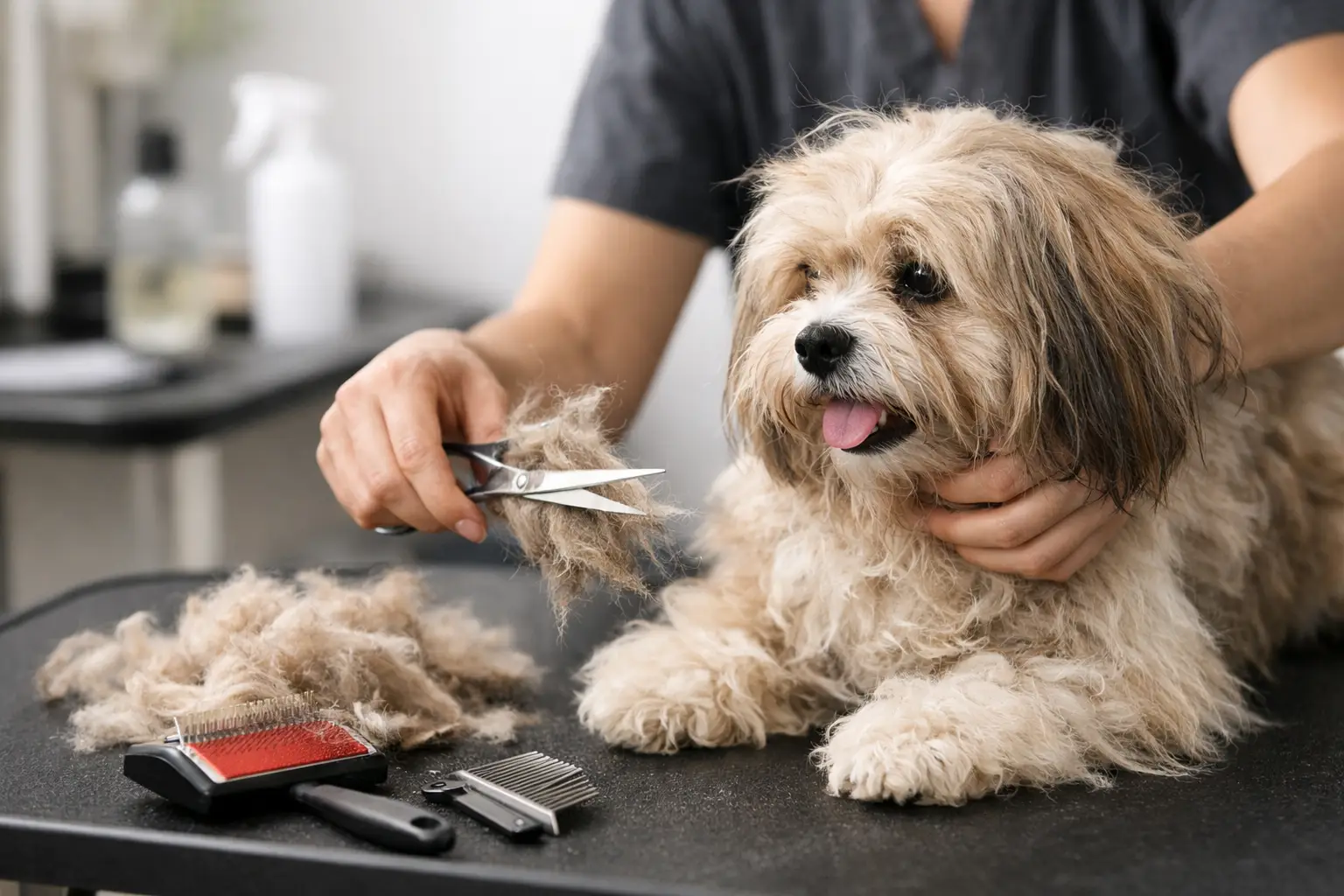
That little click-click across the kitchen floor, the lingering odor after a cuddle, or the knot you find behind an ear can be easy to dismiss for a week or two. But grooming is not simply about a polished look. The top signs your pet needs grooming often show up as small changes in comfort, movement, behavior, and coat condition long before they become a bigger problem.
A consistent grooming routine helps dogs and cats feel cleaner, lighter, and more comfortable in their own skin. It also gives you a regular chance to notice changes that may need veterinary attention. Here are the signals worth paying attention to.
10 top signs your pet needs grooming
1. Their coat has tangles, knots, or mats
A few loose tangles can become tight mats surprisingly quickly, especially around the ears, collar, armpits, belly, tail, and back legs. Curly, long, double-coated, and fine-haired pets tend to be especially prone to matting, but any coat can develop knots when shedding hair, moisture, and everyday friction build up.
Mats pull on the skin with every step and can hide irritation underneath. Do not try to cut a tight mat out with household scissors. Skin can be pulled into the mat and injured in an instant. Gentle brushing may help with minor tangles, but close-to-the-skin mats are best handled by a professional groomer who can prioritize your pet’s safety and comfort.
2. They smell unpleasant soon after a bath
Dogs have a natural scent, and cats typically keep themselves quite clean. Still, a persistent musty, oily, or sour smell may mean your pet has built-up dirt and oils, damp fur, or debris trapped in the coat. A proper bath, thorough rinse, complete dry, and coat brushing can make a meaningful difference.
If the odor is strong, sudden, or concentrated around the ears, mouth, or skin, grooming may not be the only answer. Ear infections, dental disease, and skin concerns can cause distinct odors, so call your veterinarian when the smell continues after grooming or comes with redness, discharge, itching, or discomfort.
3. Their nails click on hard floors
Nails that touch the floor when your pet is standing are usually ready for a trim. You may hear clicking as they walk, notice snagging on rugs, or see your pet shifting their weight differently. Overgrown nails can alter posture and make ordinary walks uncomfortable, particularly for senior pets or dogs with joint concerns.
Nail care is not one-size-fits-all. Active dogs who regularly walk on pavement may wear their nails down more than a mostly indoor pet. Dewclaws, however, often do not wear down naturally and need regular checks. If your pet dislikes paw handling, a calm, one-on-one appointment can be far kinder than waiting until their nails are painfully long.
4. They are scratching, licking, or chewing more often
An occasional scratch is normal. Frequent scratching, licking at the paws, or chewing at a specific area is not something to ignore. Sometimes the cause is simple: loose undercoat, dirt, dry skin, or compacted fur can make a pet feel itchy and uncomfortable. A bath and thorough brush-out can remove buildup and help the skin breathe.
But persistent itching can also point to allergies, fleas, parasites, infection, or another medical issue. Grooming supports healthy skin, but it does not replace veterinary care. If you see sores, hot spots, flaking, hair loss, swelling, or intense itchiness, schedule a veterinary evaluation promptly.
5. Their eyes or face look messy between cleanups
Tear staining, crusting in the corners of the eyes, food caught in facial fur, and a damp beard are common grooming concerns, particularly for short-nosed breeds and pets with light-colored coats. Left alone, facial debris can become uncomfortable and may irritate sensitive skin.
A groomer can carefully clean and tidy the face based on your pet’s coat type and tolerance. At home, use a clean, pet-safe damp cloth for gentle daily maintenance. Avoid putting products directly into or near the eyes, and seek veterinary guidance for squinting, redness, cloudy eyes, or unusual discharge.
6. Their ears look dirty or seem uncomfortable
A little wax can be normal, but excess debris, a noticeable odor, repeated head shaking, or pawing at the ears deserves attention. Regular ear checks are especially useful for floppy-eared dogs, frequent swimmers, and pets with dense hair around the ear opening.
Professional grooming can include gentle external ear cleaning and removal of loose debris when appropriate. Deep cleaning is not a DIY project, and you should never insert cotton swabs into the ear canal. If your pet cries when an ear is touched, has dark discharge, or holds their head at an unusual angle, contact your veterinarian instead of booking a routine grooming service alone.
7. Shedding has taken over your home
A little fur on the sofa comes with pet parenthood. Tufts collecting in corners, heavy shedding on every blanket, or a coat that looks dull and packed with loose hair may mean your pet needs a professional bath and brush-out. Removing dead undercoat helps air circulate through the coat and keeps hair from compacting into tangles.
More brushing is not always better. The right tools and frequency depend on your pet’s coat. A slicker brush may work beautifully for one dog and irritate another pet’s skin. Cats also need a gentle approach, especially if they are older, sensitive, or easily overstimulated. Coat-specific grooming is what turns brushing from a battle into helpful care.
8. They leave dirt, dander, or oily residue behind
If your pet’s bed, favorite chair, or your hands feel noticeably grimy after contact, it may be time for a refresh. Outdoor adventures, city sidewalks, backyard play, and normal skin oils all collect in the coat. Bathing and drying thoroughly can reduce dirt and dander while restoring the soft, fresh feel you both enjoy.
The right schedule depends on lifestyle and coat needs. Overbathing with unsuitable products can dry the skin, while waiting too long can allow oils and debris to build up. A grooming professional can recommend a routine that suits your individual pet rather than applying the same timetable to every dog or cat.
9. They resist brushing or being touched in certain areas
A pet who once enjoyed brushing but now pulls away, flinches, growls, or hides may have painful tangles, tender skin, or discomfort elsewhere. Resistance does not mean your pet is being difficult. It is useful communication.
Do not force the issue or turn grooming into a stressful struggle. Make a note of the area and look for visible changes. A gentle grooming visit can address manageable coat concerns, while sudden sensitivity, lumps, wounds, or pain should be assessed by a veterinarian first.
10. Their coat no longer looks or feels like itself
A healthy coat varies by breed, but it should generally be clean, free-moving, and suited to the pet beneath it. A dull, greasy, brittle, uneven, or heavily compacted coat can signal that routine grooming has fallen behind. It may also reflect nutrition, age, seasonal shedding, allergies, or an underlying health concern.
This is why regular appointments matter beyond appearances. Familiar hands and a consistent grooming routine make it easier to notice subtle changes early. For pets with thick coats, seniors who cannot groom themselves well, or anxious animals who struggle with busy salons, individualized care can make all the difference.
When grooming should happen sooner
Do not wait for a standard appointment if mats are tightening, nails are curling, your pet has stool or urine caught in their coat, or they seem genuinely uncomfortable. These situations call for prompt, gentle attention. Likewise, skip cosmetic grooming and call your veterinarian first if you notice open skin, bleeding, severe pain, sudden coat loss, or signs of illness.
For routine care, the best schedule is the one that keeps your pet comfortable without causing unnecessary stress. Some pets thrive with a bath and brush every few weeks, while others need less frequent bathing but more regular nail, ear, and coat maintenance. Their coat, activity level, age, and behavior will tell you more than a generic calendar ever could.
A calm grooming experience can help your pet see care as a comfort rather than something to fear. For DFW pet parents, V-GROOM brings that personal attention to your doorstep with cage-free, one-on-one grooming designed around your pet’s needs. The goal is simple: a cleaner coat, easier movement, and a pet who feels as loved as they look.