
A mat can begin as a small knot behind the ear or beneath a collar, then tighten quickly into something that pulls every time your dog turns, walks, or lies down. Dog mat removal is not simply a cosmetic task. Done carelessly, it can be painful, frightening, and damaging to delicate skin. Done with patience and the right professional judgment, it can bring real relief.
For pet parents, the hardest part is often knowing where the line is between a tangle that can be gently brushed out and a mat that needs professional attention. That distinction matters, especially for senior dogs, anxious pets, puppies still learning grooming routines, and dogs with fine, curly, double, or long coats.
Why Mats Become a Comfort and Health Concern
A mat is tightly tangled fur that has compacted near the skin. Friction from harnesses, collars, clothing, bedding, and everyday movement can start the process. Moisture makes it worse. A damp coat that is not fully dried after a bath, swim, or rainy walk can tighten into mats faster than many owners expect.
The concern is not just appearance. Mats pull on the coat and skin, which can make brushing, petting, and movement uncomfortable. When they sit close to the skin, they can trap moisture, dirt, dander, and debris. The skin underneath may become irritated or sore, while fleas, ticks, or hot spots can be harder to spot.
Mats are especially common in high-friction areas: behind the ears, under the chin, around the collar or harness line, in the armpits, around the legs, under the tail, and along the belly. Dogs with doodle-type coats, poodles, spaniels, retrievers, long-haired mixed breeds, and thick double coats often need a more consistent maintenance routine, but any dog can develop them.
Dog Mat Removal Starts With an Honest Check
Before reaching for a brush, look at the mat closely. Can you see and gently separate some hairs at the outer edges? Does it sit away from the skin? Is your dog relaxed when you touch the area? A small, loose tangle may be manageable at home with a calm approach.
A dense mat that feels like felt, sits tight against the skin, or causes your dog to flinch is different. Do not pull at it, soak it in water, or try to cut it out with household scissors. Skin can be drawn up into a mat and is remarkably easy to nick, particularly in thin-skinned areas such as the ears, armpits, groin, and legs. Even a normally patient dog may react suddenly when a painful spot is handled.
Professional grooming is the kinder choice when mats cover a large area, are packed close to the skin, contain debris, or have been present long enough to cause tenderness. A groomer can assess the coat, the pet’s tolerance, and the safest option without turning the appointment into a struggle.
When Brushing at Home Is Appropriate
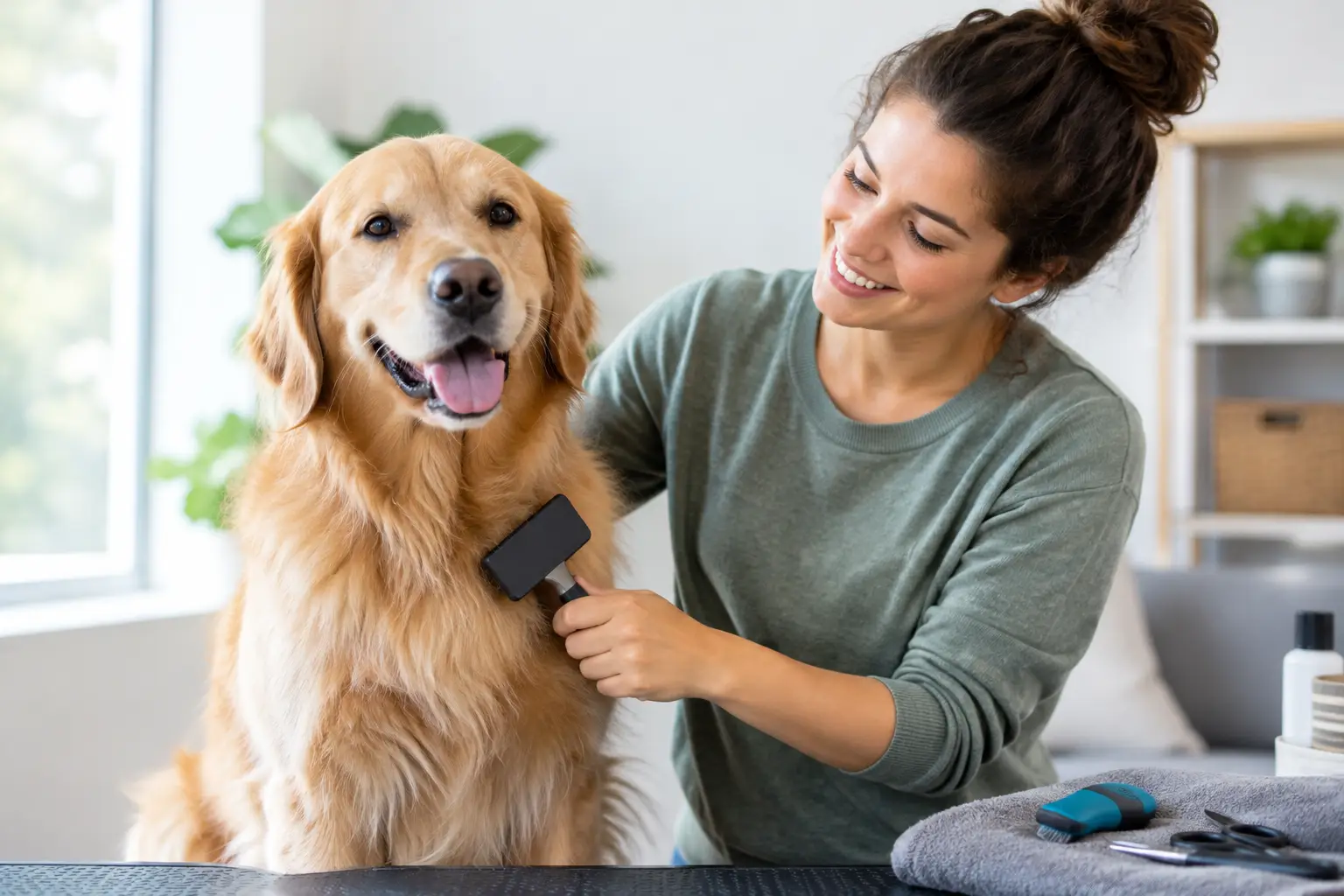
For a minor surface tangle, choose a quiet time when your dog is settled. Work in very short sessions, using your fingers first to hold the hair near the base of the tangle. This reduces pulling on the skin while you gently work from the ends inward with an appropriate comb or slicker brush.
Use a light touch and stop before your dog becomes frustrated. A few calm minutes followed by a treat or rest is far more productive than trying to finish everything at once. If the brush catches repeatedly, the knot is not loosening, or your dog begins to pull away, that is useful information. Pause rather than push through.
Conditioning or detangling products may help with loose tangles, but they are not a solution for tight mats. They can also make a coat feel slippery while leaving the compacted area unchanged. Never assume that more product and more force will fix a mat safely.
When It Is Time to Stop
Your dog is communicating throughout the process. Lip licking, turning away, holding their breath, whining, growling, snapping, or suddenly becoming very still can all signal discomfort. These responses are not bad behavior. They are a reason to reassess the task.
Stop home grooming if the skin looks red, damp, scabbed, swollen, or has an odor. The same applies if you find parasites, a wound, or a lump beneath the coat. A veterinarian may need to evaluate the skin before or alongside grooming care.
What Professional Mat Removal May Look Like
There is no single best method for every coat. For small, loose tangles, a groomer may carefully brush and comb them out in sections. For severe matting, a shorter clip may be the most humane choice. This can be disappointing when you love your dog’s fluffy look, but comfort must come first.
Dematting a dense coat strand by strand can take a long time and cause repeated tugging. In some cases, removing the coat beneath the mat is gentler than prolonged brushing. A professional will consider the location of the mats, the condition of the skin, how long the dog can comfortably stand, and the dog’s stress level before deciding what is appropriate.
A close trim does not mean a permanent loss of your dog’s preferred style. Healthy coat growth and a realistic maintenance plan can help restore the look over time. The immediate goal is a clean, comfortable dog with skin that can breathe and be properly checked.
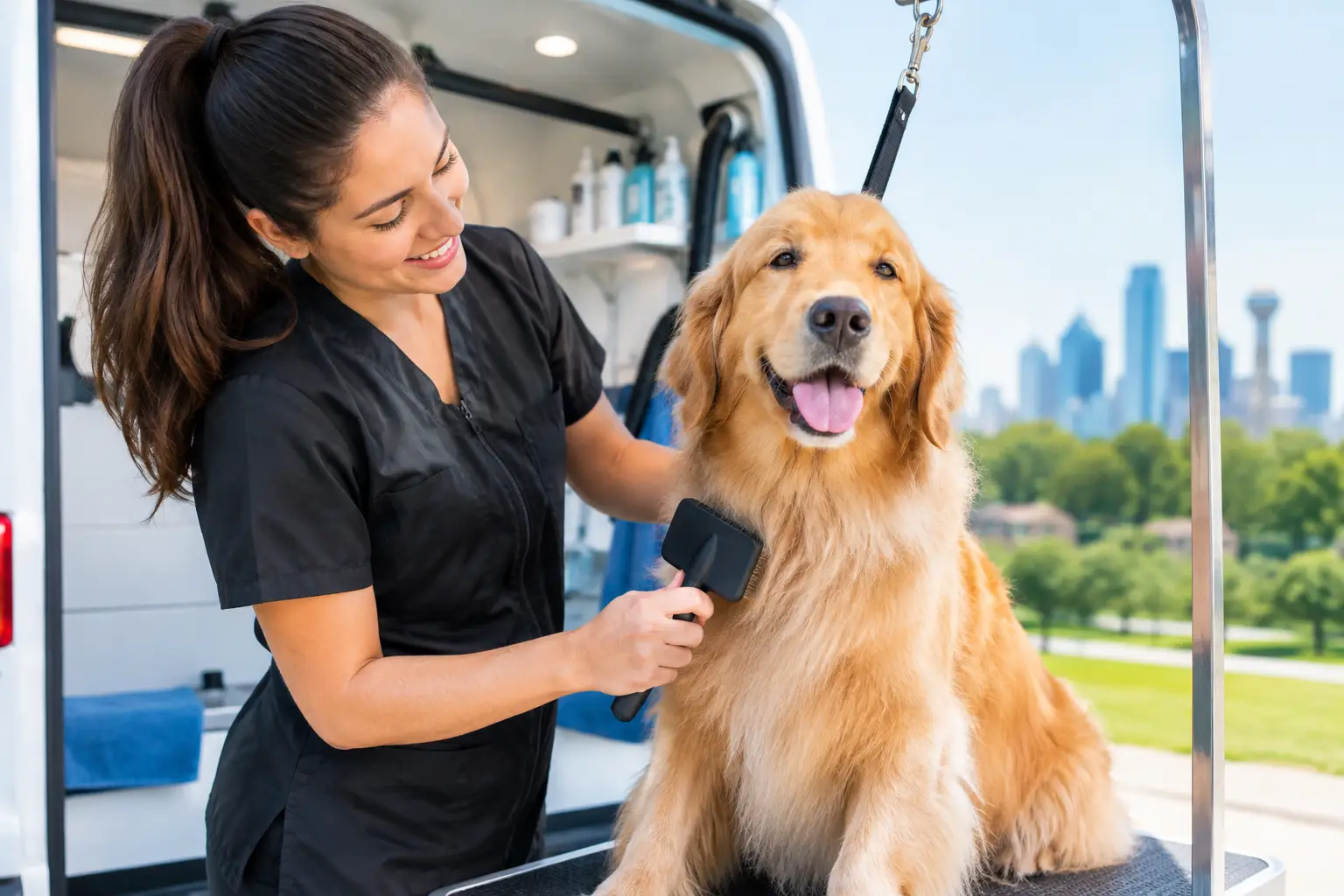
For dogs who find busy salons overwhelming, the grooming setting can make a meaningful difference. One-on-one mobile grooming gives pets a quieter, more focused experience without crowded waiting areas, cages, or the added stress of a car ride to a salon. At V-GROOM, appointments are designed around individual comfort, which is especially valuable when a dog needs gentle handling for a sensitive coat.
Preventing Mats Between Grooming Appointments
Prevention works best when it becomes part of ordinary pet care instead of a once-in-a-while project. The right frequency depends on coat type, activity level, weather, and hairstyle. A short, smooth-coated dog may need only occasional brushing, while a curly or long-coated dog may need hands-on coat checks several times a week.
Start by running your fingers through the areas that mat first. Do this after walks with a harness, after outdoor play, and after baths. If your dog wears sweaters or rain gear, check beneath them as well. Catching a knot when it is still loose takes seconds. Waiting until it becomes compacted can turn it into a difficult grooming issue.
A regular grooming schedule also supports mat prevention. Professional bathing, drying, brushing, and coat trimming help keep the coat manageable, but the schedule should suit the individual dog. A longer, plush style looks beautiful, yet it asks more of the home routine. A shorter trim can be an excellent comfort-forward choice for active families, humid weather, or dogs that dislike frequent brushing.
A Kinder Standard for Coat Care
It is easy to feel guilty when you discover mats, but they happen to attentive pet parents, too. Life gets busy, coats change with age and seasons, and a single wet day or missed brushing session can create trouble in the right kind of fur. What matters most is responding with care rather than rushing into a painful fix.
If a knot feels questionable, let your dog’s comfort guide the decision. A calm assessment, gentle maintenance, and timely professional help protect more than a beautiful coat. They help your dog feel safe in the hands of the people caring for them.
4 Responses