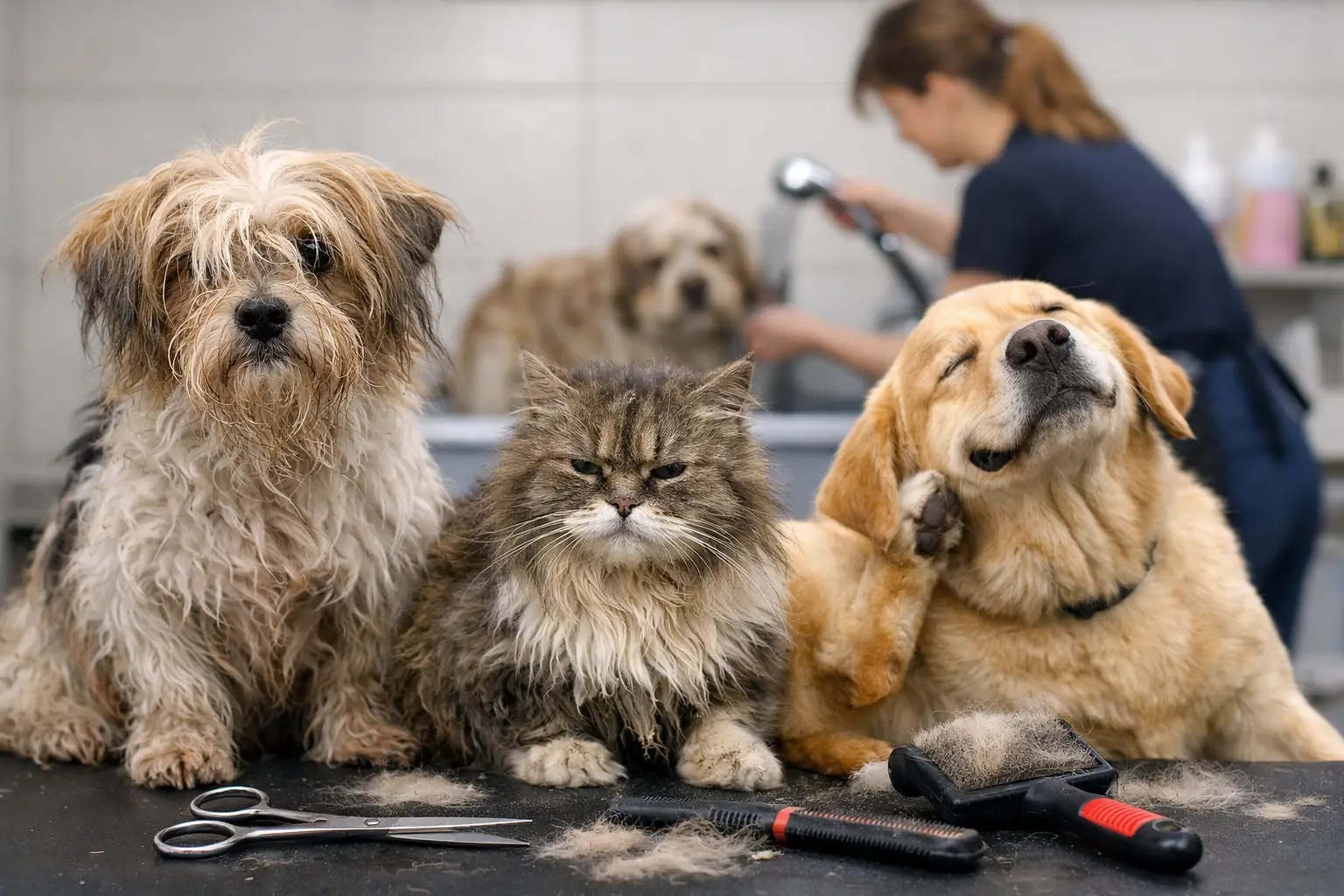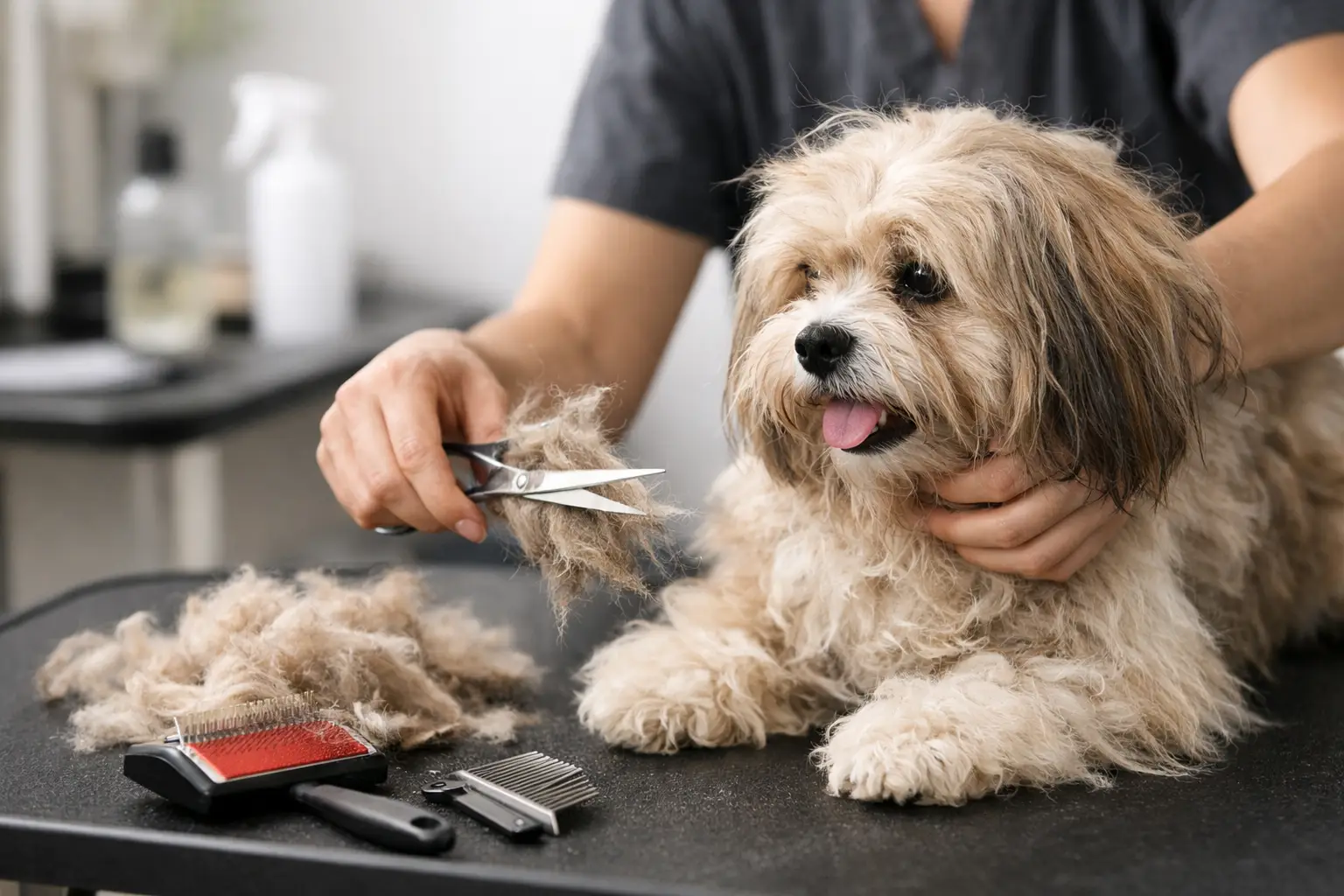
A mat can look like a small knot in your pet’s fur, but it can pull at the skin with every step, stretch, or cuddle. Pet grooming for matted coats is about far more than appearance. It is a comfort and hygiene service that requires patience, coat knowledge, and a gentle plan tailored to the pet in front of the groomer.
For a dog or cat who is sensitive, senior, anxious, or simply overdue for grooming, a calm one-on-one appointment can make a meaningful difference. The goal is never to rush through a difficult coat. It is to relieve discomfort as safely and kindly as possible.
Why Matted Coats Need Prompt Attention
Mats form when loose hair, dirt, moisture, natural skin oils, and friction cause strands to twist tightly together. They often begin in easy-to-miss places: behind the ears, under the collar or harness, beneath the front legs, around the tail, and in the feathering on the legs. Curly, long, double, and fine coats can all be prone to matting, although any pet can develop tangles.
Once a mat tightens, it sits close to the skin and tugs with movement. Severe matting can trap moisture and debris, conceal irritated skin, restrict normal movement, and make brushing painful. Pets may lick at the area, avoid being touched, or seem unusually restless. A pet that suddenly dislikes grooming is not being difficult. They may be telling you that brushing has become uncomfortable.
The right response depends on how close the mat is to the skin, how extensive it is, and how your pet reacts to handling. A few loose tangles may be manageable with a careful home routine. Dense, tight, widespread, or skin-level mats are best left to a trained professional.
When Not to Brush It Out at Home
It is tempting to keep working at a mat because you want to save your pet from a shorter haircut. That instinct comes from love, but aggressive brushing can cause pain, bruising, and brush burn. Pulling apart a tight mat strand by strand may also make a fearful pet more distressed during future grooming.
Do not use scissors to cut out mats. Skin can be pulled up into the mat and is much thinner than it looks, particularly around the ears, legs, belly, and sanitary areas. Even a small slip can result in a serious injury. Bathing a matted pet before the mats are addressed is also risky, because water can cause tangles to contract and become even tighter as the coat dries.
Professional help is the kindest option when mats are firm, close to the skin, covering a large area, or accompanied by redness, odor, sores, parasites, or signs of pain. If your pet will not allow the area to be touched, start with a veterinarian if there are any health concerns, then arrange grooming based on their guidance.
What Professional Grooming for Matted Coats Looks Like
A thoughtful grooming appointment begins with an assessment. The groomer checks the coat’s condition, identifies sensitive areas, and considers your pet’s age, temperament, mobility, and tolerance for handling. This is the moment for an honest conversation about what is safe and realistic.
In some cases, careful detangling is possible. It takes time, specialized tools, coat-appropriate products, and frequent breaks so the pet is not pushed past their comfort level. The trade-off is that extensive brushing may still be uncomfortable and can take longer than a pet can reasonably tolerate.
For tight or widespread mats, a close clip may be the safest choice. This is often called a comfort shave or reset groom. It can feel disappointing if you hoped to preserve a long coat, but a shorter clip removes the painful tension and gives the skin and coat a fresh start. Hair grows back. Relief should not wait.
A skilled groomer works slowly around folds, sensitive areas, and hidden skin issues. After the coat is safely removed or detangled, a gentle bath, thorough drying, nail care, and ear cleaning can help your pet feel clean and comfortable again, depending on what their condition allows.
A Calm Setting Matters More Than You Think
Matted-coat appointments can be emotionally demanding for pets. They may already associate touch with pulling or discomfort, and a crowded salon environment can add unfamiliar sounds, smells, barking, cages, and waiting time to the experience.
A quiet, one-on-one mobile grooming appointment removes many of those stressors. Your pet stays close to home, receives focused attention, and does not need to wait in a cage before or after their service. For pets who are anxious, elderly, reactive, or easily overwhelmed, that calmer pace can help make necessary grooming easier to tolerate.
At V-GROOM, each appointment is approached with patient handling and coat-specific care inside a fully equipped mobile spa. There are no loud generators, fumes, or busy salon traffic competing for your pet’s attention, just professional care centered on comfort and safety.
How to Prepare Your Pet for a Matted-Coat Appointment
There is no need to spend the night before the appointment trying to fix severe mats yourself. In fact, last-minute brushing can make tender skin more irritated. Instead, tell the groomer what you have noticed: where the mats are, whether your pet has been scratching or licking, and whether they are sensitive about particular areas.
Keep your pet dry unless the grooming professional instructs otherwise. Remove harnesses, sweaters, and accessories before the appointment, and give your pet a calm opportunity to potty beforehand. If your pet takes medication or has a medical condition, share that information during the intake process. Clear communication helps the groomer choose the safest approach.
It also helps to prepare emotionally for a coat change. A pet who has been heavily matted may leave looking much shorter than expected. That fresh, close cut is not a failure. It is often the most compassionate path back to healthy skin and a manageable coat.
Preventing Mats After the Reset
Once the coat is back to a comfortable baseline, prevention becomes much simpler. The best schedule depends on breed, coat type, haircut length, lifestyle, and how often your pet gets wet or wears gear. A long-coated doodle who visits the park, wears a harness daily, and enjoys water will need more hands-on maintenance than a short-haired dog who stays mostly indoors.
Between grooming visits, use a gentle line-brushing technique rather than skimming over the top of the coat. Part the hair into small sections and brush from the skin outward, paying close attention to friction points. Follow with a metal comb when appropriate for your pet’s coat. If the comb cannot pass through comfortably, there is likely a tangle forming beneath the surface.
For most mat-prone coats, a few brief sessions each week are easier on both pet and owner than one long brushing session. Check behind the ears, under the legs, around the collar, and near the tail after rainy walks, swimming, or outdoor play. Dry the coat thoroughly after baths, and ask your groomer for a maintenance schedule that fits your pet’s real routine.
A shorter haircut can be a practical choice for active households or pets who dislike at-home brushing. Longer styles are beautiful, but they come with more frequent maintenance. There is no single right look. The best coat length is the one your pet can wear comfortably and your household can maintain consistently.
Give Comfort the Final Say
A mat-free coat is soft, clean, and easier to care for, but the real benefit is a pet who can move, rest, and be touched without discomfort. If you find a tight mat, choose patience over pulling and professional care over risky shortcuts. Your pet does not need a perfect coat. They need to feel safe, comfortable, and cared for every step of the way.