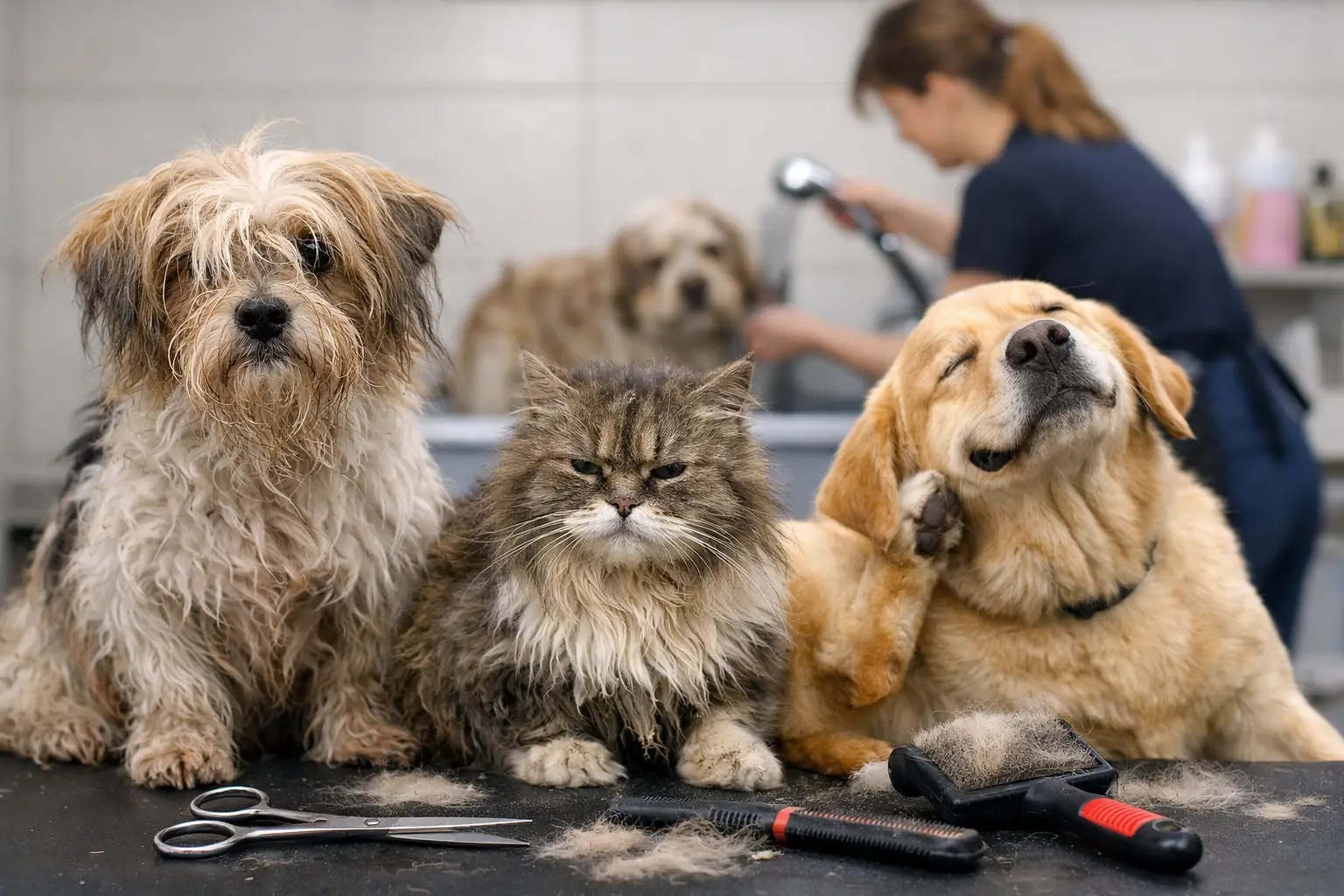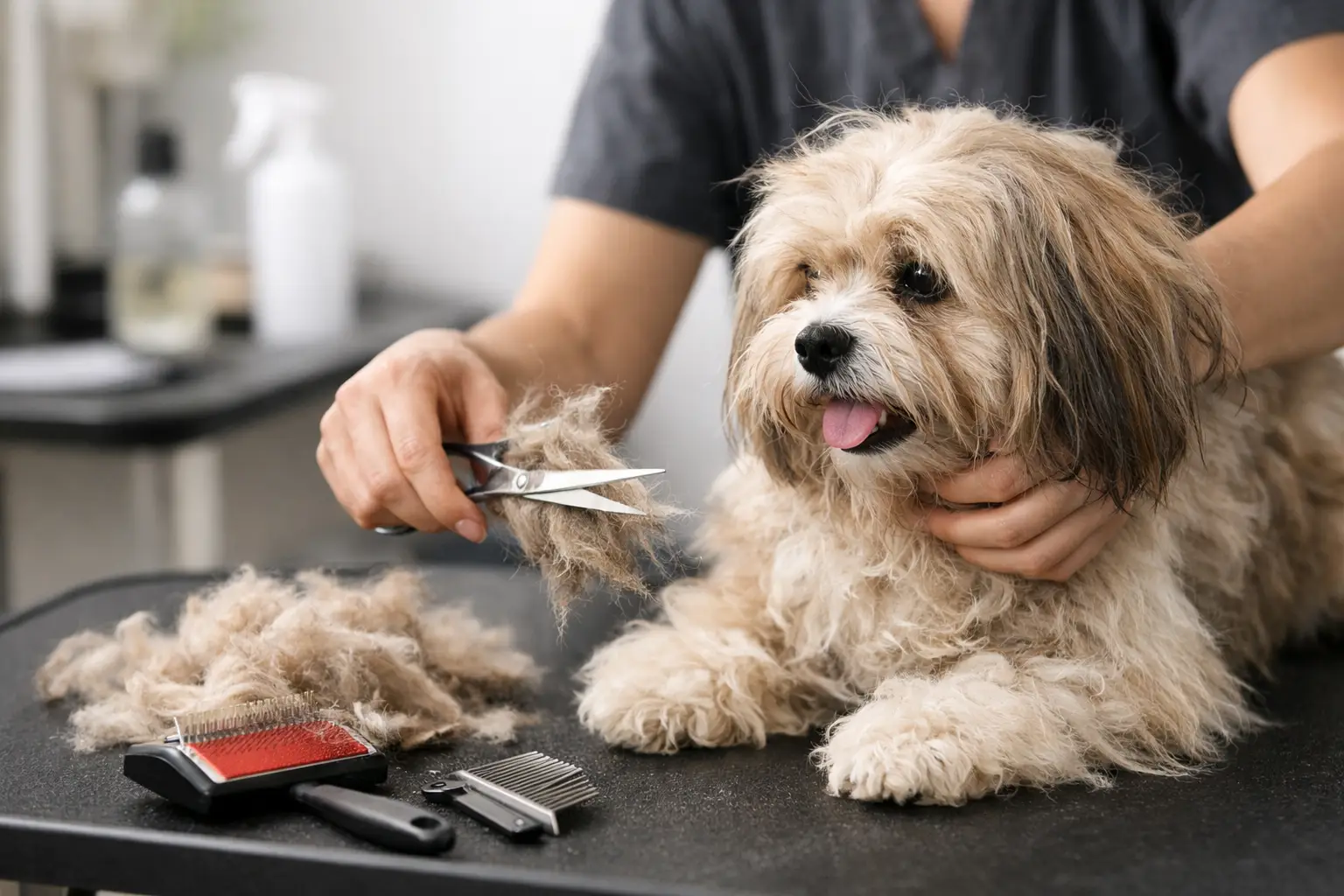
A doodle can look freshly brushed on the surface while tight mats are forming underneath the ears, collar, legs, and belly. That is why dog grooming for doodle coats is about much more than keeping a fluffy teddy-bear look. Consistent care protects your dog’s skin, comfort, movement, and trust in the grooming process.
Doodle coats are beautiful, expressive, and wonderfully varied. They can also require more maintenance than many families expect. Whether your dog has loose waves, dense curls, a soft fleece texture, or a thick wool-like coat, the goal is the same: keep the coat clean, fully dry, and free of painful tangles before they become a bigger problem.
Why Doodle Coats Need a Different Routine
Most doodles inherit some combination of Poodle curl and retriever-style density. Loose shed hair often stays trapped in the coat rather than falling onto your furniture. Add moisture, friction, outdoor play, harnesses, and a little natural oil, and those loose hairs begin winding together near the skin.
Mats are not just a cosmetic concern. A tight mat can pull constantly on the skin, trap dirt and moisture, hide irritation, and make a dog uncomfortable when walking or lying down. Mats around the ears, armpits, tail, sanitary area, and between the toes can develop quickly because those spots experience frequent movement and friction.
Coat type matters. A wavy doodle may be easier to maintain at a longer length than a tightly curled doodle, while a dense, cottony puppy coat may mat surprisingly fast during the transition to an adult coat. Your dog’s lifestyle matters, too. Frequent swimming, rainy walks, daycare play, and a favorite harness can all increase grooming needs.
The Best Dog Grooming Schedule for Doodle Coats
There is no single schedule for every doodle, but most benefit from professional grooming every four to eight weeks. A shorter haircut generally allows more time between appointments. A longer, fuller coat needs more frequent brushing at home and often a tighter professional schedule to stay comfortable.
For many families, a full groom every six to eight weeks paired with a bath-and-brush visit between haircuts works beautifully. This keeps the coat clean, removes loose hair, and gives a groomer a chance to spot early tangles before they become severe. Dogs with dense curls, long coats, or a tendency to mat may need care closer to every four to six weeks.
A calm, predictable appointment routine can be especially helpful for puppies and anxious dogs. Rather than waiting until the coat is tangled and the grooming session must be lengthy, regular visits help your dog learn that handling, brushing, bathing, drying, and nail care are normal parts of being cared for.
A note on puppy coats
Many doodles begin changing from their soft puppy coat to a denser adult coat between roughly six and 12 months old. This is often the period when families suddenly notice mats appearing faster than usual. Increase your brushing frequency during this transition, and let your groomer know if you are seeing tangles even with regular care. A small adjustment in coat length can make a meaningful difference.
Brushing at Home Without Causing Discomfort
For doodles, quick surface brushing is rarely enough. The most effective approach is called line brushing: work in small sections, parting the coat so you can gently brush from the skin outward. Start in an easy area, such as the shoulder or side, and keep each session short enough that your dog stays relaxed.
A slicker brush can help separate the coat, while a metal comb is useful for checking your work. After brushing a section, the comb should glide from the roots to the ends without catching. If it snags, there is still a tangle hiding underneath.
Focus on the places that mat first: behind and under the ears, under the collar or harness, armpits, chest, inner legs, belly, tail base, and feet. If your dog wears a sweater or raincoat, remove it at home and check the friction areas afterward.
Gentle handling matters as much as the tools. Hold the hair close to the skin while working through a small tangle so you do not pull on your dog. Use calm praise and breaks. If the tangle is compact, close to the skin, or making your dog flinch, stop. Aggressive brushing can turn a manageable grooming routine into something your dog fears.
Bathing Is Helpful Only When the Coat Dries Completely
A clean doodle coat feels wonderful, but bathing a tangled dog can tighten mats and make them harder to remove. Brush and comb through the coat before a bath whenever possible. Use a dog-safe shampoo, rinse thoroughly, and avoid leaving product residue that can cause itchiness or dullness.
The step many owners underestimate is drying. A damp, dense coat can mat quickly, particularly around the ears, legs, and belly. Towel drying is a good start, but it may not be enough for a thick doodle coat. If you bathe your dog at home, dry in sections and brush gently as the coat dries. Never leave a heavily coated doodle damp after a bath, swim, or rainy walk.
There is a balance here. Frequent bathing may be appropriate for dogs who get muddy, swim often, or need skin-focused care, but overbathing with unsuitable products can dry the skin. Your groomer or veterinarian can help you choose a routine based on your dog’s coat, skin, and daily life.
Choosing a Coat Length That Fits Real Life
The longer the doodle coat, the more daily maintenance it requires. A full, plush look can be lovely, but it is only a good choice if your household can keep up with thorough brushing and regular appointments. A shorter, even trim is not a compromise in care. For active families, it can be the kindest option because it reduces matting risk and makes at-home upkeep much easier.
If mats have already formed close to the skin, a shorter reset may be necessary. This can feel disappointing when you love your dog’s fluffy look, but it is sometimes the safest and most comfortable path. Trying to save every inch of coat through prolonged dematting can be stressful and painful, especially for sensitive dogs. Once the coat is healthy again, your groomer can help you create a realistic plan for growing it out.
What a Professional Groomer Should Check
A quality doodle groom is not simply a haircut. It includes a coat and skin assessment, brushing and combing, a thorough bath, careful drying, nail care, ear attention when appropriate, sanitary cleanup, and a trim tailored to your preferences and your dog’s comfort.
Communication makes the result better. Share how often your dog is brushed, whether they swim or attend daycare, any sensitive areas, and the style you want. Photos can help explain the look you have in mind, but your groomer should also be honest about what is achievable based on the coat’s current condition. A healthy, comfortable dog should always come before a particular haircut silhouette.
For dogs who find traditional salons overwhelming, a one-on-one mobile appointment can make grooming feel more manageable. V-GROOM provides a quiet, cage-free setting at your doorstep, giving doodles individualized attention without the noise, travel, or busy salon traffic that can unsettle sensitive pets.
Small Habits That Prevent Big Problems
The most successful doodle grooming routines are simple and consistent. Comb through friction spots after walks or harness wear. Check the coat after rain, swimming, and muddy play. Keep nails on schedule so your dog can stand and walk comfortably during brushing. Most of all, do not wait for visible mats to start a grooming routine.
Your doodle does not need a perfect coat every day. They need a coat that lets them run, curl up, be hugged, and move through the world comfortably. With regular home care and thoughtful professional grooming, that soft, happy coat can stay a pleasure for both of you.