A grooming appointment should feel less like a rushed errand and more like dedicated care for your pet. If you have wondered what happens during a grooming appointment, the answer is not simply “a bath and a haircut.” A thoughtful visit considers your pet’s coat, skin, comfort level, age, temperament, and the result you have in mind.
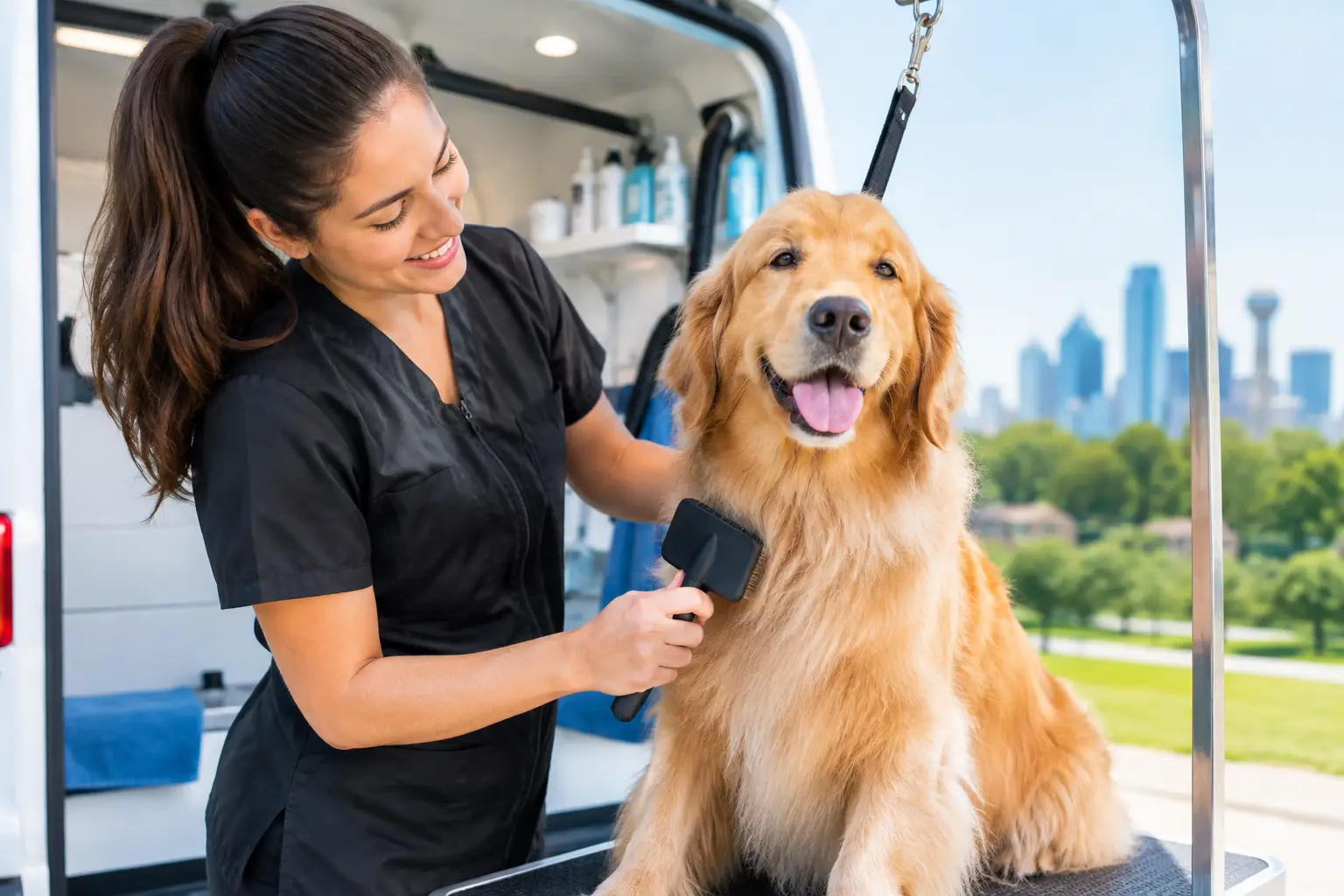
At V-GROOM, that care happens one-on-one in a calm, fully equipped mobile grooming van right outside your home. No crowded lobby, no unfamiliar cages, and no waiting all day for a pickup call. While every appointment is tailored, here is what pet parents can generally expect.
What Happens During a Grooming Appointment, Step by Step
A personal check-in comes first
Before grooming begins, your groomer takes a close look at your pet and confirms the plan for the visit. This is the time to share anything that may affect their comfort or care, such as a sensitive paw, itchy skin, arthritis, a history of ear infections, anxiety around dryers, or a tendency to guard certain areas.
Your groomer will also assess the coat. Light tangles, compacted undercoat, shedding, matting, dryness, and signs of skin irritation can change what is realistic and safe to do that day. A pet who needs a simple tidy-up has different needs from one who needs a complete coat reset.
Clear communication matters here. If you want a specific trim, bring a photo or describe the length and shape you prefer. If your priority is comfort over style, say so. The best grooming plan is one that respects both your pet’s well-being and your expectations.
Gentle brushing and coat preparation
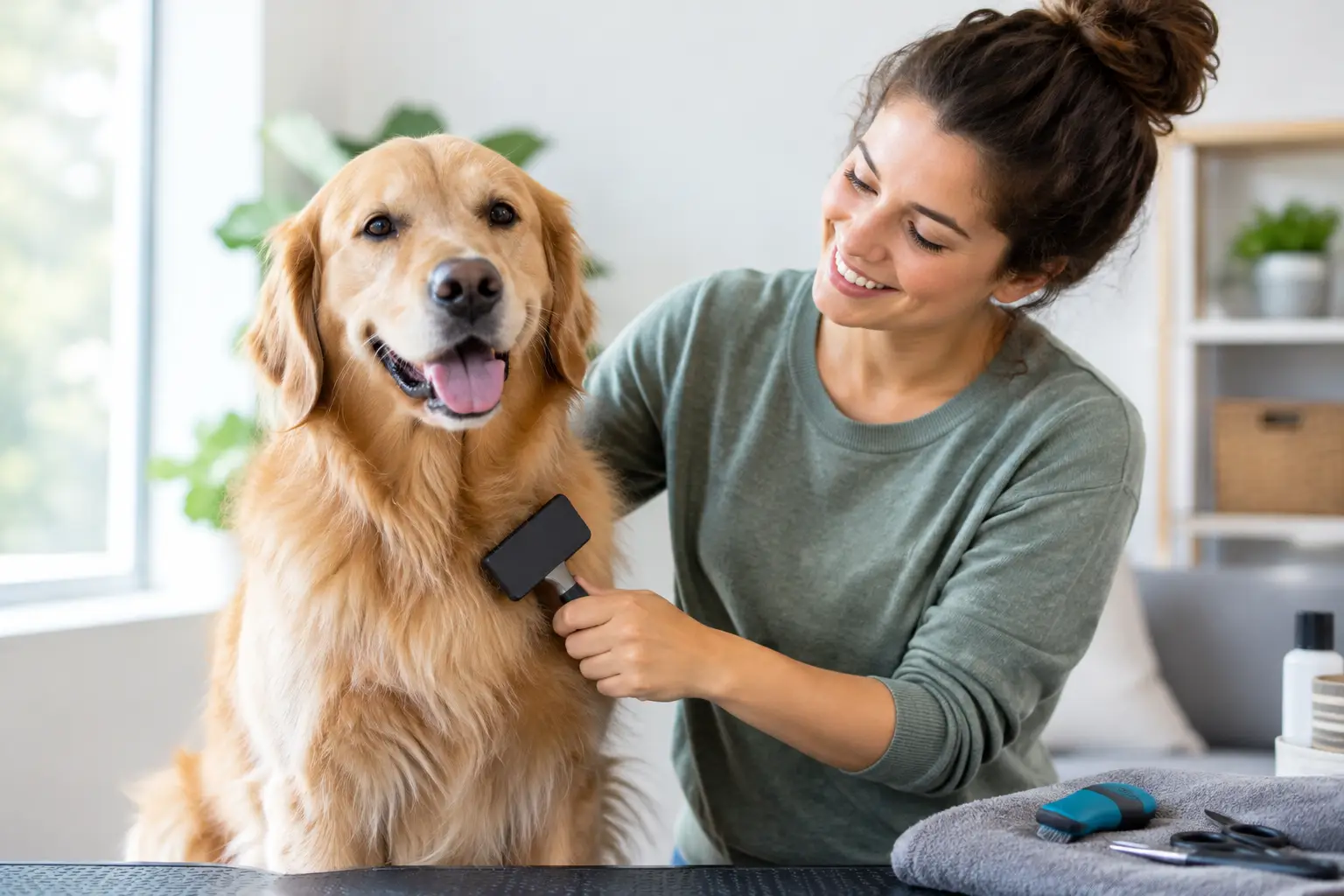
For many dogs and cats, grooming begins with brushing or combing. This removes loose hair, surface debris, and small tangles before the bath. It also helps the groomer understand the coat’s true condition.
Some coats need more extensive de-shedding, especially double-coated breeds that are blowing their seasonal coat. Others need careful detangling in targeted areas, including behind the ears, under the collar, around the legs, and near the tail. These spots often mat because of friction and moisture.
There is an important trade-off with matting. Trying to preserve length by brushing out tight mats can be uncomfortable, particularly when mats pull close to the skin. In some cases, a shorter clip is the kindest option. A professional groomer should explain the condition of the coat and seek your approval before making a significant change.
A customized bath and skin-focused cleanse
Next comes the bath. Your pet is washed with professional products selected for their coat and skin needs, rather than a one-size-fits-all shampoo. A short-haired dog with normal skin may need a straightforward cleansing bath, while a pet with dry skin, heavy shedding, or a dense coat may benefit from a different approach.
The groomer works carefully through the coat so water and shampoo reach the skin, where dirt, oils, and odor build up. The face, paws, sanitary areas, and underbelly receive special attention. Many pets enjoy a gentle facial treatment, while others prefer quick, quiet handling around the face. It depends on their temperament.
A proper rinse is just as valuable as the shampoo itself. Leftover product can cause irritation or leave the coat feeling dull. Once clean, your pet is towel dried and prepared for the next stage.
Drying is about comfort as well as appearance
Drying is often the part pet parents do not see, but it has a major impact on the finished groom. Damp coats can trap moisture against the skin, encourage odor, and make brushing difficult. Thorough drying also allows the groomer to see tangles, uneven areas, and skin concerns more clearly.
The method depends on the pet and the coat. Some dogs do well with a controlled high-velocity dryer that lifts loose undercoat and dries efficiently. Others, including seniors, highly sensitive pets, or pets with respiratory concerns, may need a slower, gentler approach. Cats often require especially patient handling and a quiet environment.
A mobile, one-on-one appointment can make this stage much easier for pets that struggle with salon noise. V-GROOM uses quiet equipment and an individualized pace, so your pet is not competing with barking dogs, ringing phones, or a busy grooming floor.
The Grooming Details That Complete the Visit
Haircut, trim, or de-shed work
Once the coat is clean and dry, the groomer can shape it accurately. A full groom may include a breed-inspired haircut, a practical all-over trim, or a customized style that fits your lifestyle. If your dog loves hiking, swimming, or rolling in the yard, a lower-maintenance length may be more useful than an elaborate style.
For pets who do not need haircuts, this part may focus on brushing out loose coat and tidying areas that grow quickly. Feet, face, fringe, and sanitary areas are common places for a clean-up trim. The goal is a pet who looks polished while still feeling comfortable moving, seeing, and using the bathroom.
Not every coat should be clipped. Double-coated breeds, for example, generally benefit from bathing, drying, brushing, and de-shedding rather than shaving. Your groomer can recommend the safest care based on coat type, season, matting, and your pet’s daily routine.
Nails, ears, and other essential care
Most grooming appointments include care for the small details that are easy to overlook at home. Nails are trimmed and, when appropriate, smoothed to reduce sharp edges. Keeping nails at a healthy length supports more comfortable walking and can help prevent strain on the feet.
Ears are checked and gently cleaned when needed. Groomers can remove visible debris from the outer ear, but they do not diagnose or treat infections. If there is strong odor, redness, swelling, unusual discharge, or clear pain, your groomer may recommend contacting your veterinarian before continuing with certain services.
Depending on the package and your pet’s needs, the appointment may also include a sanitary trim, paw-pad tidy, teeth brushing, a blueberry facial, or a light luxury scent. These finishing services are optional, but they can add comfort and leave your pet feeling especially fresh.
A final comfort and quality check
Before your pet returns home, the groomer checks the overall finish: the coat should be dry, even, and free of loose clumps; the eyes should be clear of stray hair; the paws should feel neat; and the style should match the agreed plan.
Just as important, your groomer pays attention to how your pet handled the visit. Did they dislike the dryer? Were they sensitive around one leg? Did they need extra breaks? Notes from each appointment help make future visits more familiar and more comfortable.
How Long Will the Appointment Take?
Timing depends on coat length, size, behavior, condition of the coat, and services requested. A bath-and-brush appointment may be shorter than a full haircut, while a heavily shedding or matted coat can require additional time and care. A calm, well-maintained pet often moves through the process more quickly, but a groomer should never rush a nervous pet simply to meet a clock.
One-on-one mobile grooming also means the appointment is focused on your pet rather than a rotation of pets throughout the day. You can plan for the groomer to arrive, settle your pet in, complete the service, and return them to you without the usual salon drop-off and pickup logistics.
How to Help Your Pet Have a Better Groom
A few simple choices can make the experience smoother. Give your dog or cat a chance to relieve themselves before the appointment. Let the groomer know about any recent health changes, medications, sensitivities, or behavior concerns. For dogs, a brief walk beforehand can help release extra energy.
Try not to bathe your pet immediately before a professional groom. A groomer needs to evaluate the natural condition of the coat and skin, and home bathing without full drying can sometimes tighten tangles. Between visits, gentle brushing is the most helpful habit you can build, particularly for long, curly, or double coats.
Most of all, keep your own energy calm. Pets read our routines closely. When grooming becomes a familiar, compassionate part of their care instead of a stressful outing, many pets learn that a clean coat, comfortable paws, and undivided attention can feel very good indeed.