A mat can look like a small tangle on the surface, yet it may be pulling tightly at your dog’s skin underneath. That is why the question of whether to remove mats before dog grooming deserves more than a quick brush-through. The kindest choice depends on the mat’s location, size, and closeness to the skin – and on how comfortable your dog is with handling.
For many pets, especially those with curly, fine, double, or long coats, mats happen faster than owners expect. A little friction behind the ears, beneath a collar, under the front legs, or around the hindquarters can turn loose hair into a dense knot. Left in place, that knot can trap moisture, cause irritation, limit movement, and make even a loving touch uncomfortable.
Why mats need thoughtful care
Mats are not simply messy fur. As they tighten, they pull on the coat and skin every time your dog moves. A mat under a harness can rub during walks. A mat around the rear can hold urine or debris. Mats between the toes may make a dog reluctant to walk or paw-sensitive during grooming.
This is also why a dog who suddenly resists brushing is not being difficult. They may be telling you that a tender area is being pulled. Senior dogs, anxious dogs, and dogs with thin or sensitive skin often need especially gentle handling.
A professional groomer will assess the coat before deciding whether a mat can be brushed out comfortably or should be clipped away. There is a trade-off: preserving coat length can be appealing, but it should never come at the expense of your dog’s comfort. When mats are tight, humane removal may mean a shorter style for that appointment.
Should you remove mats before dog grooming?
If the mat is small, loose, and clearly separated from the skin, gentle maintenance at home may help before the appointment. But you do not need to solve every mat on your own before professional grooming. In fact, attempting to remove a tight mat with scissors or forceful brushing can cause pain, skin tears, and accidental cuts.
Let the groomer know about mats when you book and point them out at the start of the appointment. This allows enough time to plan the service and choose the safest approach for your pet. Honest communication is far more helpful than a last-minute attempt to hide or cut out problem areas.
Mats you may be able to handle at home
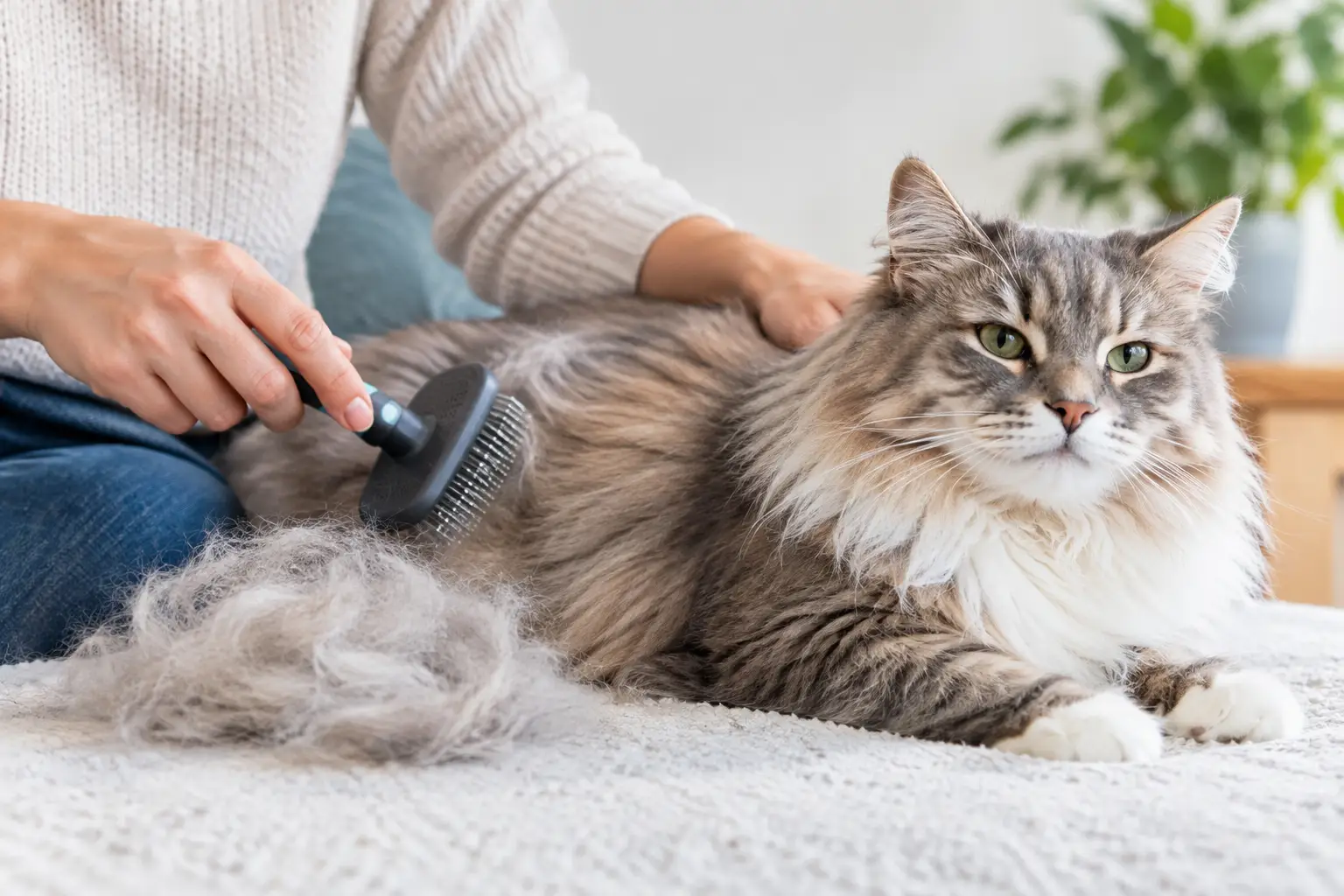
A few loose tangles at the ends of the coat can often be worked through with patience. Hold the hair above the tangle, close to the skin, so your dog does not feel the pulling. Then use your fingers to gently separate the outer edges before making short, careful strokes with an appropriate slicker brush or metal comb.
Work in brief sessions, offer praise, and stop if your dog flinches, pulls away, or becomes stressed. The goal is not to finish at all costs. It is to make grooming feel safe enough that your dog can tolerate it again tomorrow.
Mats best left to a professional
Professional help is the right choice when a mat is dense, sits close to the skin, covers a large area, or is located in a sensitive place. The same applies to mats behind the ears, in the armpits, around the groin, near the eyes, beneath a collar, around the tail, or between the paw pads.
Do not use household scissors on a mat. Dog skin is thinner and more movable than it appears, and skin can be folded into the mat itself. Even experienced groomers use specialized tools and careful technique because the risk of injury is real.
If you notice redness, odor, moisture, sores, fleas, discharge, or a painful reaction beneath a mat, contact your veterinarian. Grooming can improve hygiene, but a groomer should not diagnose or treat a skin condition.
What professional dematting actually involves
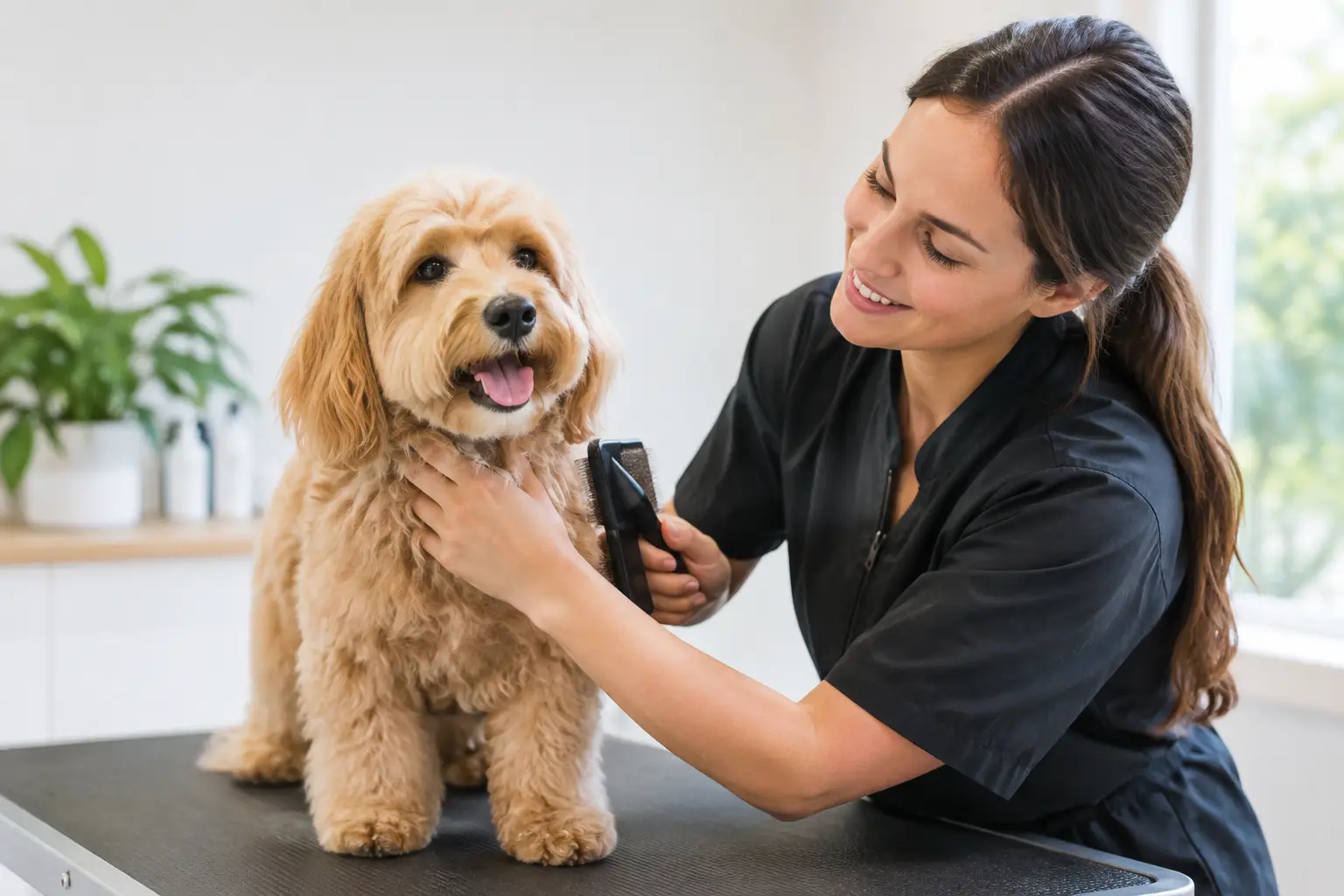
A caring groomer begins with an assessment, not a promise to save every inch of coat. The safest plan may be targeted brushing, clipper work to remove individual mats, or a close shave when the coat is heavily pelted. The decision should be based on your dog’s welfare, not on a cosmetic preference alone.
Dematting takes time and can be tiring for a dog. There is a point where continued brushing becomes uncomfortable, even when done correctly. A compassionate groomer recognizes that point and recommends a practical reset. Once the coat is clear, you can begin a manageable at-home routine and maintain the length more comfortably between appointments.
A one-on-one setting can make this process easier for dogs who are nervous or sensitive to sound and activity. Without the commotion of a crowded salon, many pets settle more readily and receive the focused attention their coat condition requires.
Help your dog arrive more comfortable
Before the grooming appointment, avoid bathing a matted coat unless your groomer specifically tells you otherwise. Water can tighten mats, and drying may make them harder to address. Keep the collar or harness from rubbing against known tangles when possible, and give your dog a normal potty break before the groomer arrives.
Share useful details upfront: where the mats are, whether your dog has reacted to brushing recently, any mobility concerns, and whether they have a history of skin sensitivity. This information helps the groomer tailor the pace and handling to your dog instead of treating the visit like an assembly-line service.
It can also help to keep the handoff calm. Your dog takes cues from you. A relaxed, reassuring goodbye and a familiar routine can reduce anticipation, particularly for pets who dislike travel or traditional salon environments.
Prevent mats without turning brushing into a battle
The best mat-prevention routine is one you can realistically maintain. A short daily check is often more effective than an occasional long brushing session. Run your hands over the high-friction areas: behind the ears, under the collar, under the legs, along the belly, around the tail, and between the toes.
For curly or longer coats, brushing only the top layer is rarely enough. Use a line-brushing approach: lift a small section of coat, brush from the ends toward the roots, and check that a comb can pass through to the skin without snagging. Be gentle and methodical rather than fast.
Frequency depends on coat type and lifestyle. A short-haired dog may only need occasional maintenance, while a doodle, poodle, bichon, or long-coated mixed breed may need brushing several times a week or even daily. Swimming, rain, muddy play, sweaters, harnesses, and seasonal shedding can all increase matting risk.
Regular professional appointments also make home care easier. A groomer can keep the coat at a length that suits your schedule, your dog’s activities, and their tolerance for brushing. There is no single “right” haircut. For some families, a fluffy longer look is worth the maintenance. For others, a shorter, easy-care style provides more comfort and freedom.
A fresh start can be an act of care
When a heavily matted dog needs a shorter coat, it can be emotional for a pet parent. You may miss the soft curls or long feathering. But your dog may feel immediate relief once the pulling, trapped debris, and daily discomfort are gone.
At V-GROOM, a calm, one-on-one mobile grooming experience gives pets the individual attention they deserve, right outside the home. For DFW pet parents, that means no stressful car ride, no crowded waiting area, and a grooming plan built around your dog’s coat and comfort.
Your dog does not need a perfect coat to deserve professional care. A gentle assessment, a realistic plan, and consistent maintenance can turn a painful problem into a clean, comfortable fresh start.