
A fluffy doodle leaving the bath with hidden knots, a double-coated Husky shaved too short, or a short-haired cat shedding across every sofa all have the same underlying issue: their coat was treated like every other coat. Coat specific pet grooming recognizes that a pet’s hair type, skin needs, lifestyle, and tolerance for handling should shape every part of the appointment.
A beautiful finish matters, but comfort matters more. The right grooming routine helps prevent painful mats, trapped moisture, excess shedding, skin irritation, and the stress that can build when grooming becomes uncomfortable. For pets who dislike busy salons, a calm one-on-one appointment at home can make that care feel much easier.
Why coat-specific grooming is not one-size-fits-all
“Bath, brush, and haircut” sounds simple until you consider what is beneath the surface. Some coats grow continuously and need regular trimming. Others are designed to insulate the pet from heat and cold. Some release loose undercoat in dramatic seasonal waves, while others tangle quickly from a single damp walk, harness rub, or playful afternoon at the park.
Using the wrong tools or techniques can create real problems. A clipper blade that is too short may compromise a double coat’s natural protection. A heavy conditioner may weigh down a fine coat. Skipping a thorough dry can leave dampness close to the skin, where irritation and odor can develop. Even a pet with a low-maintenance coat benefits from a routine tailored to its particular needs.
Breed can offer useful clues, but it is only a starting point. Two dogs of the same breed can have very different coat density, skin sensitivity, activity levels, and grooming tolerance. Age matters too. Senior pets may need shorter, gentler sessions and supportive handling. Puppies need positive early experiences. Cats often need a quiet environment and patient pacing.
The four coat types that guide grooming care
Smooth and short coats
Boxers, Beagles, French Bulldogs, Pugs, and many short-haired cats may not need haircuts, but they still shed, collect dander, and can develop oily buildup. Their grooming usually centers on a skin-appropriate bath, a gentle rubber or bristle brush, a complete dry, and light finishing work around nails, ears, and hygiene areas.
Short hair can make skin concerns easier to notice, including dryness, bumps, redness, or parasites. It also means rough brushing is rarely helpful. The goal is to lift loose hair and distribute natural oils without irritating the skin.
Double coats
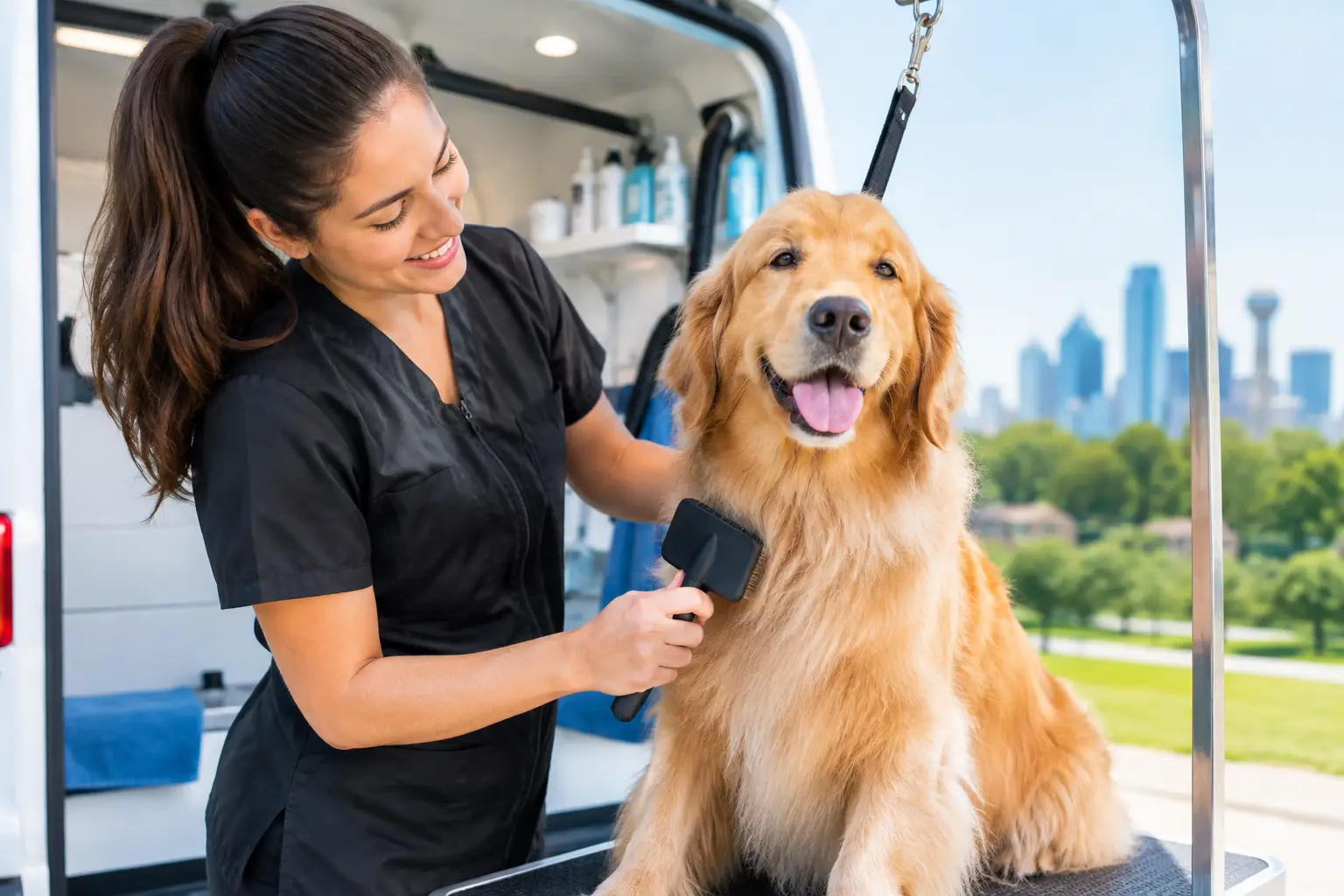
Golden Retrievers, German Shepherds, Huskies, Pomeranians, Australian Shepherds, and many mixed-breed dogs have a soft insulating undercoat beneath a protective outer layer. These coats benefit most from regular bathing, high-velocity drying when appropriate, and careful de-shedding that removes loosened undercoat without damaging the longer guard hairs.
This is where a common grooming misconception deserves attention: shaving is not usually the answer to shedding or summer heat. A double coat is part of the pet’s natural temperature regulation and skin protection. There are exceptions, such as veterinary needs or severe matting, but a thoughtful de-shed and tidy trim are often the healthier choice. Your groomer can explain what is appropriate for your individual pet rather than applying a standard clip to every thick coat.
Curly, wavy, and continuously growing coats
Poodles, Doodles, Bichons, Portuguese Water Dogs, and many terrier mixes need regular brushing and professional trims because their hair can hold onto loose strands instead of shedding them out. That trapped hair turns into knots, and knots can tighten into mats close to the skin.
For these pets, consistency matters more than an occasional long appointment. A schedule every four to eight weeks may be appropriate depending on coat length, home brushing, and the desired style. A longer fluffy finish can be lovely, but it requires committed maintenance between visits. A shorter clip is often more practical for active families, frequent swimmers, or pets that strongly dislike brushing.
Matted fur is not simply a cosmetic concern. Mats pull on skin, hide irritation, trap moisture, and make movement uncomfortable. When matting is severe, a humane reset clip may be kinder than attempting to brush through it. Starting fresh can feel disappointing, but it gives the coat and skin a comfortable foundation for a more manageable routine.
Silky, fine, and long coats
Yorkshire Terriers, Shih Tzus, Maltese, Cavaliers, Afghan Hounds, and long-haired cats often have fine strands that tangle at friction points. Check behind the ears, under the collar, beneath the front legs, around the tail, and wherever a harness sits. These areas can mat before the rest of the coat looks messy.
A suitable shampoo and conditioner, careful drying, gentle line brushing, and regular face and sanitary maintenance keep these coats clean and soft. Tear staining around the eyes is also common in some breeds. It should be approached gently, with products and handling that respect the sensitive eye area rather than harsh scrubbing.
What a personalized grooming appointment should consider
A premium groom is more than selecting a haircut from a chart. Before the first bath, your groomer should consider the pet in front of them: coat condition, skin sensitivity, age, behavior, past grooming experiences, and your priorities at home.
A dog who hikes every weekend may need special attention to paws, coat debris, and nails. A city dog who wears a harness daily may benefit from extra work at the chest and underarms. A cat with limited mobility may need help managing tangles it can no longer reach. A pet with allergies may need a simpler bathing approach and close observation of the skin.
Temperament shapes the appointment, too. Some pets are comfortable with brushing but wary of dryers. Others dislike paw handling or need breaks during face work. Rushing through those signals can make future grooming harder. Calm equipment, quiet surroundings, and one-on-one handling help a groomer work at the pet’s pace while still delivering a polished result.
At V-GROOM, that individualized attention is central to the experience. A cage-free mobile setting eliminates the car ride, crowded lobby, and long wait that can overwhelm sensitive pets. No noise. No fumes. No stress. Just focused grooming care at your doorstep.
Between-appointment care makes every groom better
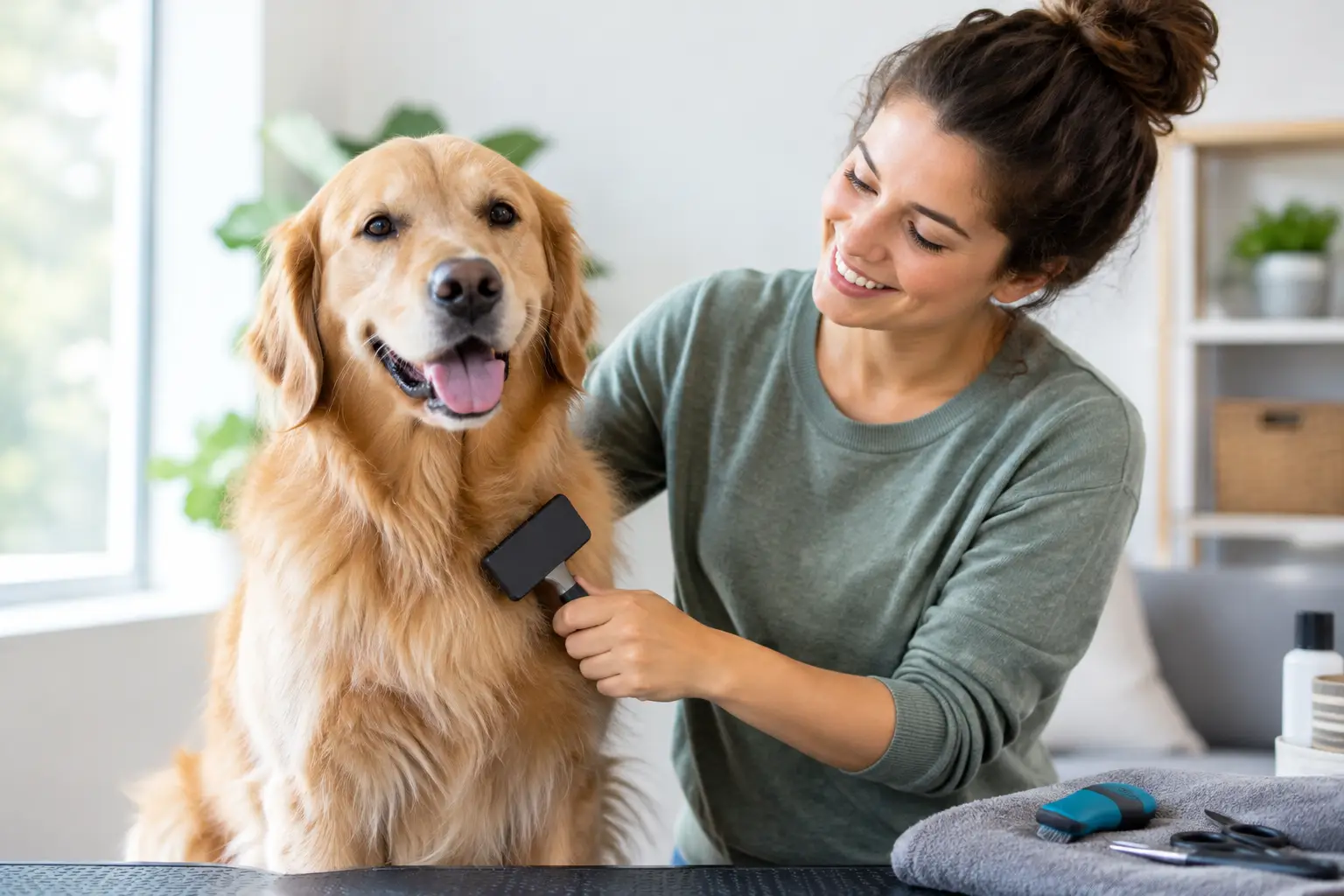
Professional grooming works best when it is supported by a few simple habits at home. You do not need to turn your living room into a salon, but you do need the right brush and a realistic routine. For a curly or long-coated dog, several minutes of brushing a few times each week can prevent a major matting issue. For a double-coated pet, regular brushing during shedding season keeps loose fur from building up throughout the home.
Always brush down to the skin, not just over the top layer. If the brush glides over the surface but catches when you separate the fur with your fingers, there may be hidden tangles. Be especially gentle around ears, legs, tails, and the belly. If brushing causes distress, stop rather than pulling through. A groomer can assess whether the area needs professional attention.
Bathing at home also has trade-offs. Frequent bathing with the wrong shampoo can dry the skin, while incomplete drying can leave a dense coat damp underneath. For many families, occasional spot cleaning, routine brushing, and professional bathing is the most comfortable balance. Ask your groomer what schedule and tools fit your pet’s coat rather than copying a routine that works for another breed.
When your pet is telling you it is time for grooming
A grooming appointment may be due before your pet looks visibly untidy. A sour smell, greasy feel, flakes, persistent scratching, fur clumps around the home, clicking nails, or resistance to brushing are all reasons to take a closer look. In long and curly coats, small knots around the ears or underarms deserve prompt attention before they become tight mats.
For cats, watch for reduced self-grooming, tangles along the back or hindquarters, and litter or debris caught in the fur. Older, overweight, anxious, or arthritic cats may need more support with coat maintenance than they once did. Grooming should never replace veterinary care, so new skin changes, hair loss, wounds, or ongoing itchiness should be discussed with your veterinarian.
The best coat-specific routine is the one your pet can comfortably maintain. When grooming is matched to the coat, the season, and your pet’s personality, it becomes less of a chore and more of a regular comfort ritual – one that helps your companion feel clean, relaxed, and wonderfully cared for.
One Response